
Only You Can Understand Your Dreams
Summary
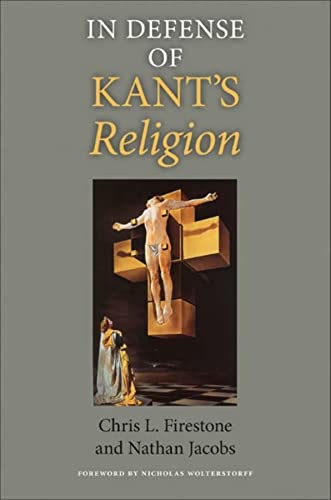
Concluding the series, Dr. Firestone gives a staged method for interpreting your own dreams: journal it, record your unfiltered reaction, run it through Hall's and the depth psychologists' lenses, then return to Scripture, illustrated with his 2008 dream about finishing In Defense of Kant's Religion.
Show notes
In episode fifty-two, Dr. Firestone concludes the dream interpretation series by offering a practical framework for understanding personal dreams. He reviews the philosophical and biblical foundations covered earlier and outlines a step‑by‑step method for recording, analyzing, and discerning the meaning of symbolic and prophetic dreams. The episode emphasizes the dreamer’s unique context as the key to interpretation.
Books discussed
Transcript
I don't know how many times I've had that with students who share a dream with me in their office or in class where I start asking them questions utilizing this procedure and there'll be a moment where they go, "Oh my goodness. All right. Well, welcome back. We have come quite a distance together. If you've been tracking along with this series, you've been learning along with me or relearning some things that I taught um for a number of years uh at Trinity uh off and on. wasn't one of my main courses at Trinity, but it was one that uh I was intrigued by because I was having dreams and lots of dreams and they came at pivotal times in my life.
at least those are the ones I remember and so um and they're formative and we've already discussed a couple of them in the context of the philosophers and psychologists of the 19th and 20th centuries and also the biblical witness and the importance of having an open system and of a an open mind to how God might be speaking to you through your dreams. And so today we're going to try to wrap all that up. I may use some of those dream illustrations. I got one more dream that I want to share with you as an illustration of the approach that we're going to have here today.
Well, as I said, this is uh episode 6. The first episode, we introduced the topic. In the second episode and third episode, we talked about the philosophers and the psychologists. In the uh fourth and fifth episodes, we looked at the Old and New Testament. I'm going to be reviewing some of those things and turning them into a what I'm going to call a procedure, an approach, a practical guide for how to interpret dreams. Now, again, you'll want to consult an expert. Ultimately, you'll want to talk to somebody who knows you, who knows your dreams, who knows your life context.
Um, but at the end of the day, what I'm trying to produce here is a starting point for you, a place for you to go to cultivate and to uh uh transcribe, to analyze, and to understand your own dreams. At the end of the day, I'm going to make the argument that only you can understand the meaningfulness of these dreams because you're the only one who a had the dream in the first place, knows the complete context, and is able to see or understand or experience when an interpretation kind of locks in. and exposes a deeper meaning or a you know an interpretation that makes sense.
And so no psychologist or counselor or philosopher can do that on your behalf. But what we can do is to consolidate a lot of what we've learned in this field and to put it together in a intelligible and useful format. So that's what I'm going to try to do here u in episode 6 is to give you a strategy if you will for dealing with your dreams. Now, one of the things you guys will remember is that what I'm trying to do is bridge the sacred and secular divide. We are products of our age. We have been a part of a society here in the west that has systematically over the last hundred years purposely separated the sacred and the secular.
The separation of church and state, the separation of our public spaces from our religious artifacts, all of this stuff came at us as a result of modernity and the postmodern extrapulation of modernity. And that creates a kind of problem for dream interpretation because dreams are not the waking life. They may be continuous with it. They may be informed by it. They may even contribute to it, but they're not exactly that. And therefore, they don't have a neat and tidy space within the contemporary discourse. This is why a lot of times we don't even talk about them anymore. Um, this is not universally true. You probably had an experience where you had a dream and maybe you're having some coffee in the morning or you're with family and you, man, I had a weird dream last night. It's kind of funny to to relate it and so forth, but that is not that's just a sur scratching the surface here.
Our lives about a third of them is spent sleeping and dreaming. And these are experiences every bit as real to us in some ways more real to us because they don't have any um any um context in which they occur. You know a lot of time the waking life will be focused on something but there's a lot of context to uh a waking experience but to dream experiences they have they have no um no uh um what do you say you know no challenggers in the experience. There's no there's nothing else but the dream. Everything else kind of fades into blackness and nothingness. What's happening is what's real to you in the dream.
And these experiences can be profound for that reason. And so we want to try to see if we can take them more seriously. There may be a lot at stake. Now it may not be at stake like money is put into a 401k or something or invested here or there or that you know there may may not be those kind of physical stakes but dispositional stakes can be quite high when we're talking about dreams because they're talking about you in your soul and your innermost person. Also they are the place where we seem to be most human. we're not totally put together as it were uh when we're dreaming. And um when we become more attentive to our dreams, we become more regular in our humanity.
Um there's this world inside of us and it manifests in our personality outside of us and that can't but I think help us to understand that we're human beings. We're finite and yet we're very complex uh and we have an inner as well as an outer life. And those things, the continuity between the waking life and the dream is an intrigue that um I don't think we can deny. Now, you'll recall in that first episode I talked about the sacred secular divide. I have this book. In fact, I've got it in front of me again. Um I would recommend that you read the introduction to this book.
It's called The Persistence of the Sacred in Modern Thought. It was edited by Nathan Jacobs and I. We wrote this introduction. It was kind of eyeopening to us at the time because we were tracking this secularization theme. Now we'd seen it in Khan studies and we were aware of it in the study of Decart and the study of Lach and the study of linenets and the study of a lot of the great modern thinkers because we had asked experts in those fields. Was the secularization push happening in your field? And universally the answer was yes. Yes, it is happening. And they wrote all these essays. We ended up getting it published with uh with Notre Dame University Press and uh that was a watershed moment for us. And uh and in writing the introduction, we started to dig into the origin of this secularization push.
And uh you guys recalled um you know uh uh uh Jacob Holio and um Leo Strauss and some of the Straussians and so forth. And what we uncovered there was a materialistic naturalistic atheistic push in the middle of the 19th century really culminating in a book by Leo Strauss on persecution and the art of uh the art of reading and essentially he's arguing that all the past thinkers are attempting to escape theism and religion and so forth but they can't do it because of the church state relationship and sensors and everything else. So you have to read them esoterically. They don't really mean what they say.
The problem that the experts noted and that we also noted in Persistence of the Sacred was that those contributions to the great modern and enlightenment writers could not be coherently understood without the theological affirmation. oftentimes at the center of their work. And that's a profound insight. You can't understand the meditations without understanding Decart's argument for the existence of God and the foundational component that that has in the system in terms of grounding the existence of the external world and the experiences of the self the quantity and quality of ideas that we have. So you'll remember back to the to the uh presentation that the episodes that I had on Decart's meditations. You really can't make coherent sense out of his argument without the theological center of that argument. Same is true of liets. Same is true of John Lockach. And I would say the same is true as as the full range of Kant's philosophy as it ex as as reason becomes unstable without rational religious faith.
This is a kind of a universal theme throughout modernity. They're not orthodox Christians per se, but they're theists with Christian affinities and they're trying to understand how that great truth manifests itself in natural reason and how reason is even possible uh seems to require belief in God and and so forth. So anyway, we make we make that case in persistence of the sacred and I think that that uh is where uh I started to approach the whole notion of dream interpretation. Now we ended episode one by looking at um at Hunt's views of of of the types of dreams that we have. And um I think in in that episode we talked about let's see here.
Yeah, dreams. Bear with me if you will. My uh please forgive me for there's a lot of material here in episode 6 to try to consolidate into a discernable method. So it's going to not necessarily be as straightforward as uh I would have liked. But you remember um Harry Hunt talked about uh personal dreams and um these dreams that are basically dreams that happen out of everyday life. Then we had medical or uh sematic dreams which usually have a symbolic component. Maybe you have some kind of injury or some kind of hurt going on or some something else going on in your life that is symbolized in your dream. Then you have symbolic dreams and prophetic dreams and um and then he talks about uh uh nightmares and lucid dreams and so forth. So those were the types of dreams that we discovered. Not all of those dreams are worth doing a deep dive in terms of interpretation.
I think really the uh symbolic and the prophetic ones are the ones that are the deeply meaningful ones. And I I shared one in episode one about the crematorium and uh how it was a kind of prophetic dream that was a warning, a revelatory dream that was a warning to me that I needed to act upon. And so that's uh that's where we went in episode one. And episodes two and three is where we dove into the scholars of the 19th and 20th centuries.
Now um the reason we did that is because they're the sort of watershed moment of modernity as they are working out the insights of critical reason as it explores the contributions of the conscious life and the subconscious life and the dream life. um not leaning into spiritual realities per se, but in just exploring the transcendental components, the the the the active contributing components as Kant puts it within reason itself. Those things had not until Kant been fully extrapulated philosophically. And now people like Jung and Freud and uh Wilhelm Vunt and so forth, they're beginning to say, well, what about the psychology of the transcendental? How does the conscious and the uh uh subconscious and the unconscious contribute to our dream life? And so you'll recall that that uh well, there are a number of figures in play here.
Let me start with I mean I'm not going to take them in the order that they came in necessarily in episodes two and three but I think some important insights are worth noting. Wilhelm Vunt for example in 1879 started to do for the first time experimental psychology. You'll recall that Kant didn't think that you could do experiments on the transcendental because experimentation was a empirical thing that required sensation. How are you going to experiment on the conscious or the subconscious? And he didn't necessarily think it was possible. But Vilhelm Vunt, now notice the date on this, 1879.
It's right around the time of the um of the free thought society and the naturalists and the atheists promoting the secularization of the university of the of of of politics of society. And Wilhelm Vunt comes along and he kind of fits into that mode because he's not going to look at biblical dreams or anything like that. and he wants to see whether or not he can quantify dreams, the mental life. Um, and he thought you could do that. You'll recall that um that Wilhelm Vunt started to notice that you could use a clock to determine how long it took somebody to recognize something, to deliberate on something, to judge something, and that that was quantifiable.
And so, Vil Helm Vunt developed this whole um notion that um you could measure discrete mental operations. And that was kind of a the light bulb that went on in the community that maybe there were triggers, maybe there were empirical um measures that could be used by psychologists to get at the mental life. And of course that immediately gives rise to whole schools in in Switzerland, in Vienna and other places where p persons like Sigman Freud and his um protetéé Carl Jung um began to do their work. You'll recall that Freud um was really in search of the what I would call the reductive trigger.
If you buy into the atheism, the naturalism, then what you're in search of is some deeper meaning of a dream that isn't reliant upon any outside sources, but that is in a sense a a repressed memory. Maybe you've censored something. And so he goes into this, he makes this distinction, as you guys will recall, between the manifest and the latent dream. You may have what's on the surface, but you're trying to go layers deeper to see what is in the depths of your psyche. Now, of course, this is a closed system.
Doesn't mean there's not some truth to it. Uh anybody who's read Freud and has thought about their own life recognizes that um you know this the the the the the sexual component can be present often times is present in a lot of what we think and say. But when you use this hammer everything looks like a nail. And that's kind of what happens with Freud. Um not so much with um Kelvin Hall. Now, you you'll recall that Kelvin Hall didn't think that dreams were symptomatic of something latent or deeper. He kind of collapses the manifest latent distinction altogether. And Kelvin Hall kinds of sees the uh dream as a kind of a verbal text.
It kind of is what it appears to be. And what you need to do is to um is to recognize that you're the center of that verbal text. It's kind of like a first person continuity between the dream and the waking life. And so he was trying to take the manifest version of the dream and say that's really just needs more analysis in order to get at the meaning of the dream. So he he goes through this whole school of content analysis. So you can look at Freud and Kelvin Hall as two polar positions.
One saying there's a manifest light and distinction and you need to get away from the layers to see what's really at work in the deeper parts of your subconscious and unconscious life. Whereas Kelvin Hall says, "No, no, no, no. That's it's it's primapacia. what it is. What you need to do is analyze the verbal text, look for the symbols, unpack the story in order to get at the meaning of the dream.
So that I think is uh fairly uh fairly interesting. And uh when we looked at the Jack in the Box um dream that I had had, very different than the crematorium dream, the Jack in the Box dream could be very easily looked at as a kind of a latent young man's struggle with his own sexuality and the Jack in the Box represents a kind of phallic symbol and that kind of stuff, then that would be sort of the Freudian direction on that dream. But Kelvin Hall is not at all, you know, diverted by those kinds of themes. Excuse me. Kel, the Kelvin Hall says, "Look, look at what the dream really is about.
It's about you in a journey. You're in this wilderness of relationships. You have a person that you're interested in. You go to the mentor, which is symbolized by the jack in the box, and he gives you the answer you're looking for. But it's not really what you should be looking for. You should be you should have asked more meaningful questions. You had a chance to ask the sage, the the the oracle, a meaningful question. And what did you do with it? You asked a mundane question about a relationship that you were in. And so you can see right there the difference between Freud and Hall. Uh Fritz Pearls uh is another kind of interesting one. He developed Gestalt psychology. The whole idea of the gestalt is understanding the whole of your life.
According to uh perils, your personality is regulating itself. In the waking life, you don't always get the opportunity to become fully actualized. Your life is fragmented by false starts, um, dead ends, sometimes coming to completion, sometimes being frustrated. And the dream life is about bringing holistic remedy to your personality. And so for pearls, this gestalt therapy is all about self-actualization. When you're in the waking life, you're always dependent upon somebody else. Maybe it's your spouse or your family or your boss or or uh the state, circumstances you're in, never completely becoming self-actualized. in in your dreams, in the sort of psychology of your dream, your personality gets a chance to work things out holistically and uh it does so.
And you need to look at your dreams with a kind of gestalt therapy to understand how that's working itself out. And once you do, it can be therapeutic in your waking life. You become the the being that you were meant to be. um through this kind of therapy. And then the last one in really in episodes two and three we talked about I mean I guess it was more in episode two but I I put him last here because Carl Jung is a kind of different beast alto together. You'll know that Carl Jung talks about the collective unconscious.
the idea of archetypes that our common humanity yields a kind of common dream pattern. And if we look at the great stories and myths of ages past, we can see a kind of typology of possibilities in our in our dreams. And uh we talked a little bit I think about Joseph Campbell in that context. the idea of let's say the hero myth and the the the the the uh archetype of the hero and that being um fairly important. Um Jung in this sense is kind of transpersonal. It's not as it were um only about me, only about the waking life and its continuity or discontinuity with our dream life.
But for Carl Jung, it's about the species. It is transpersonal in that sense. It is more spiritual than some of the other systems of thought. And yet it is still kind of ambiguous in that regard. It gets it's kind of like Jordan Peterson. He kind of takes you to the well of religious faith, but then you'll have to drink from the well yourself. He doesn't actually get you all the way. And that's kind of the way Carl Young takes this as well. Very informative though. It's been, you know, very influential in my life as I've tried to understand myself and why I do the things I do.
Um, Carl Young has been very important. Okay, so those were, uh, episodes two and three. Episodes four and five were a kind of reclamation project by going back to the scriptures, going back to the Bible. And um prior to that looking at the 19th and 20th centuries, you could get the impression that dreams can be completely understood just through the resources of experimentation of reason of the discipline of psychology with a little help from philosophy. That's not a biblical worldview. The Bible doesn't deny that these things are meaningful. However, let's call them natural revelation. The understanding of who we are and how we've been made and the various aspects both of our bodies and of our minds and souls.
Scripture doesn't deny the truth of these things. And we're not going to deny the truth of they're helpful aids and they're going to be built into this system of interpretation that I want to leave you with here today. But the Bible does suggest doesn't just suggest it assumes that we are living in an open system. The battle's not of flesh and blood, but of angels and principalities. And when Jesus says the kingdom of God is at hand, he doesn't mean it's at hand like we're going to take over the Romans today uh and reestablish uh you know, God's kingdom in Jerusalem. He's saying that the spiritual realities are at hand.
That God's kingdom has been has come close in his person, but also in leaving the Holy Spirit until he returns again. There is something of an open system. Not just something, there is an open system. And that reality is more important or as important as any of the mundane physical realities that in the natural revelation that we've been talking about so far. In other words, dreams are conduits of divine revelation to the world and to you in particular. And so there's a movement here. I guess I'm using the classic categories of natural and special revelation.
The two are not out of step with one another. In fact, they're in harmony with one another. But we've done such a job in the west of of marginalizing the spiritual that it appears the only coherent thing is the natural stuff. And that stuff can be meaningful and helpful in a pragmatic sense, but not in an ultimate sense. This is where the scriptures, I think, speak to us. There's this movement from the natural to the supernatural or the special revelation. You might say dreams begin in scripture and we see this very early on with Abram and with Jacob and Joseph. They are revelatory, but they deal with oftentimes very specific circumstances about how God is going to work with Abram.
how God is going to bless Abram and through Abram the nation and through the nation the world and how he's going to uh work with Joseph for example and take Joseph into captivity but then raise him up so that he would be the leader both of Egypt but al but also of his own family as it were by the time we get to the New Testament We see the need for this kind of direction from God to be lessened because Christ has arrived and the Holy Spirit is with us. So we see in the Joseph of Matthew something slightly different that God is warning him.
He is uh giving him direction. He's he's he's the the Lord is speaking in a specific way because of the person of Jesus Christ and because of the moment revelatory moment that we're in. And then we see a kind of lessening as it were of the directiveness of the dreams in the rest of the New Testament. It's not that they disappear exactly. We see them in Peter to to to to flesh out the revelation of Christ and its meaning for the church.
We see them in in in Paul where he's getting a vision or direction, but it's always with regards to his evangelism, his establishment of the uh the gospel, taking it to the ends of the earth. And we see it in Revelation where we are projecting prophetically both locally to the times and to the region but also potentially for the future where Christ will return and there will be a final judgment. And so we see the working out of dreams um in a slightly different way in the New Testament. I think we also see a democratization if you will of dreams. Now everybody's dreaming and uh it's always with formation in mind.
It's all always with kingdom guidance in mind and we can take that to heart today. It won't necessarily be as punctilier and important to salvation history because that's been finalized in the person and work of Jesus Christ and the ongoing work of the Holy Spirit. But in that ongoing work of the Holy Spirit, there is a battle between angels and principalities or among them and that it has ramifications for people today. And so we see that dreams matter. They matter in a slightly different way in this sort of church age that we're in waiting for Christ's second coming. But this is I think what we learn. We learn in the scriptures that there is a continuity between the waking and dreaming life.
And there's a continuity between what appears to be the scientific space-time continuum and that which is beyond the space-time continuum that doesn't obey the laws of the space and time Newtonian world in which we find ourselves. And that's a liberating concept. That's a bridge I think that uh we need to take note of. And so as I was kind of uh putting together the architecture of this methodology that I want to share with you guys, I'm looking at it both in terms of natural philosophy and psychology which I think are insightful but also as an open system in which God can speak directly to us and oftenimes does.
And I want to make a distinction here between the kind of dreaming that we have in the Old Testament which is formative of the uh of God's people and the kind in the New Testament where it's reformative of God's people. It's formational of God's people. And so it's important to realize that I think the age is over where you're going to have a dream where a new religion is established. You know, we've seen that in the history of religion that, you know, Joseph Smith gets some kind of tablet from on high.
Maybe it's a dream, maybe it's not a dream. Um, that age is over. that that is you you're you're not dreams don't work that way if scriptures are are are are accurate. No, they speak to us in ways that have our well-being in mind. They warn us. They they they they they give us reproof and correction. They give us direction. They give us things to think about in our formation as we grow in Christ likeness. And so that I think is a distinct difference. So that's I want to bear that in mind as I developed um this architecture if you will of a methodology. Okay. So what are let's get to it then.
What h how do you go from the crematorium dream or the jack in the box theme? I'm going to talk about another dream that I had here. I'm going to kind of use that as an illustration once I flesh out this interpretive sort of method a little bit more and I'm going to call that one the black lamp dream. Um but as before we get to that and and and try to you know use that as an illustration of this methodology what are the seinal features of the architecture of this methodology? Well I I call it a progressive perspectival methodology.
It's progressive in the sense that it moves through stages. And in that sense, I think it's very pragmatic. When you are looking at a dream, you're recording it, you're incubating it, you're recording it, you're analyzing it, you're you're doing sort of the sort of spade work on the dream to make it useful to you as a potential uh communicative act. And then you are looking immediately at its spiritual insight. You, this is an open system. Maybe God's speaking to you. Um, if you don't have that kind of click moment, then you are going to want to go through this what I'm calling a progressive methodology or you know a procedure that goes through the natural to special revelatory sequence.
Now um now it's also perspectival and by perspectival I mean we're utilizing the insights of thinkers like uh uh Jung and Kelvin Hall and possibly even Sigman Freud and and others. But we're not doing that peace meal. In other words, we're not, you know, uh uh just doing a patchwork and see what we get at the end of the day. No. What what's happening is we're looking for a moment where suddenly it comes into sharp relief. If you've ever had a camera lens that you're trying to focus, it'll be out of focus. You turn the lens and suddenly it's in focus, but you didn't notice it was in focus.
You go too far and it's out of focus again. That's what I mean by a click moment where the resolution becomes so clear that the meaningfulness of the dream matters to you and you can see it more clearly than you, you know, than you initially did. And so that's what I'm going to call the sort of trigger that we're looking for for the meaning of the dream. Now, you can continue on playing around with the focus, playing around with the lenses, extrapolating more meaning from a dream. No doubt about that. But key to it, and this is what some psychologists call the the the click moment.
You're looking for the moment where you, the interpreter, the one who has access to the dream, the one who had the dream, the one who knows the context, the one who has those hidden motivations in your heart that suddenly when you hear the dream properly interpret coming into focus, you go, "Son of a gun. That's it." I don't know how many times I've had that with students who share a dream with me in their office or in class where I start asking them questions utilizing this procedure and there'll be a moment where they go, "Oh my goodness, I think that's it." That's what we're looking for in dream interpretation. We're looking for a way in which to adjust the resolution and the focus and the changing of perspectives and angles so that we get an optimal perspective on a dream. That's what I'm calling a click moment.
Um, so we start with an open system in a spiritual looking for the spiritual click moment. Sometimes you grab those right away. And I think we're going to find that in my uh black lamp uh dream. I actually had that kind of click moment early on and then again uh later on as I did more analysis, it was even uh uh more deeply confirmed for me. But uh if you don't have that, if it's still a kind of mystery, which presumably, you know, many of our dreams will fall into that latter category because otherwise we wouldn't be interested in dream interpretation. we'd already know what it means.
Um, we have a we have this movement from the descent you this is what Emanuel Khan called the descent into the hell of self-cognition. As we begin to dig deeper into ourselves, we realize the trigger or merging h points of origin of our dreams. And that descent and return to spiritual reality is the kind of shape of what I mean by this progressive perspectival reading uh or interpretation um procedure that I'm trying to articulate here. Um, and so we're holding the outside inside primmaaccia interpretation of of your dream in tension with the inside outside sort of analytic interpretation of the dream. If you don't have an a primmaaccia spiritual click moment, then the descent and the reemergence into a new spiritual understanding is going to be important.
And that's kind of an analytic process as you unpack the nature of the dream and then look at its symbols and its and its uh potential meaning and you're looking as it were for different ways of focusing your interpretation so that you might discover that click moment. Um so that click is the governing criteria. That's the overarching criteria throughout the whole process. The dreamer is listening for a moment of intuitive recognition. It may come early. It may come, it may come with, you know, uh, a Kelvin Hall analysis. Maybe it is a continuity issue with the waking life. Many of our dreams are like that.
You know, if there's a if they're having to do with the issues of the day, they might simply be something that you've been struggling to think through and now it becomes clear in a dream to you. But you're looking for that uh for that moment. Only the dreamer knows when this happens. As I've already stated, the click is what makes the method uh dreamer centered rather than anal uh analyst centered. You know, I can't force you to have a click moment. All I can do is guide you inside and back outside, you know, to the to the sort of inner life in the outer life and the the physical and the spiritual dimensions of a dream. Only you, the dreamer, will know when it has in fact clicked. And it's kind of what keeps us open at every stage. If you're not sure, then keep analyzing.
Um, one thing about the human person, if we are indeed a body and soul composite, as I believe we are, then it is that soulful click, that is kind of what we're interested in mostly. I mean, if if it has to do with bodily issues, that's fine. I mean, that's, you know, that's life as well. You know, you might get an injury or sickness or you might have something else going on in your life that's manifest in a dream. And that's important to work itself out if for nothing else for the healing process. And yet we're more than just physical beings. And that is kind of what we're looking for as well.
So I think it's important to realize that we can fool ourselves that our click moments are fallible. You may have a click moment and then begin to secondguess it over time. that maybe it was a, you know, false flag or um something along those lines. Um it maybe it was wishful thinking. Um this is why, you know, at the end of the day, I'm calling for collaboration. Collaboration with the history of ideas as we have with the psychologists and philosophers, collaboration with the scriptures, collaboration with experts, collaboration with your pastor. This is not a one-stop shop here for dream interpretation, but it is a start. It is a place for you to go that I think is deeply meaningful and really helpful.
All right. Well, I've broken this down into um really six stages. Um I guess it's numerically five stages, but I have a stage zero. By stage zero, I'm calling this the preparation phase. Um, you'll remember Jacob at Bethl. In fact, I popped the scriptures open here to the dream that Jacob had at Bethl. It says here in Genesis 28 verse 10, Jacob left Beersa and set out for Heron. When he reached a certain place, he stopped for the night because the sun had set. taking one of the stones there, he put it under his head and lay down to sleep. He had a dream. And so what we're seeing there is intentional dream dream incubation.
I think the biblical characters understood that there were certain places, certain times, certain seasons to have massively important dreams. Um, and you know, as I've now lived 60 years of my life, those things seem to come in eb and flows. You know, there seem to be long periods that nothing really major happens. And other times they're high stress or they're high impact or something traumatic has happened or whatever. Um, and you kind of expect dreams to be more poignant and and and and potent and purposeful at those high moments. But dream interpretation requires incubation at all time. You never know when those times are going to happen.
You never they might be on you and you don't even realize it. Maybe opportunity is right in front of you. And the dreams are important to consider even then. And so be on the lookout. Um, you know, one, if you're interested in dream interpretation, I would highly recommend that you have a journal that you keep near your bedside. And we talked about in in episode one, the fragility of dreams. Um, I think that's super important to realize that if you I don't know how many times I was laying there in bed. I'm thinking, man, Chris, don't be lazy. Write this down. I look around. I've got no paper and pen.
and then I forget or I forget substantial details and I can't kind of make it out. I felt like I was close to understanding a Eureka moment and then it just disappeared. So, think about the conditions getting reasonable sleep. Um, waking and immediately being intuitively aware that you may have had a dream or that you have had a dream and that it's it's in the forefront of your mind. Journal it. Write it down. And uh don't just write it down, but write it down in excruciating detail, remembering everything you can possibly remember about the dream. Even if you think it's inconsequential, write it down. If you lose it, you don't have access to it.
And it it obviously can't be a part of your interpretation of the dream except, you know, via negativa in some way. And uh that's that's only minimally helpful. Um and then reread um your dreams. This is one I don't think I really mentioned prior to going asleep. Um, sometimes a meaningful dream can be a recurring dream and rereading it before you sleep quickens within the mind the significance of the dream and you might have it again. You might have it in a more expansive way or it might be a s a dream series. those can be particularly meaningful dreams and um I think it's worth considering as part of the incubation process as it were as you prepare to have a dream.
Okay. Now, not all of us are going to be taking the time to do all that. That doesn't mean you won't have a dream. That's really important. That's kind of like me. I I don't there were times where I journaled particularly whenever I was teaching the class because they're always food for illustration for the for the lecture of the day. Um and so when I'm teaching the class I I journal all the time. Uh but when I'm not teaching that kind of uh you know other things get in the way and you're not quite as diligent about that as you once were. So if you're interested in this start to write it down.
um you'll want to figure out what kind of dream it is. If it is one of those uh personal dreams that has to do with the daily activities and so forth, probably not as deep or significant in your overall structure in the disposition or your soul. Uh it's good to know that and you know you can treat it as such. Maybe it is one of those dreams that u you know has to do with uh your physical uh nature and it's important to know that as well.
But if it's one of those prophetic or archetypal type dreams, that's going to take more work on your part to try to understand and it's potentially a lot more fruitful for your personality, your disposition, your life, your spiritual uh journey. And so I think that that's important to know. Now, if you've identified a prophetic or revelatory or or or archetypal type dream, you know, there's more going on to it than immediately meets the eye. Then in stage one, you want to make sure you record it. That's a complete written account of the dream.
You want the date, you want the time, and importantly, you want the context of the dream. what was happening in your life that day, that week, that season of life. Make sure that's all written down. Um, you know, the dream of the black lamp, which I'm going to talk about here momentarily, that was April 15, 2008 while I was teaching at Trinity and writing a book, submitting a book to publisher called In Defense of Con Religion. those context points down the road. Here I am using it some 18 years later as an illustration. Um you lose if you don't write it down. Glad I wrote it down.
I have my own dream journal and I've cherrypicked a number of them here for the purpose of these podcasts. But uh it's important that you record them in stage one. Um, you want to give some kind of initial unfiltered reaction to the dream. I say this um because you want to sort of capture as it were the feelings that you had. You know what did you sweat? Did you wake up contemplative? Did it um remind you of something in your you know your initial reaction just get that down. So you you've journaled out the dream in its details and then you've given some initial sort of reaction to it.
Stage two is what I'm going to call the phenomena exploration. In stage two, you've now recorded the dream. You've had some initial thoughts about it. Um maybe it was a collection of certain experiences you had at a certain time in your life or whatever it was. Dreams can be multifaceted, but u you've got that all documented, but you haven't really interpreted it yet. In stage two, we have this kind of phenomenological move that we want to make.
Let the dreams contents speak for themselves. Here you want to, as Huserol would say, bracket off the context for a moment and just allow the speech act of the dream to speak to you. What was in the dream? What qualities do those things have? In a sense, you want to bring the dream into sharp relief and experience the dream as a dream. Um, and it's in this stage two where you ask the prime, what I call the primapaccia spiritual question. Is this a personal message to you? Is it speaking to you directly? or is it emanating from within you in some way?
If it's speaking directly to you as it did, I mean, we saw that in um episodes 1 and episode 4 when we're talking about the Old Testament in Abram. He had the this vision trance dream in Genesis 15. He doesn't spend a lot of time analyzing this thing. It's a direct speech act to him. And I think we need to be open to the fact that God might be speaking directly to you. That happened to me in the in the crematorium dream for sure. Less so in the um in the uh Jack in the Box um example that I gave in subsequent episodes. That one had a primaphasia component to it, but it also had other possibilities that weren't immediately clear to me and I had to analyze those in more detail. But you want to ask that question um because it might be that simple.
Okay? You want to also in stage two if you if you've if you've identified some kind of primapacia sort of spiritual speak speech act identify any personal potentialities. Is there something that the dream is asking of you or commanding of you? listen to see if there's a click moment there. It's possible that it's got something for you to act upon that very day. Now, of course, this has to be tested morally and aesthetically and religiously. I mean, this isn't like a speech act where, you know, you you know, go out and shoot your neighbor or something like that. No, this is uh this is u just far more mundane than that really.
It's whether or not God's speaking to you in a way that you have been struggling to utter, but the dream is made clear to you and uh now it's time for you to to move out. And so that's stage two. It's not impossible that you're done interpreting after stage two. But if you don't have that kind of primapacia click moment, if it's not an obviously spiritual speech act, then you're going to do head on this descent into what I would call the psychologist or the uh philosophers.
And I would begin, I guess, in stage three with content analysis in the sense of Kelvin Hall and a little bit of Adler. Um, treat the dream as a verbal text, a whole story. What is the story? What is its arc? What's its narrative arc? Decipher the symbols within the dream. So, you're doing some analysis, as it were, of the content of the dream. If it were a story that you had to tell, what would it be symbolizing? What would be the narrative arc? What would be the highs and lows of the story? Uh, compare the dream with others in a series and look for continuity in your dreams.
You know, one of the things I think we learn from Kelvin Hall's analysis is that people tend to have signatures to their dream. Similar things are going on. Your unconscious and conscious as it were, your inner life is saying something consistently to you, nudging you forward in life. And so you need to be attentive to that. compare that uh that analysis with statistical norms. You know, you can look there's books out there. I've got stuff about my wall right over here where they talks about dream symbols and continuity of dream themes. You know, you probably heard that forests and water represent deep, you know, abyss of the unconscious.
You know, look for the various components of dreams in in doing your analysis and look for statistical norms. What type of dream is this? Is it something that you can fit into a a known category? Fit the pieces together like a jigsaw puzzle. Remember that this first stage is a content analysis stage. Maybe there's because Kelvin Hall is concerned and believes that there's a real continuity between your waking life and your unconscious life. Look for those continuities. You don't have to go deep into the unconscious and the subconscious and follow Freud all the way to the inner depths of a repressed memory if indeed what's happening is a continuous story between the waking life and the dream life. And so in stage three before our full descent into psychology, I think Helvin Hall is a good place to go to kind of see whether or not the dream is as it appears to be a manifest latent continuity rather than clear separation.
Um, listen for a click moment. If you don't have to go into, you know, into the depths as it were of the human psychology, why would you go there? Perhaps there is continuity here in the sense of Kelvin Hall and what other people are experiencing that is deeply meaningful and you're looking for the click moment. It's like, dang, that's pretty good. I think it got it. In stage four, I'm going to look at stage four as really a kind of conditional um a conditional thing. This is the repressed revelation stage. I call this the break uh break glass in case stage.
In other words, if you're not finding anything through Kelvin Hall or through a primapacious spiritual sort of uh analysis of the dream, then it is not impossible that there's something deeper going on. And so you can use things like free association. What comes to mind randomly when you think about components of the dream? Symbolic associations that might hearken back to your childhood. I don't think I mean I'm not against Freud on these issues. I do think that sometimes we have things in our past that percolate into our present and out of our dreams. And so I think that that is super important as a tool.
It's not a first tool. It's a kind of like I can't make any progress tool. Uh I got an emergency here. This thing, this dream seems to be super important. There's something that I need to deal with, but I can't seem to see it on the surface. Um do an honest exam uh examination. Is there censorship going on somehow in your life? Are you forgetful of some traumatic past? Um, are there sexual overtones, repressed memories that you need to deal with? Again, if you're going to go into these kinds of depths, I wouldn't go there alone, per se. You know, it's like going spelunking, you always want to take a a partner, as it were, or some expert, I hope.
Same thing when you're scuba diving. you you always have a buddy that you go with because when you're, you know, 100 feet below the surface and your air runs out, you've always got a buddy to share air with until you can get back up. Recommend that if you're going to go into this kind of repressed revelations uh modality of interpretation. This is stage four. Um it's potentially powerful. Um but it does get you into premises and into aspects of your person that are deeply personal and that requires I think um something more than just an individual explorer.
Okay. Um not sure stage 4 is always necessary but it's there. It's a tool that you can use if necessary. Now the one um that I think has more regular viability to it as a meaningful contributor to dream interpretation is what I would call stage five depth analysis. We talked about Fritz Perils who has this kind of dramatic structure and uh um um exposition of a whole life. What is the dream's purpose? What is it trying to integrate into your personality? And so the gestalt kind of concept of what is this dream? How does it fit into your big story? I think that kind of depth analysis can be useful to you.
Um, and it's something worth considering. Uh, Carl Young, for example, has this dream component having to do with the collective unconscious. Is the dream about the dreamer or is it about external reality? Is it progressive or is it regressive? Is it archetypal? Is it a common story that human beings have? Um, and how does that contribute to the meaningfulness of a dream? I think a lot of our dreams, as I've, you know, I've taught in I think we've uh already published philosophy as myth and philosophy is demythilization.
I think that those come into play here in depth analysis that the common stories that human beings tell work themselves out in our lives and through the gestalt of our dreams we experience holistic storytelling and metaphor and symbol and I think Carl Young is really a kind of a genius at at at at getting at those things. So look for the personal versus the collective unconscious motifs. Which ones are peculiar to you? Which ones are common to the human species? And uh how do they contribute to the meaning of the dream? In this depth analysis stage, I think we get right to the boundary line of the spiritual again.
And really it's important at this stage to show how the dream reconnects with the spiritual sort of biblical or scriptural understanding of the human person. Um does it speak to your daily walk with God? Does it contribute something to your story? You life can be really simple but it also can be really complicated. And I think the depth analysis is where we're airdropping into the more complicated that is we're looking at our journey and all the various components of it looking for common human components and then those particular contributions that your individualization makes because your whole goal if France uh Fritz Pearls is is is right is to um self-actualize to become who you were meant to be.
And if I'm right about good philosophy, you'll remember that from some of my previous episodes, that your self-actualization is always in the presence of God because it's only God who knows who you are and who you're meant to be. And if your dreams are helping you to reform and to form yourself into what you're meant to be, then you have to return to scripture.
You have to return to God's speech acts. You have to return. You know, naked you came into this world and naked you will return and out of the dust you were made and to dust you will return. And your whole essence and being and disposition and soul an eternal state is determined in your relationship to God. What might God be saying to you that you may have missed in round one?
And that is the promise I think of the other stages is that they help you to really bring into sharp relief high resolution the nature of the dream meaningfulness of the dream but ultimately you'll need to understand that under God's supervenience and how does it uh you know h how does it uh become meaningful in the presence of Uh okay. Well, those are the those are the uh stages in a nutshell. You'll you'll notice just to review then stage one uh stage zero really is preparation. It's not really an interpretive act, but it's the the incubation and preparation and notation.
And uh stage one is the is really the the the sort of writing it out and and um giving a complete written account of it. Stage two is allowing the phenomena of the dream to interpret itself as it were to just let it speak to you. What is it saying and how does it how does it strike you? Content analysis is when you look at the verbal text and you write it all out and you look for the arc of the dream, the verbal shortorthhand as it were that it's communicating to you. You compare it to other stories and other dreams that people are having and you listen for a click moment and hopefully you've got one at this point.
You could take a detour to repressed revelations. This is in stage four. not necessary, but on certain types of dreams, it may be in a sense needing to be unlocked in some way in in order for you to deal with it in the waking life. And then in stage five, this is the depth analysis. This is the most complex and the most potentially fruitful of a deep analysis.
This is where you look at your whole life, the gestalt of your life, the commonality, common stories that we tell in this in this in the archetypal sense and we return to scripture and we do a depth analysis having clarity surrounding the dream and the various possible meanings of the dream, but we present it to God and we look for the meaning of the dream for ourselves.
Okay. Well, that brings us to this culminating moment here. Hopefully that's helpful to you. Um hopefully you're going to reap some positive results from this methodology. And uh I thought I'd close this session by sharing a dream that I had and then kind of working working it out with you very briefly. Um the dream in question is called the black lamp. Uh I mentioned this earlier. I had this dream in 2008. Now just by way of context because I think that the context matters.
in uh in April 2008 I was I'm you know this this actually is my journal from that but I'm going to give a little more context than just this I had uh I had completed my PhD after nine years of blood sweat and tears in 2005 and um that was a rigorous process an intense process I I mean it it was a lifechanging process in many ways I'm going to do a Firestone file on that at some point to share that story. But um in 2008 I was submitting the proofs of for a book called In Defense of Kant's religion.
And those who know the history on this thing know that uh um I wrote that book, co-wrote that book with Nathan Jacobs and it really was the culmination of my revised PhD in 2005. During that process in 200 uh 2001 to 2005, I was asked to do extensive revisions. So it was kind of the second version of it. I think I've got that up here somewhere. Oh, it's over on the other side of the room here. But I've got two PhD books that I wrote. The first one was uh rejected, dismantled, sent me on a spiritual quest and a vocational quest to get a to get a revision done.
And then in 2005, I resubmitted it. And I still had one of my examiners who was in was against my getting a PhD because of it. And that um I at the end of that process I ended up getting my PhD but not without a fight and not without a lot of work and uh work I'm grateful for honestly it made me the scholar I am today but boy it was quite the uh set of hurdles. By the time 2008 came around when I had this dream I was looking for self validation.
I was looking for the fact that okay, one of my examiners never did come around and there was an adjudicator who had to step in and award my PhD in spite of the fact that this external examiner refused to uh to give me the credit for it. Um anyway, I'll share more of that story later, but Indiana University Press had agreed to publish in defense of conser religion, which was really my PhD dissertation on steroids.
and uh Nathan Jacobs had come uh come along on that journey with me and I promised him I would not publish that PhD without him and I didn't I could never have uh gotten it into the form of indefense of conser religion without him and probably couldn't even have passed the PhD without him because I you like I said I was in a real battle but u says here spent the whole weekend reviewing the proofs for in defense of K's religion after a several year process we submitted the final draft via FedEx to the publisher on April 14th, 2008.
The dream, this is the way I wrote it at the time. I was in a largish van with all the people from Scotland involved in my PhD program. In particular, there was a male driver with dark hair and lots of others who were not clearly visible to me. We were looking for a place to eat a meal. We spot a restaurant and the van pulls just beyond it. The driver begins to back up and turn into the parking spot to parallel park the van. The van smashes into a tall black lamp, breaking it in half, and the bulb smashes onto the top of the van.
The man driving yells out something like, "Oh man," and pulls forward into the spot. Okay, here's my interpretation of it at the time. It's very short. I lay awake at 5:00 a. m. thinking about the interpretation and came up with the following. The black lamp represents Peter Burn, who was my external examiner of my dissertation. Peter Burn was the external examiner who never did give me a thumbs up on my PhD. There was a uh in 2004 basically there was a disagreement between the ex internal and external examiner and um I was not going to be awarded a PhD.
they had to go to adjudication where they hired another external examiner to come in and adjudicate the log jam as it were uh between the uh between the examiners. Anyway, um eventually that examiner um approved about 6 months later wrote a report and approved my passing for the PhD. Um the publishing of my recent book that was in defense of K's religion uh took the backing of lots of people from Scotland in its original inception. The one driving was representing the arbiter of the dispute over whether or not I should pass.
Maybe it was that arbiter um who was called in to adjudicate. Maybe it was David Ferguson who was the head of the faculty at the time and uh he helped to navigate the process of appealing and uh getting the arbiter. Anyway, um maybe it was David Ferguson who was the person who def helped me to defeat Peter Burn Stonewall against my PhD. In the recent book at the time recent book I conduct a careful examination of Peter Burn's position on Kant's religion um and show its many limitations and outright flaws. The publication of the book is vindication of me breaking the back of burn on this issue.
He is something like a gatekeeper in religious studies. That is he's like the light in religious studies. the black light. He's got such a high bar, so difficult, so uh uh uh um idiosyncratic in what he approves and does not approve. That he had an antithetical attitude towards most arguments that are not his own. This would be the blackness of the lamp. So we have this light of of gatekeeper light, but also a black lamp. And um the dream seemed to me at the time and even to this day to be the confirmation I was looking for that I never got from Peter Burn. And that is this black lamp, this gatekeeper, this light who is such a rigid and difficult and and and high bar and and and idiosyncratic uh gatekeeper of K studies.
um that he'd been broken that the publication of in defense of Kant's religion um along with the help of all these people in the van broke the broke his back finally and proved that my PhD was worthy and that my um that my uh ideas on Kant were in fact worth hearing. uh despite um even to this very day never hearing from him ever again. It's interesting when uh when this was published in defense of cons religion uh I was eagerly awaiting uh religious studies um commentary on this new book every time a a book came out in con studies that was significant Peter Burn would read that book and then give his commentary on it.
Well, right before right after I published in Defense of K's religion, um I uh he retired and so I never did find out what he thought about the book and so um I find that to be kind of fascinating in all of this. So if you look at the methodology in light of this, you can see that uh um in the in the uh in the setting of the scene, we have the context. We worked out the dream in as much detail as I could imagine it at the time. Um the preparation had already happened. So stage zero was already. So we have the context.
We also have stage zero which was my submitting of the book and being receptive to the dream. Um it appears in the in Hunt's kind of typology of dreams, it appears to be an archetypal kind of structural spiritual dream. Uh it has personal elements to it. Obviously, I was publishing the book and there were some topics of the day that were of interest to it, but it did have a kind of importance to me that was archetypal about my journey from u the sort of a hero's journey that I was on that uh um I think that this represented the kind of culmination of that journey.
I recorded the dream. I looked for the phenomenological exploration of the dream. Um, there was an initial click moment. And so when I took the phenomenology of the dream, I immediately woke up that morning at 5:00 a. m. when I had the dream and wrote it down and realized immediately that this was a spiritual revelatory type dream. Um, and so I really could have ended at stage two. Um, from a content analysis, I could work out more details. You know, the van I had uh had a uh a silver van. We called it the silver bullet and u that I used when I in my teaching during those those times.
It's not impossible that that journey along with the students along with my supporting people as it were in my PhD, the the Kevin Vanhoozers, the Steve Palmquists, the um you know Nathan Jacobs, the the David Ferguson's the the others in Scotland that had joined me on this quest were all present in that van it seemed and um they helped me to get as it were to finally break the black lamp.
um and he retired. And so maybe it was prophetic actually is that when this book came out, he never gave commentary on this book publicly as far as I know. And he retires. He's broken. In my better moments, I like to think that that was such a watershed book in the field that uh even Peter Burnon doesn't say anymore. And he rides off into the sunset. Um, I don't think there were any repressed revelations there, but maybe some will come to me if I think long and hard enough about it. I do think that the depth analysis could be could yield something. I haven't really uh revisited the dream in that light, but the dramatic structure of it is obvious.
the fact that it fits into this motif of um a kind of hero's journey, an archetypal journey that we all have to go through. I I had a deep sense after writing that book and publishing that book that I was vindicated and that in a sense this stage of my life was over. It wasn't the PhD that made it be over. What I realized in this dream was that it was the publication of the PhD in in defense of Kant's religion that closed the book and vindicated me and really was the climax of the entire story. It wasn't the reception of the PhD which was a joyous moment but it had some gestalt as it were still to be completed.
It had to be accepted in a peer reviewed publication or pub with a peer-reviewed publisher like Indiana University Press and be accepted among our peers. And after that, of course, the book was very wellreceived thanks to Nicholas Walters's Forward and we did an American Academy of Religion session on the book and we did an author meets critics in 2012.
All of that was part of that gestalt, that holistic drive that I had to be vindicated. And I think that that dream helped me to realize that that it wasn't fully over for me in receiving the PhD, something I had been driving towards for nine years. It was instead being confirmed by my peers that transcended Peter Burn, that brought holism and healing and and and relief to the story. All right. Well, hopefully that gives you a place to get started, a procedure, a way to go. There's more that can be said about this. Um, and perhaps if you're interested, let me know and I'll revisit this topic down the road.
But for now, I would uh just say thank you for listening. Thank you for uh traversing these six episodes with me on dream interpretation. Such a fascinating area and a very fascinating world that we live in. And I am u just delighted to be able to dive into these things with you. And I hope that uh they've been helpful to you and that you'll find them to be meaningful and that maybe you'll have a click moment that makes all the difference in your personal journey. All right. Well, that's it for now. Blessings to you. We'll see you next time.
Thanks for stopping by to spend some time with me here on the Firestone Files. I hope today's reflections offered you some new insights and perspective on life. If you enjoyed the episode or found it valuable, I'd appreciate it if you'd take a moment to like, subscribe, and share it with someone you care about. I'd also love to hear your thoughts. What resonated with you? What challenged you? Or what would you like to hear more about in future episodes? Drop a comment below or send in your suggestions to the email in the description. Your input helps shape where we go next. This has been Dr. Chris Firestone. Until next time, keep asking the big questions and remember the kingdom journey is always best with your friends. Further up and further in. Bye for now.
Auto-generated from YouTube captions and lightly formatted; it may contain errors.
Related episodes
More from Dream Interpretation, then the nearest by date.
 Dream Interpretation1:09:13
 Dream Interpretation1:19:54
 Dream Interpretation1:09:24