
Public School, Running, and the Amtrak: Dr. Firestone's Youngest Daughter
Summary
Rebekah Firestone, the youngest daughter, discusses moving to the 'Chapel House' in first grade, trading figure skating for the self-directed progress of running, public school, and the family Amtrak dash when their train had already boarded.
Show notes
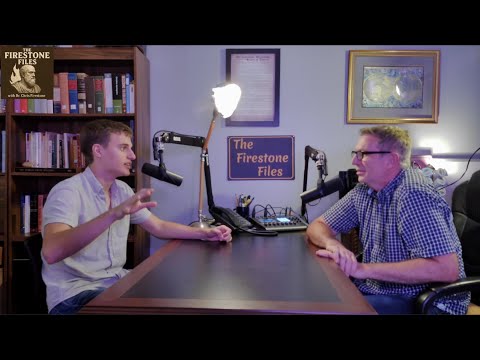
In episode twenty-nine, Dr. Firestone interviews Rebekah Firestone, his youngest daughter and second youngest child. They discuss Rebekah's youth, her experience as a Firestone kid, and her plans for the future.
The Firestone Files: Letters to My Grandchildren is a podcast hosted by Dr. Chris Firestone. In it, Dr. Firestone uses his expertise in philosophy and worldview to bring answers to profound questions to bear on the mundane of life through personal anecdotes and family stories.
Transcript
Hey everybody, welcome to the Firestone Files. I am Dr. Chris Firestone and today I have with me one of my children, Rebecca Firestone, here on the Files. Looking forward to it. That's coming at you next on the Firestone Files. All right. Well, we are here um in a unique location. Actually, I'm able to shoot this only because we are on a a Christmas New Year's family uh get together. And with me here is Rebecca Firestone. Welcome. Thank you. the people on the Firestone Files will know that you're my youngest daughter, a second youngest, I guess, child of five.
And uh what they might not know is that we tried to do this uh this interview over the summer had a few I don't know if they were technological issues or how would you describe our last attempt at this? Well, it was about somewhere between 90 and 100° in his office space. I don't think we had the AC turned on. We had his big lights shining down on us. We were both just sweating and yeah, it was not a great situation. Um, if you watch some of the earlier episodes, you'll see me at my desk and sometimes I interview people on one on both sides of the desk there. And uh, yeah, I guess the AC was out.
It's a little rough in Hot Springs, Arkansas in the summer. So, that's not necessarily the best time to do it. Um, we do have some footage from that that might be usable. So, if I do interject some of that into the conversation here, uh, you'll know, you'll you might get bounced around a little bit because I thought there was some good stuff that we talked about, but uh, not ideal conditions and really didn't uh didn't finish that interview. So, here we are today starting over six months later. Okay. Well, let's see if we've got the the basics of where you're at in life now. Are you a senior at Taylor University?
Is that right? Correct. Yep. I'm graduating this May. And what? Remind me, what's your major there? I am a data science major with a concentration in political science and I'm minoring in honors. Okay. So, that's super cool. I'm in, you know, we're doing this a little bit backwards. Typically, I'm when I did these interviews with some of your siblings, I started in the young period and worked my way up, but I I thought I'd start there just to kind of get a sense of where you're at right now. Um, that major, did that is that something you came into college with or is that something you discovered?
No, not at all. Uh, mom actually sold my calculator um after I finished high school because she thought I was going to be completely done with all math classes. Okay. Um, I came in undecided, so I wasn't really sure what I wanted to major in. Um, but I liked that I can kind of take data science into almost any field. So, decided to go with that. Gain some technical skills and so far I really enjoyed it. So, it's worked out. That's super cool. Now, when did about how far in? So, you're a senior now. How far in did you make that discovery? I didn't actually officially declare my major until halfway through sophomore year.
Okay. But I started taking classes the beginning of my sophomore year. I see. Towards the data science major. I see. And I I thought I remember you telling me, tell me if I'm wrong about this, that that was a relatively new major at Taylor. Yes, we've had uh programs, degrees that are similar in the past, but I'm the going to be like the first official data science major from Taylor. That's that's super cool. Now, that is one aspect of your college experience. Um, there's another aspect though of your college experience that I want to explore because I think you not that long ago ran for Taylor uh University's cross country team in the nationals. Is that right?
Yep. this November. Okay. And I was unable to be there because of my commitments with prepar and other things going on, but your mother was there, I think. Was Andrew there as well? Correct. Yeah. Okay. And uh I know we're kind of working backwards here because you're a senior now. That went pretty well, I understand. Yeah, we won nationals, so that was pretty great. Yeah, that's super cool. And uh you've you were you were able to run at nationals. Is that the first time that you ran nationals? Yeah, I was an alternate the past two years. So, in cross country, for those of you who don't know, you at some meets you only run your top seven runners.
Yes. So, freshman year I was not even close to being there. And then the past sophomore and junior year, I was an alternate and then this year I got to run, which was pretty great just being a senior and being able to end that way. Yeah, that's that's incredible. I I know that I mean just running and I mean being an athlete in college is already because I we you know at champion we have athletics as part of our program but I know what these athletes go through to get where they get and um you jumped in as a freshman stayed the course and ended up uh running for the team in your senior year. That's uh it's pretty amazing. So um now running where does that begin for you? I mean is that you ran in high school? Is that right?
Yeah. I mean, I guess it it kind of begins all the way back when I was 11 years old or so. 10 11 years old running behind the high school with you and the Slooh, as we call it. I see. And now that's that's back in like middle school. But we didn't go to school. Yeah. Homeschooled. Um Well, this was I was just kind of tagging along with you. I guess you would go and do your whole workout thing and then me, sometimes Andrew, occasionally Emma would join you and we'd bike over there, do a lap around running and then some push-ups and sit-ups. And so when did you realize that you loved it or what what did you love about it?
I mean, what did what was it that I think when those like younger years? Um, we weren't we were just doing it for fun, you know? It was just a fun way, you know, we we'd race each other at the end. At some point, you would just take off and be like, "Catch me if you can." And then we'd see who could make it back to our bikes first. Um, I didn't at that point, I wasn't even considering like running on a team. It was just something that we did for fitness. So, after those couple years in middle school, those summers, I kind of left running, I guess you could say. I mean, I wasn't really doing that much of it.
Um, but I would say that was probably the foundation of like my fitness journey. Um, and then it was also ice skating as well. So, I think I was actually the first Firestone kid to pick up the sport. I don't remember if you know how that went down, but I don't remember how you started, but I do remember you being proficient and growing in that sport and going to the rink and picking you up a lot. Mom would be of course very much involved with that because she was primary teacher in homeschool and uh but yeah, I'm curious about both those overlapping running and skating.
Well, I mean, when I was little, the running was just kind of tagging along with you. It would I wouldn't call that necessarily like a sport I was doing, right? And then I started skating when I was 8 years old. It was all of us kids heading over to the rank with mom. I see. And that was started off with just being once a week and then we added more practice days, that kind of thing. I mean, I have memories of you with your computer up in the stands just typing away, getting some work done, doing some grading while we're out there.
Oh, yes. Practicing now. Yeah. I think we had something like it was probably was one year when I was in middle school where we had a particular day of the week where you would come and pick me up and they would have like this two-hour practice session in the middle of the day that was like pretty great cuz it's the middle of the day so there's not that many people there and then I would skate for you know the two hours and you would get some work. I I to be honest it's a little fuzzy in my mind but I'm pretty sure we did that.
remember because yeah, I'd have to dress warmly even if it were, you know, warm outside because that's genuine. They had this like the heaters above the stands, but they would be off because there's nobody there during the day. And you would come in and you would like reach up there, turn the heat on for yourself, and then sit and get your work done. It was It was nice to be able to double dip, watch you practice a bit, but also be able to do emails and do other stuff for work. Yeah, that was a It's a pretty cool thing. So, you were you went kind of up the ranks in skating. Was there a point at which that was a law of diminishing returns or you weren't enjoying it as much or what?
Yeah, I mean, I always really enjoyed skating. I think it was it's a difficult sport because um you just have to have so much ice time and that's really really demanding for elite levels. like people are literally like, you know, you have to devote your entire life to it and we weren't really on that level and able to make that jump. Um, some people where I do remember what what was the name of the skater at Highland Park this Jason Brown. Jason Brown. Okay. Yeah. That was the claim to fame of of your particular rank that you practice. Yes. Um, Jason Brown like Highland Park Figure Skating Club was his home Okay.
rank. So, and you you did see him now and then, didn't you? Yeah, he would occasionally when he came home, I think from like training in Colorado or wherever he was training at. Um, and then when he was at went to the Olympics for the first time, he like there was like a whole viewing party for him. I see. Then, and you would do year-end shows as well. In fact, I saw you and your mom were looking at one back at the house. Yeah, we have DVDs of them. Okay. And what time of year was that that trip?
I believe it was the spring. Okay. So, you've been practicing, working on some routines, and then everybody Yeah. participated in that. Yeah. Um, those were a lot of fun. Yeah. Every spring. So, there's going to be a transition there somewhere from skating to running for you. Yes. And what is that? High school transition. Yeah. So sophomore year of high school, uh, two of my friends invited me to try out the cross country team. They were both on it and they were really enjoying it. Yes. So I started going to just like a couple running like summer running practices that summer before sophomore year. Um, it was really just running like, you know, a couple times a week, couple miles.
I think the first run we did it was like just like around the back fields of Deerfield High School. Probably about a mile, right? Probably around I don't know 11 12 minutes and I was completely dead. So this is this is sophomore year. You're running 11 12 minute miles. Yeah. Fast forward to the end of your senior year. What do you what kind of weekly workouts are you doing at the end of your senior year? Yeah, I think I was running around like 40ish miles a week during peak weeks and then we basically had the same workout week like schedule every single week throughout the entire year. It would be trying to remember I think it was tempos every Tuesday and then 400 workouts every Thursday and then a long run on Saturday.
And it was the same thing every single week. But you'd like start out at the beginning of the season like at a lower amount. So it'd be 4x400 you'd start out with and then we'd go up and I think the most we ever got to was maybe like 16 by 400. So it was decent mileage but So let me get this straight. You're doing three or four miles a week and you pushed it to 30 or 40 miles a week in the course of a couple of years. Um yes. So that's a that's is that something that you knew you were after or did it just sort of like a frog in boiling water or you know you sort of fell into it?
Yeah. I think something that was always hard with skating was just that um I wasn't able to progress as quickly as I wanted to. Mainly due to the fact that I wasn't skating every single day, right? Um and I wasn't taking private lessons multiple times a week like a lot of the other skaters were. Yes. So, something that was really nice with running is that I could just go out there and do it. And if I made my training plan and stuck to it, I could improve and get better. And it's literally just you just need to have running shoes and that's it. Like I I mean, now I have a fancier watch, but I didn't get a nicer watch until like my last year in high school. I was just literally planning my routes like on Google Maps and then running them.
Okay. So, that that became over the course of your high school career a bigger part of your life. Yes. Almost by necessity because the sheer number of minutes it took to do the workouts took a lot longer. Yeah. And recovery I think probably took longer. That kind of stuff. Yeah. Um did you become sort of health consscious as well in terms of eating better? And uh not really. I would say that most of my better eating habits which are mainly just eating more which is what the main thing I think I was lacking in high school. Okay. occurred in college.
I see. There wasn't I would not say my high school training had as much nuance in Now was that now if if we think about that transition from high school to college? Um what factored into going to Taylor? Did the running factor in in a major way or minor way or Well, by senior year I would say I was enjoying running as much as I ever had. I really didn't I didn't see myself pursuing running after high school just because I didn't think I was fast enough. Um just being in the Chicago region, you know, there's a lot of really good competitors. So, um you know, I wasn't like winning sectionals or regionals or state or anything.
Um and then I did reach out to a couple of coaches, but it was less like you know, like, oh, if I I I want to run, like, it was more just like, oh, maybe I'll look into this on the side and see if it's something that I'm interested in. And I don't know if you remember my visit with Taylor. It was actually my first college visit that we did on my little college tours.
Yes, I do remember cuz we ended up sneaking into what the locker, didn't we, your locker room? Yes. So, I was not at all looking at running at Taylor. We hadn't I hadn't reached out to the coach. Um, I like knew that they were like a decent program, but I hadn't looked in really looked into it at all. So, remember this. So, yeah, we bumped into some people. Mhm. We were touring the athletic facility and we had stopped at like the cross country locker room. I was like, "Oh, dad, look, cross country." There's like a big purple banner on the door with like just an image of a woman running.
And right as we stop and are I'm pointing at the door behind us is coach Q and he's like I have no neither of us have any idea who he is yet. He's like do you want to see inside? And we're like who are you? Um, but yeah, it just so happened that Coach Q was there at K-ASAC, the the athletics facility, and he was putting in the gear for like into like new gear into the locker room. And we ended up having a conversation with him about running, about the program, and you know, he asked like, "Oh, so what are your times?" And I was like, "Oh goodness, here we go.
I'm going to be, you know, I'm going to be exposed. I wasn't I was yeah that's kind of what was going through my minds. Um I really wasn't happy with a lot of my times and so I think I told him my mile time which at the time was like I think it was like a 5:42 or something and he's like well you know stay in touch what times you run this fall um and you know there's potential for a spot on the team.
We visited in the summer of your junior senior year going into senior year that summer. Yeah. Um and yeah, now here I am at Taylor. Wow. And that that journey there was it was there competitors or was Staylor really like cream rising through the top sort of obviously for you? Well, I mean a really big piece of my decision was like the tuition waiver thing that's available through CCCU colleges, right? um with you working at one. So I got that at Lucas Hendrick's College or college. That's right. In Arkansas and that was a really big contender for me. Just that's just outside Little Rock. So that would have put you within about an hour of of Hot Springs.
Mhm. Which would have been kind of cool because your grandfather was there. Yeah. Um, I think that the difficult piece of that decision is that we weren't able to visit Hrix and it was also a college that I had kind of found on my own and we didn't really have that many connections, right? So, I mean, I got the like the full tuition covered there. Um, they also didn't have a great I don't I think they're D3. They they didn't have like a great cross country program, but it was I don't know. So that was one that we were like because we didn't have any other offers. We had a deadline. I don't know if you remember this. They gave us a deadline of like you have to give us the answer by this date and we were like okay if you don't get another offer I mean I have I didn't have money if I rejected this one.
Oh yes there was then I mean I hadn't heard back from a number of other schools yet but it was kind of a gamble right? So, but it worked out. Yeah, it worked out because I rejected it and then Taylor Taylor was kind of cool because it's a good school. Four hours, is that right? From Chicago land without traffic. Okay. Yeah. Four plus hours from from our house in Deerfield before we left for Hot Springs. And uh yeah, it's sort of on the way to Hot Springs. And so it was and it's on the way to Nashville. It's on the way to Nashville a little bit more.
Yeah. Yeah. And so anyway, ended up being a pretty good logistical decision as well. We've talked a little bit about the life of the mind was your major life of the body running and so forth. Now you you grew up in the Firestone house and we went to more suburban church and so forth. And where was your friend groups throughout this period? Were they at church? Were they at school? Were they at home? Uh, primarily. Yeah. Um, I would say church was a big one. I also went to public school in fourth grade. That's right. Met a few friends that way as well. Um, neighbors.
I would say I was super close with anyone at skating, but I mean, I had people I talked to, friends there. Okay. Um, and just so people know, you of all the Fire Stones who went through homeschool K through 8th grade, you're the only one who took a detour into the public school system during that period. And that was in fourth grade. Mhm. Um, and so, yeah, I don't know. It might be worth you explaining that. How'd that happen? Why did that? Well, it was a long time ago, but from my memory, I I guess I just really wanted to do something different than my siblings.
I had read a lot of books about school. I thought it could be fun. Yes. It was novel. It was new. It was okay. just an I I really don't know why I was so fixated on going but I did I do recall something about your personal tell me if I'm wrong about this but doing something that's different from your siblings was kind of a fun idea yes definitely that was a big motivator also getting out of the house because we were a little bit Were we in Williams or we in chapel we were in chapel we're in chapel at that point that's the bigger house so it wasn't space considerations as much as it was just the experience.
I would say most people would say eight people in one house. Even if it's a slightly larger house, is still quite a few people, but Okay. I guess that's up to interpretation. I see. I see. So, we talked a little bit about the high school and is there anything else about the So, you're finishing up college now. Um, what's next in my life after college? Yeah. Are you looking at you're looking at what? Some jobs, internships. Well, this is actually a little bit of a rough spot for me right now. All right. You should know this. Um, yeah. I mean, I You still got a lot of time.
You got a whole semester left. That's true. That's true. Yeah. I mean, I'm right now I'm looking for a job to work. Not exactly sure what I want to do specifically. I would love to go to back to school potentially. So, you're looking at some potential options. I know you talk about potentially moving to a different city. Um, and looking for opportunities there, but biggest thing right now is just graduate, get done with school. Yep. Uh, that'll be a big corner. All right. Well, you know, I have asked all of your other siblings about times earlier. You you pretty much grew up in the bigger house, right? In the chapel house.
Um I think I was I think I was going into first grade when we moved houses. So I have memories from Williams, but Okay. I would say the majority of my childhood was at Chapel Court. Okay. Do you remember uh rooming with your sisters in in the Williams house? You do? Yes. Okay. And that was with three of you in one room. Mhm. Yeah, it was Hannah in the loft bed and then Emma and I in the bunk bed. I see. Yeah. Okay. Was that formative or was it short-lived and not really that significant for you? You mean like living with the two other sisters?
Yeah. In a smaller house. Um I mean I think it many shenanigans happened because of the combined space. At one point, I was renting the back half of my bed to Hannah for her office space for the business that she was running. That sounds about right. Renting to Hannah. Okay. I mean, all I really had as a commodity was my my bed space and that was it. I had to make money somehow. Oh my goodness. I I didn't realize there was this uh this this economy, this black market economy. Yeah, there was. And then we would buy uh cardboard like shelves from Matthew.
She like had a desk that Matthew made. And then I think at one point we had she was using Emma as a housekeeper if my memory is correct. Okay. So yeah, there was a whole economy going on. Oh wow. Fascinating. And so um the move then um to the newer house, did that impact you? You you ended up rooming with Emma, you know, so you dropped a roommate. Yes. Hannah got her own room. And uh the move to the new house. Is that that was an upgrade? Yeah. I mean, I remember there was some things we were really upset about.
Um one of them was we had this tree in like our front yard of our old house that we would we had like a game that we'd play there. And so we were really upset that we were going to be losing that tree. I I I specifically remember like us like crying about it and just being like really upset. But I also remember when Emma and I had our like new room, we were like dancing around and singing in it cuz we were really excited. So there was, you know, there was both emotions present. I see. Now, did you ever have a room to yourself at the Yes. Yeah. When was that? How did that happen? Well, um, after Hannah moved out, um, and the pierces moved in.
Okay. That meant we were still together. So, there's Emma and I in one room, Matthew and Andrew, and then Matthew and Josiah and Cassandra and Alex, the four other rooms upstairs. And then once the Pierces moved out, we were like, "Oh, we could all four of us have our own rooms now." But that did not happen. Emma and I stayed together and I was very upset about it at the time. Whole journal entries that are like, "Can't believe this is happening. My younger brother is getting his own room and I'm still stuck with Emma." Um, but then after Matthew went to college, I got my own room.
So I I don't remember when that was. I think it was maybe it was maybe freshman year of high school. Yes. Um Here you go. Always some shenanigans at the Fire Stones. Okay. Not surprisingly, they want the car keys. Anyway, um uh yeah, so we we have that uh that going on there. And now that period of time from in Williams, what what age were you when you what year in school were you when you went into the uh Chapel House? Going into first grade. First grade. Okay. I believe it really was your formative a lot of years there. Yeah.
In the Chapel House. Okay. Is there um I'm trying to do you have memories of good, bad, and indifferent to the homeschooling and all the extra bodies in the house? I mean, what is your memory that there were a lot of kids? Few kids. Yeah, I mean definitely tradeoffs for sure. Um it was always a lot of fun to have just like a bunch of, you know, kids around that we could do stuff with. Like I mean the game possibilities expand when you've got 10 players as opposed to like two or three. So um that was always great. I understood from your mom as I talked to you about you coming back to homeschool from fourth grade.
Is it because the fact that you had some additional bodies in there? Yeah. after fourth grade, uh, mom and you gave me the chance to kind of like decide whether I want to stick going to public school or come back to home school. And I was actually I think I was leaning towards public school. I just I mean I had my friends there and I was enjoying certain aspects of it. So, but then we learned that two of our close family friends were going to be in one of them was like my childhood best friend was going to be homeschooled with us the next year. So that immediately I think I was like tearing up in the car and when mom told me and I was like I'm going to be homeschooled. I'm like I was like immediately switched up and I was like I'm totally going back. So yeah, it was a big decision. I see. That's was the the tablets, right?
Mhm. Okay. Shane and Shira. Yeah, I remember mom doing sort of double duty on the uh homeschooling front when the tables started homeschooling with us as well. And then of course daycare with all that. Fortunately, we had Barb to pitch in now and then, but primarily your mom was pretty pretty uh disciplined with all that and and really move that ball forward. Um, are there any any experiences that you remember from that whole period story or some formative experience that stands out to you? Or is it more of the the whole thing? Um, I think some of my fondest memories of the homeschooling time period are when we were just like playing.
Um, whether that be I don't know, we had so many different games and a lot of them carried on for many, many weeks with similar story lines. Um, or Nerf gun Wars. That was one of my favorites. Um, we'd go to the park. We we had home phones home phones. So, we'd call up the other homeschool kids occasionally and we'd all meet at like a local park. We'd get our bikes. Um, and we play cherry bomb or various games of that nature. Um, I think those were just great experiences because felt very empowering. You know, we had we got to decide what we wanted to do.
We were kind of off on our own little adventures. Um, so I think those were very formative times. We did take a few family vacations and things during that period. I mean, I don't know if you remember the ones out to the east coast. Oh, Williamsburg, James Town. Yeah. Yes. DC. Went to DC. Went to DC. And we also, I think somewhere in there we went to Disney World. Yeah. That I think was when I was in like sixth grade. Okay. Maybe. Did those were those major things just kind of a nice? I think some of like the historical ones that we did I would probably appreciate more now, right?
Um lots of walking, lots of historical facts. Uh I mean I still have like you know good memories of those times. Disney World was fun. That was kind of I I would say it's probably something that I would still keep doing once every 20 to 30 years. But it it was still a fun time. Um we also did the Springfield trips if you remember those. Yes. I forgot about I don't know if they went there once or twice. Yeah. To see the Lincoln the Lincoln stuff. Yeah. And and his grave was there and some other things like that.
Um some of that was pretty cool. And we did you see much of hot springs during those years. Was that part of our um Yeah. Okay. And so we go there in the summers. Normally the summers um occasionally it was just Andrew and I. You'd take the two of us down. I think that happened two to three times maybe. Oh, we have we have a good story from one of those. I know what you're thinking about right as I'm Yeah, the light bulb went off there because I think we got to tell that story. Yeah. Uh we were uh taking the Amtrak train out Hot Springs and uh I was actually on my game that day because I had surprisingly so.
Yeah. Two hours ahead when we we had packed sandwiches. Yeah. To eat once we got to Union Station. Yeah. And um Yeah, that was uh that was pretty good. Now, in order to get to Union Station, we have to take the Metra. in Deerfield and it's usually about I guess 40 minutes or so to get to Union Station. It's such a great route because it's door todo. We get on the train at the metro. It gets off at Union Station. We hop on our other train 100 yards away is the next train right to uh Melvin, Arkansas, which is really close to Hot Springs. So that day uh something unusual happened.
The train died about I don't know two stops in to the trip. Yeah, it was really strange. It was like it would go for a little bit, then it stopped, then it' go for a little bit, then stop, then one time it stopped, and it was clear it was not going to be starting anytime soon. Now, we had I had a remember big backpacks. We had so much stuff. So much stuff. We also had cooler and uh I had like a CD player and like I don't know five or six different books on CD like no because we were so far ahead of the curve on time.
We really didn't worry about it at first. They said no we're going to get the engine started and yeah they eventually did get it started and we moved out again. Now we'd lost I don't know 30 minutes at that point and they got it going again. Okay, well, we're still in great shape. Still going to be We won't be an hour early, but we may like 30 minutes early or something. But I don't think it was a couple stops later that it died again. Yeah. Yep. And so, um, it was at that point where we started like, uhoh, we're actually in danger of missing our Yeah. It was one of those moments where everyone just like starts talking to each other and like, what are we going to do?
Yeah. Where do you need to be? Yeah. We got to be Yeah. Like this is not good. Another family sitting with us that was headed to I think No, no. It was a group of um women I believe. Okay. You're thinking they were like headed for some some exotic Amtrak train. Yeah. Headed to like the Grand Canyon possibly. That sounds right. Yeah. Something along those lines. And they were ahead of the curve as well, but they were also getting way behind. Mhm. And there was a a business guy in there who uh we we were looking at our Ubers cuz we're thinking, "Okay, maybe we can take an Uber."
Mhm. And the Uber was like, "Uhoh, okay, if we jumped out out of the train now, then be 15 minutes early. Maybe we should jump out of the train." But if this train got running again, Yeah. Anyway, I waited and waited and waited. I don't know how what were you how were you processing my I was stressed. We were all a little stressed except for Andrew. I think he was a little bit too young to be like super stressed. Okay. Yeah. Well, it got to a point where I'm looking at the Uber ride and it was like if we jumped out now, we'd have five minutes to get to our train once the Uber dropped us off. It was at that point some business guy had pried the doors of the train.
Yeah. Mind you, we are not at a train station. We are actually at a like railroad crossing. Like we're on a like a street where we're we're covering the street and there's actually long lines of cars stuck in the street. Anyway, I'm looking at my Uber. I'm looking at the door. The guy has the door pried open and he looks up at me. Remember that? Yeah. He says, "This is your time." Something I can't remember. He's like, "Yeah, it's now or never. It's now or never." Yeah. now or never. And I look at the kids. What do you guys think? I don't know if we can trust this train.
Let's go. Grabbed all our stuff and jumped out of the train in the middle of the street there. Hit the Uber button to call the Uber. The problem was the Uber was stuck in traffic and couldn't get to us. The train had been there for so long that there was like traffic built up all around it. But I was I think I was able to call him and say, "Hey, we're running in the street here. if you see us, could you pull out and turn around? We ended up jumping in the Uber. And literally, it was like, you're right on time. As in, we're arriving to Union at the time our train is leaving.
That's right. And so there was like no margin for error. And we still had to get out of the Uber and get down to the train, which was probably going to take a couple of minutes at least, you know. Anyway, I said to the Uber driver, he could probably see the stress in our face. Well, we were running towards the Uber, physically running. You were like, "Go, kids." And so, we were kind of ahead of you cuz you had more stuff. So, you weren't able to move as quickly. So, I think he understood how Yeah, he probably saw the desperation. So, we loaded everything into his his car and got in.
And that guy, as you recall, he was moving in and out of traffic. and he got us to the uh Amtrak station and I think we had one or two minutes to spare that he probably got us and uh we just headed out and at that point I said follow me kids. No, you were like hold on to me kids and we had a little train. We had a train go made a beline and uh I did something that I did two things that I very rarely do. Um, one is I just kept going and I went into the Amtrak station past all the workers there right toward the train.
Are you talking about how every they were all lined up for the train that was supposed to be departing after ours? Yeah. Our train had already cleared. They had already completely boarded our train. Yes. So, we had to get through the crowds of people that were waiting for the next train and I decided that's not going to happen. Yeah. and we went around the gates and headed straight for the train. And I thought, hey, that was an amazing move until one of the service people there, a conductor or somebody grabbed me, said, "You can't do that. Where do you think you're going?" And then I used I mean, so that one one principle there was keep walking.
That actually didn't work. He didn't stop us. Did you remember that incident? Not I remember you getting in trouble with someone. I yeah I've probably well I I used I used principle number two and that is as soon as he said something to me I looked him in the eye said sir can you help us that's our train and it's leaving now and he looked me in the eye and he said follow me and now we had a fourperson train heading to the train and uh he got us in the doors and literally as as as all three of us got on the door that I have a distinct memory of us. And we were like going to get our seats. The car was like the train was moving. We hadn't sat down.
The train was moving. Oh man, I was just like beside myself. But we made it on there and um Yeah. I did not want to have to go back home and then fight with Amtrak for tickets. Yeah. It would have been a nightmare. Yeah. And then go back some other day and but boy, it worked out for us. So, I don't know if there's any other analogous stories to that one, but that's the kind of thing adventures we would go on. You you guys were the last two kids of the five. Mhm. And um I mean I think of the Fire Stones in terms of Hannah and Matthew, the older ones born in Scotland, kind of a pair.
And we have Emma in the middle. Then we have Becca and Andrew uh is the last two. and think of you guys as a pair sometimes. Is that how you think of the Fire Stones or do you have a different sort of way in which you process the five kids? I think that's pretty accurate. Um I mean a lot of how the fin the family dynamics worked is you know we'd lose a kid to high school and then we'd lose a kid to college. Yes. So, I think that there's kind of that um time. I don't know how you'd exactly describe that, but once Hannah left, then the next four of us were a group. Once Matthew left, then the next three of us were a group. And so, I think what we were saying is true, but I think you could also look at it that way, especially with the homeschooling piece cuz it was like Hannah was kind of the unofficial leader of our like little group of like homeschooled kids.
Yes. Um and the daycare kids, and then when she was off to high school, then it was Matthew. Um, and it kind of progressed like that. Yeah, I recall when I was interviewing Hannah, the dynamic was different because she has memories of being the only one or Matthew as a baby where she and I would go do stuff and there really wasn't anybody else, but you were like losing them, not gaining. Yeah. Yeah. No, that's interesting. I thought about that. Yeah, it's an interesting sort of psychological piece and I I don't exactly some people smarter than I will have to figure out how that all plays out.
So, so that's not a I mean you and Andrew were that was pretty common for us back then because of the way in which people had gone off to school or whatever that uh you know we would go off on our own adventures at that time. All right. Well, I mean this has all been fascinating. I'm glad we had this followup opportunity to talk about your um really about your college experience and your high school transition to college and so forth. Some of that stuff we didn't get to because of the conditions under which we had that first interview, but I don't know how we're going to actually put this sequence together, but uh I feel pretty good about some of the ground we've covered.
We're in this macro level. I really would love to have you come back on the Firestone Files maybe sometime down the road when uh you know we have some new things to talk about and a deeper dive maybe on your vocation or you know what you're doing uh at that point in your life. But for now, I really enjoyed this opportunity to talk on this, excuse me, on this macro level and uh similar to your other siblings and so hopefully future years can can kind of compare those and kind of learn insights about the Firestones from all that. So, thank you for doing that. I appreciate it.
No, thanks for having me. Well, that concludes the interview with Rebecca Firestone here on the Firestone File. So glad that you were here to listen and I look forward to you joining us next time soon. Bye for now. Thanks for stopping by to spend some time with me here on the Firestone Files. I hope today's reflections offered you some new insights and perspective on life. If you enjoyed the episode or found it valuable, I'd appreciate it if you'd take a moment to like, subscribe, and share it with someone you care about.
I'd also love to hear your thoughts. What resonated with you? What challenged you? Or what would you like to hear more about in future episodes? Drop a comment below or send in your suggestions to the email in the description. Your input helps shape where we go next. This has been Dr. Chris Firestone. Until next time, keep asking the big questions. And remember, the kingdom journey is always best with your friends. Further up and further in. Bye for now.
Turn it around.
Auto-generated from YouTube captions and lightly formatted; it may contain errors.
Related episodes
More from Meet the Firestones, then the nearest by date.
 Meet the Firestones45:41
 Meet the Firestones1:14:40
 Meet the Firestones48:56