
Charlie Kirk and Socrates
Summary
Drawing on the Gorgias and the Apology he was teaching at Prep Year, Dr. Firestone casts Charlie Kirk as a contemporary Christian Socrates who exposed the sophistry of the modern university, and recalls that Kirk's real vision was something closer to Aristotle's Lyceum, a place to pursue virtue and human flourishing.
Show notes
In episode five, Dr. Firestone continues the hiatus from his standard programing to discuss the relationship between Charlie Kirk and Socrates. From the Socratic method to the Sophists who opposed them, the parallels may surprise you.
Transcript
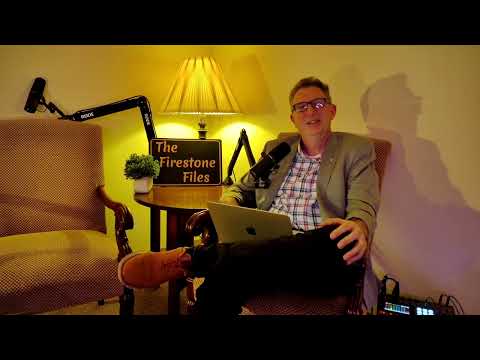
Welcome back to the Firestone Files. I am Dr. Chris Firestone and today we're going to continue on talking about Charlie Kirk, the contemporary Christian Socrates. That's coming at you today on the Firestone Files. Well, welcome back everybody. It's been quite an amazing week. Um, I did that podcast as a special one offer I thought historic moment, but this continues to be historic times. And so today I want to offer another kind of tribute piece to Charlie Kirk. When this podcast drops it will be a day after the memorial uh to Charlie Kirk in Phoenix at State Farm Stadium.
I'll be going to that event along with many other Turning Point staff and of course thousands upon thousands of other people who want to pay their respects to Charlie. Um, from what I can tell with the little bit of inside information that I have is that that stadium holds up to 70,000 and they have um more than 250,000 registered. So, not sure how that's going to happen. Um but um so this guy his person in work have been shown to be a social a cultural an academic a political watershed moment in the west here. Charlie often talk about saving western civilization. I always thought it was a little bit tongue and cheek. That is a huge ask. But ever since I did my op-ed with Marlon Delasio on the Bible belt being the last stand of the western intellectual tradition and its relationship to the Christian faith.
I have come to believe that he really did believe that his work with Turning Point, his work on campuses around the country was able to be the catalyst for saving Western civilization. I mean, this sounds like an audacious claim on one level, but this guy actually backed it up. He backed it up with his actions by continuing to go into universities and to stake claims and to promote open rational discourse. But he did so while building one of the largest organizations and youth organizations ever seen on this planet. And uh that's a huge accomplishment. And I have just a very small role to play in that with Turning Point Education.
And uh I was praying with the guys that tonight at uh at our mentor sort of small group and um I talked about Turning Point education in general and Turning Point prepared as being the point of the spear of the of the movement that Charlie was really all about. It's the newest thing that Turning Point was doing. It's the only thing that hasn't really shut down for a couple weeks after his assassination because education can't stop. We got students and we've got to move forward.
So, we are doing just that. And it's really on the strength of Erica and Charlie and Charlie's legacy and Erica's strength that um that we're able to keep going. That's what he would want us to do. His ministry to universities impacted me. I wouldn't be working here. I wouldn't be doing this if it wasn't for Charlie, his success, his message, and his person. He gave us a kind of methodology, a methodology that I have grown to greatly respect. It was one that I was struggling to put together for years, but this guy, 18-year-old all the way to a 31y old, just went out and did it.
And I have been doing some thinking in about it. I think it's basically a four-fold strategy. Penetrate the university context. Speak to young people, not to the professors. Oh, he would often invite the professors forward too. But the young people are voters. The young people are citizens. The young people will determine the fate of this country and ultimately the fate of Western civilization. So he took it upon himself to engage them. Zero in on the foundations. Don't get caught up in all sorts of other philosophical and theological argumentation. Although he was wellversed in many of these arguments.
Focus on the Bible. Focus on the moments in the Western intellectual tradition that are noble, true, and good and the founding documents of our country. Those are the three things. I've talked about these in the last podcast, but I think they're worth mentioning again. They're what they're they're the centerpiece really of Turning Point Education Prep here. And I think they're the watershed in Charlie's own vision for what students absolutely had to have to be upstanding American biblical citizens. And the fourth thing I think in Charlie's methodology was debate the antagonist. come to the microphone, say what you have to say. Allow me to respond.
Allow me to ask questions and see if your worldview, your vision, your view of humanity, your anthropology as it were, stands up to close scrutiny. And I think time and again he showed the emperor has no clothes on and that many of the students coming out of our universities simply are illquipped with the basics in life. And so Charlie, he he he was transparent. He showed us that he showed us that much that the value propositions of contemporary universities are low. They put you into debt. They teach you a lot of bad ideas. You don't know the basics of who you are in the in the in in in history.
and they really are doing a disservice that we're paying a heavy price for both as a culture and as individuals who go to the universities and that brought up to all of us here at Turning Point Education really turning point prepared Greek thought and basically I'm in the in that week I'm studying the sophist with the students we're reading those texts we're reading for example gorgeous Uthifro uh some of other of of Plato's writings. So we're looking at the sophists, we're looking at Socrates, we're looking at Plato, we're looking at Aristotle this week and all in the original writings. Um not in the Greek, but in English.
You know, there's only so much you can do in a one-year program. Um, but we're getting a sense for those foundational elements of the Bible and the Western intellectual tradition that Charlie thought was so valuable to understanding who we are in the 21st century here in America. Um it dawned on me uh that um in the in the process of but grieving over the loss of Charlie but also studying the life of Socrates through the eyes of Plato that Socrates and Charlie had an awful lot in common.
They possess many of the same qualities. And so, you know, there's plenty of, you know, differences. Socrates lived about 300 years before Christ. So he certainly wasn't a Christian. Um but some of the early church um leaders, theologians, fathers of the church saw the likes of Socrates and some of the Greeks as thinkers that were kind of kindred spirits. And so this relationship between Athens and Jerusalem has been historically um of interest to Christians, theologians and the church. People like Tertullian famously said that what does you know rhetorically asked you know what does Athens have to do with Jerusalem? But most Christians weren't like Tertullian in that sense.
they were they knew that there was a kind of faith and reason relationship between the two. And um that whole notion of of of the church expanding so rapidly to the west and into Europe um is directly related to the fact that the Greco Roman tradition had paved the way both physically with pavement but also intellectually with sound reasoning given their limited nature. They didn't have revelation, but they had the mind and they utilized it with lots of critical rigor and in in in in ways that paved the way for Christian ministry to thrive eventually. And we see that of course in the Bible with Paul.
He goes out west, the famous um you know the famous uh engagement there in Athens on Mars Hill with the unknown god and so forth. All of that's made possible because of Greco Roman philosophy. Now, it had kind of in a sense seen its heyday by then, but it was still culturally well understood, well- definfined and created a uh a a a fine pathway for Christian advancement.
And so um Socrates, Plato, Aristotle, it seems that they were kindred spirits in sort of tangible philosophical ways as well. you know, Socrates's arguments through the mouthpiece or through through uh through the writings of Plato for the existence of the soul, the possibility of an afterlife, the importance of virtue and uh and the pursuit of justice. Um they were kind of emerging theists, you know, they'd come out of a polytheistic culture, but there's lots of the echoes of just plain theism that are emerging there. So we have this fertile soil for monotheism for a god they didn't fully understand that would ultimately be fleshed out by the Christian worldview.
All of these things make him a kind of kindred spirit to Christian thought before Christ. Now one difference that's important to mention here is that the university was not yet born. And so Socrates isn't going into any universities as a sort of Socratic gadfly asking questions and so forth because Plato of course establishes the academy which used to be the name to of turning point. We got we we we moved away from the Turning Point Academy made it turning point education.
Um, and I don't know if the leaders of Turning Point knew how um, philosophically sound that would be because I I think that Aristotle's lysum is probably a little closer to how Charlie parsed out his Socratic inclinations rather than the academy. I guess we could have called ourselves Turning Point Lysum in that sense. That was a word actually Charlie used on the phone call with me. He said, "Are you talking about a kind of lysm?" And I go, "Yeah, I guess I am." I had thought of it that way, but Charlie had. He had already thought about the implications of that.
And as we moved away from Turning Point Academy to Turning Point Prep, I it sort of has dawned on me the significance of that statement. So that's uh that's the classes that we're working on um and how there's some parallels between you know what we're what I was thinking about with Socrates and what I'm now seeing aresh in Charlie's work over the last 13 years. Uh the context is interesting. Socrates um was his context was intellectually diverse. It was loaded with sophists. Now I've already mentioned that we're going to talk a little bit about sophism and sophism is you know sophistry is typically thought of as as a negative and in fact that's how I'm going to talk about it as well.
Uh in class we've already been talking about some of the sophist writings. I've mentioned Gorgius already. Gorgius was a u self-described orator and uh the essay Gorgius is a fairly lengthy one. We only we're only reading about a third of it because it's so lengthy, but we're reading the first part where Gorgius and Socrates are in dialogue with one another. And uh the essay is really about the Socratic method and how he uses it to figure out what Gorgius means by being an ortor. And what that job of oration which is really kind of like public speaking contributes to human flourishing into knowledge.
Gorgius seems to think that it's the highest end of human beings to be orators because oration we discover is not really a positive contribution to knowledge as say uh per se but uh requires a kind of person of virtue and gorgeous admits as much through Socrates's sort of questioning that oration itself can be used for good or for evil and it kind of requires a a virtue or or a person of virtue who's exercising it. So he catches Gorgius in a contradiction. At first Gorgius said that oration is a good in itself and it leads to a pursuit of the best.
But after questioning from Socrates, he gets gorgeous to see or to admit that although it does have inherent kind of instrumental value, it does require a person of virtue to wield it in order for it to help human beings flourish or to pursue the good life. So um so that's an interesting outcome. And I mentioned this here because the the um the sophists in general provide the intellectual backdrop kind of a negative or dark intellectual backdrop because they're the uh they're the negative influencers in society even though they think they have their hand on the pulse of truth.
As long as they can convince other people that their position is right and persuade them to do what they want them to do, to do their bidding, the sophists believe that oration, the power of public speaking, saying what needs to be said to get your way is the way to have a successful life and they were paid for it. So the notoriously ancient Greece, these sophists would take money. Socrates wouldn't take money for his wisdom. He would just ask questions and be a kind of gadfly to show really the sofus don't have that much going for them. In fact, they are uh the verdict is still out. I think Socrates wants to say on whether or not they have any real contribution to make toward human flourishing.
So, Gorgius um sees the power of oration as persuasion without knowledge. And Socrates really tries to pick this apart. Is a person with knowledge more persuasive than the person without knowledge? And although Gorgius gives some ground on that saying, well, if a person is knowledgeable, they're sort of persuasive just by matter of fact, but the power of oration can overcome even the person of knowledge. And so it's kind of like this super skill that somebody might be able to have. And Socrates is a little bit uncomfortable with this because Gorgius seems to naively believe that the power of oruration is naturally pointed toward the good.
But once he is questioned by Socrates, we find out that no, it really could be evil as well. And so that's one of the sofas.
So we we spent a lot of time this past week talking about gorgeous in class and now you know we're moving on to other aspects of Plato's writings and to Aristotle but there are other sophists not just gorgeous you know those he's one that I mentioned there's protagoras man is the measure of all things so he is the sopus who is kind of the relativist subjectivist that thinks that human agency has the power over truth and so they they're sort of cousins one thinks the act of persu Persuasion is in and and and Gorgesius was also famous for laughter by be creating a humorous environment.
He could get people to do what he wants them to do. Protagoras was much more of a rigorous thinker and he argued that man is the measure of all things and he was a relativist in that sense. There's other there's other sophists that emerge. I in in in Plato's Republic for example book one there's Thrasamachus um in this whole discussion of justice and Thrasamachus is way ahead of his time here because he argues that power is what establishes the just. In other words, might makes right. If you go fast forward to Michelle Fuko in the 20 20th century, uh Michelle Fuko said things like history is written by the winners and that there isn't necessarily truth.
There's only power plays to be made. And so you can see that these sophists have something in common with our contemporary political discourse. For example, we have um we have, you know, the act of persuasion. We have the act that truth is determined by human beings through subjectivity. That man is the measure of things. And we have power dynamics that must lie behind those things. If you have those three things, you can u you know like you're like archimedes. You're like you can move the world. They create a kind of fulcrum point where you can move the entire world. thinks I'm the sophists.
And so by the time we get to Socrates's apology where he's in the Athenian court with over 500 senators and he's on trial for some trumped up charges, he's dealing with a majority of sophists and he's having to argue for truth, beauty, and goodness in his own veracity of his disposition uh and his actions in the face of people who simply want to see him die. So that brings me to this comparison I want to make between Socrates and Charlie Charlie. Um I was just doing some brainstorming after teaching here at PRA. There are some remarkable remarkable sort of conceptual and sort of interpersonal sim similarities between the two.
Um, you know, Socrates's life was cut short by a Senate that uh that was packed with sophists. And it kind of mirrors modern America where Charlie, his life was cut short by a bullet to the neck in a political climate that was packed with sofas. How many times have we seen speech for persuasion but not knowledge? How many times have we seen people waffling back and forth on concepts because they want to tickle the ears of the audience rather than be in the truth?
How many times have we seen laughter over deep dialogue? This is all we find with gorgius, one of the sofas back in the ancient Greek world, but we see it in our political culture as well. How about humanism that denies prayer and God in public spaces, that man is the measure of things. Such people are using nominalism and logic in kind of a kind of a warped alliance to get their own ends to make the world look like the way they want it to look rather than how it actually looks. My buddy Nathan Jacobs makes a lot in his uh Nathan Jacobs podcast about the distinction between nominalism and realism.
I think he's spot on on this that the nominalists think that the world has no adherence structures and that we can just name it and claim it and make it what it is for ourselves. That's has horrible results. It doesn't really make a lot of sense. Um but it is a way in which to try to get your way in society and the power dynamics that come from it. Um rather Nathan Jacobs talks about being a realist that is a person who recognizes there are inherent structures. When you kick against the goats of those inherent structures, you make you you you create problems for yourself, for your family, for your society, and for your nation.
And so we see that in the sophists. They're they're nominalists. They don't think that there's deeper truths, there's deeper goods, there's deeper beauties, and so forth. It's a scary scary development that we're seeing there. And so I'm concerned like a lot of other people these days about the sort of polarized environment that we have here in America and also in the West. But I'm concerned mainly that the deepest darkest problem are with the sophist and the supermen. And I put that in scare quotes of the far left. So what are these you know that's I think that's enough on on sort of that contextual similarities.
What are some of the similarities really of what Charlie's methodology was all about? The Socratic method seems to be one of those similarities. There's dialogue that needs to be had in our universities that gets beyond the mainstream position that's being sold by the universities because we know that that has been uh corrupted to some degree but also the dogma that we have in our own position. We want to be lifelong learners. I think that was something that in conversations with Charlie that I've had that that that he was all for that we need to be and to represent the very things that we're trying to promote. So he did these sort of prove me wrong, you know, challenging, you know, the faith, culture, politics in real time. Let's see what you really think unfiltered.
And really, I mean, this capture the imagination of young people. There's a guy who's willing to talk to us about any topic at any time with a perspective that has force and that you'd better do your homework and then come fully loaded as it were with arguments and positions and uh reasonable u you know perspectives or he'll show that your position is not worth much. Um, the search for truth, goodness, and beauty. I think that's a sort of standard trope really in Greek thought. Socrates in particular, Socrates cares for the soul. And to the extent that you're true, beautiful, and good and pursuing, you know, virtue as your highest ideal, then you are growing as a human being.
And that's really caring for your soul. If you go a different direction towards vice, it's the destruction of the soul. I think Socrates understood this. Charlie kind of in a Socratic fashion understood that God and God's world, God's word are the ultimate anchors for truth, beauty, and goodness. And so anytime that somebody claimed that they were in the truth and they had a position, he put up the measuring stick.
Sometimes he called it the like the owner's manual, the Bible, to see whether or not what they were saying was true or good or beautiful. And if it was offc center or warped in some way, he'd call them out on it. And he'd ask him to make a case for why it's better than the biblical position. Socrates um was all about exposing ignorance. No, he didn't expose ignorance for ignorance sake. He didn't try to like demean people. He tried to show them that their supposedly philos sophisticated understanding of an issue was really more like a you know a teenager's understanding or a fifth grader's understanding.
Charlie expressed, you know, exposed sort of leftist propaganda and the sort of elitist brainwashing that's happening in our universities and showed that students were not getting their money's worth. And that's kind of a similar thing to what Socrates was doing by showing that sophist wisdom wasn't really worth the price they were paying for it. both of these guys, and this is an interesting one. You know, in the apology, we we see the affidavit on Socrates, that he's an evildoer, he's corrupting the youth, he's making the worst appear, the better cause, stuff like that.
And so, we have, you know, this notion that Charlie was clearly kind of like Socrates, appealing to young people in large numbers. He taught them to embrace the deeper realities, what philosophers like me call the metaphysical realities and uh to do noble actions to be men as he put it that benefits society. One of the arguments he makes in crito this is like Socrates has been condemned to die. He's been put in under house arrest. He's got a guard there who's not really fully present. He's sort of there and not there. Crito shows up and KTO is one of his, you know, disciples, you might say.
And uh CTO is trying to talk him talk him into running away. And Socrates is trying to teach his young lad that he can't run away. He he ought not to run away. And his reasoning was fascinating. My reasoning is basically that the state and the process of the state has run its course and they have found me guilty and they have sentenced me to die and the state uh Socrates has a very high view of our civic responsibilities to the state and it's not just an American thing or an Athenian thing but it's anybody who is reaping the benefits of their home country and the state is now asking something of Socrates.
is asking for his life and he says crito what kind of philosopher would I be defending the veracity and the rights of the state she's been like my mother it's been and she's like all of our mothers she gives us everything we need to live defends us from our enemies picks up our garbage and our trash she does so much for her and now she's asking me for something she's asking asking me for my life. What should I do crito but give it to her? So he has a super high view of the state.
Charlie likewise believed in patriotism in the state and he saw the importance of the flag in the classroom. He saw the importance of remembering the American Revolution, the Civil War, the the the the many speeches and uh um historic moments that have made America great. He advocated for the center of that being marriage and having children and that that was the bedrock foundation for a civil and flourishing society. Socrates was a married man as well. Socrates understood the importance of the state and the importance of being a man, a principled man who does what the state requires of him, pays his taxes, um, obeys the police because the state is what holds these things together.
Now, as a Christian, he understood God's behind all of that. But he understood the Bible also said to give Caesar what Caesar to be obedient to the state, and that was in continuity with Socrates's argument. Both were charged with leading the youth astray. I've mentioned that one already, but Socrates by questioning authority and inspiring irreverence really. Um, Charlie leading the youth astray by helping them to embrace freedom, to love values, to believe that their country could be made great again.
both gave open rational discourse a chance by platforming it in everything they did. And it's only when we have that kind of openness that we can actually make progress on the difficult questions. We have to talk to one another. We have to create forums where we have dialogue with one another. Sometimes that gets heated.
Sometimes some people come with anger and then you know that of course wells up within you and and and and and he has to give a forceful argument in reply but that's all part of open rational discourse embracing the moment embracing the conversation and the great conversation must go on both Socrates and Charlie understood that both understood and this is found you know in the apology and it's also found in many of Charlie's speeches both thought or understood that wisdom resided in God alone. I mean, Socrates in the apology was expresses the story about having sent his disciples to the oracle of Deli, asking the oracle, you know, who's the wisest person around so that Socrates could go question them and learn from them. And uh basically the oracle says, well, Socrates is the wisest person around. Socrates is mystified by this.
He says, "How could it be that I'm the wisest person around when I know that I'm ignorant?" And of course, there's these these these great dialogues and the apology about Socrates saying, "Well, maybe I'm better off than most people because they're ignorant, but they don't know that they're ignorant. I at least know that I'm ignorant." So, those are some of the famous sort of re self-realizations of Socrates. But then he says, "But we all know God alone is wise." And of course, Charlie pointed to God and God's word, the Bible, there and there alone do we found a do we find the bedrock of wisdom.
Even in Proverbs, it uses wisdom as a uh as another name for God. And so we have this continuity between the apology of Plato talking about Socrates and God alone is wise and Charlie Kirk pointing to the Bible saying that God and God's word alone is wise. Both people really loved other people and they thought that the best way to help them was to help shake them out of their dogmatic positions. For Socrates, that was the question. For Charlie, that was the question as well. Socrates had I mean, but Charlie had something that Socrates didn't have. He had the authority and the profoundity of biblical wisdom.
So, he not only used questions, but he was able to give constructive arguments because it wasn't Charlie that they rested on. They rested on the authority of God's word and he was empowered in that way to make these very strong arguments. And honestly, it's the events of this past week that show just how powerful Charlie's arguments were because they got deep into the subconscious of millions of people. I suppose by now my audience has probably seen the millions of people marching throughout Europe, the vigils all over North America in honor of Charlie. That isn't because Charlie was like was Jesus Christ.
Charlie was merely really effective at sharing something that everybody knows is true and that is that God exists and God has spoken and he has been made incarnate in the person and work of Jesus Christ. And he kept driving that point home and he kept demonstrating its superiority to every other worldview that's being offered in these universities. And I don't know how many times you probably like me if you I mean I would encourage you to watch some of his reels and some of these interactions because eventually you can't help but realize that these university students are being scammed. They don't have any wisdom. They don't have any position.
Now if they were worthy opponents that'd be one thing. It's like okay well they're being taught something fairly potent but they got nothing. That's what's really astounding out of many of those reels. It's like who's educating these knuckleheads? Charlie would just show them kind of like Socrates did that they have fifth grade wisdom. Or maybe a fifth grader would be even more wise than they are. Both Socrates and Charlie held that death is not to be feared.
Socrates held this position because nobody had come back from the grave. And so he thought there's a great veil that separated us from whatever is coming in the afterlife. If there is an afterlife, he says, "Whether there is or whether there isn't, I ought not to fear, think Socrates, because if I'm pursuing virtue, I have every reason to believe that I will be able to continue pursuing virtue in the life to come." But if there's nothing after my death, then what am I fearing it for? It's gone. It'll be over. That's a little bit different. Well, maybe a lot different than why Charlie thought death ought not to be feared.
For all good things work together for those who know Jesus Christ. And that whether he lives or whether he dies, you know, it's kind of like Paul, you know, to die is gain, but he'll go on living in order that people might believe in him. And so Socrates believes on intellectual grounds that death ought not to be feared for the reasons I've mentioned, but Charlie believed on biblical grounds and his faith gave him great strength. Well, that phone call with Charlie made me realize that Charlie wasn't just a Socratic gadfly, you know, that can make people recognize their ignorance and, you know, and uh, you know, stump the libs, you know, whatever, you know.
Um but uh he was actually envisioning something more like Aristotle's lysum a place where dialectical debates virtue and ethics the pursuit of human flourishing what the Greeks called udimonia could be once again pursued. All of those things were a little bit more Aristotle than Plato. And by that I mean Plato was all about mathematics, the forms, ideals and so forth that were kind of a entry into the academy. You had to sort of understand these things as a gateway. The Lysum was much more interested in eternal principles as they could be applied in science, in politics, in ethics, in civic life and so forth and engage and make real difference in the life of every citizen.
When I think of how Charlie relates to these great Greek philosophers, I think of that Raphael painting of Athens where you have Socrates, I mean not Socrates, Plato pointing upward in the center of the D center of the painting and Aristotle has his hand pointing downward. Charlie Kirk points us to heaven just like Plato did there. But he challenges us to make an empirical, historical, social, cultural, political difference. that is to apply those eternal principles of truth, beauty, and goodness to the actual world using God and God's word as a rich sort of foundation for doing that. And so he wanted to focus on biblical wisdom.
He wanted to focus on the rich intellectual history of the west and the simple beauty of the founding documents of our country to make that difference in all of these spaces throughout culture and society. No analogy is perfect. Um, you know, when I think of Socrates, he died when he was 70 years old. lived a full life. He gave his life toward the end because the state required of it and it exampled the kind of virtue that he was trying to teach his disciples.
Charlie didn't have that kind of agency in his death. It was taken from him. And yet he understood the risks. We understood that um staking claims and open rational discourse might shed light into dark places that would strike back. I know there were threats on his life and yet he kept moving forward. Socrates wasn't a Christian. How could he be? Christ wasn't born for more than 300 years later. Charlie is a Christian and yet they have a kind of kindred affinity that I've tried to spell out here in some detail for you. Socrates was primarily a gadfly. There are sort of constructive arguments in Socrates and implications in Socrates that are very sort of foundational in Western thought.
But there sometimes we can't decide, you know, because Plato is using Socrates as his spokesperson. Uh it's often hard to sort of separate the visions of those two. But Charlie had a constructive Christian kind of patriotic vision. That was the sort of primary driving force for him. These similarities really I think helped to establish exactly what Charlie wanted to establish and that was the saving of the western of western civilization and he believed it started and I think one of the reasons why I mean that this program preparer you know is is one of his final initiatives that it all starts with a basic education in the Bible, in the western intellectual tradition and in the founding documents of our nation.
You understand those things, then the other pathways in life can be gone down because you understand who you are and you understand why we live in the greatest country the world has ever known. Well, that's it for today. I wanted to to connect the dots, if you will, between what we're studying here and uh you know, Socrates is and Greek thought are kind of on the plate right now, but I couldn't help but continue the momentum of remembering Charlie Kirk. Obviously, he had a big impact on me, a big impact on what we're doing here.
And I just pray that um that his legacy will continue to live on and that uh we would have a kind of intellectual and spiritual emotional renaissance in this country back towards things that are true beautiful and good. Well, that's it for now. Thank you for joining me. It's been uh it's been quite a roller coaster ride here and I appreciate your thoughts and your prayers and until next time, I'm going to say goodbye now from the Firestone. Thanks for stopping by to spend some time with me here on the Firestone Files. I hope today's reflections offered you some new insights and perspective on Bible.
If you enjoyed the episode or found it valuable, I'd appreciate it if you'd take a moment to like, subscribe, and share it with someone you care about. I'd also love to hear your thoughts. What resonated with you? What challenged you? Or what would you like to hear more about in future episodes? Drop a comment below or send in your suggestions to the email in the description. Your input helps shape where we go next. This has been Dr. Chris Firestone. Until next time, keep asking the big questions and remember the kingdom journey is always best with your friends. Further up and further in. Bye for now.
Auto-generated from YouTube captions and lightly formatted; it may contain errors.
Related episodes
More from Charlie Kirk, then the nearest by date.
 Charlie Kirk54:44
 Charlie Kirk36:30
 Charlie Kirk1:12:19