
Charlie Kirk the Apologist
Summary
A session from Dr. Firestone's spring 2025 apologetics class examines how Kirk used cosmological, moral, and cultural arguments in campus debates, followed by student Q&A with Scott Polender of Turning Point Academy on how apologetics fits into classical Christian education.
Show notes
In episode six, Dr. Firestone presents a session from his spring, 2025, apologetics class discussing Charlie Kirk and apologetics. This episode includes an interview with Scott Polender, the Director of Turning Point Academy Association.
Transcript
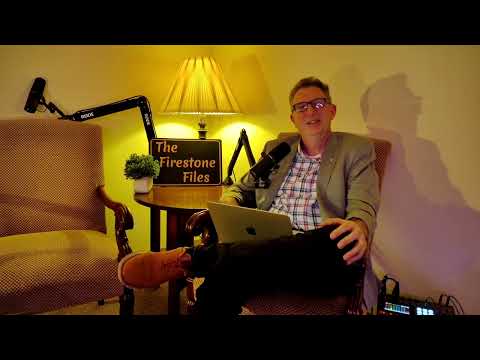
Hey everybody, welcome to the Firestone Files. I am Dr. Chris Firestone. Today on the Firestone Files, we will be discussing Charlie Kirk, the apologist. Buckle up, folks. Here we go. All right. Well, welcome to the Firestone Files. It was so much fun just to be able to say, "Buckle up. Here we go." That was one of Charlie's statements. We have been doing uh special uh uh podcasts here ever since the assassination of Charlie Kirk really in honor of his legacy and his contribution to uh to university life and to the life of really this philosopher uh and and the Firestone family. So uh happy to be doing this and being able to bring these to you is is a real honor to me.
So we're going to continue with that break. We've now done two weeks. The first one was just a tribute to Charlie Kirk. The second one was u Charlie Kirk and Socrates. Today I want to bring you uh uh you know a podcast on Charlie Kirk the apologist. Next week I will be um describing and kind of concluding this excursus this diversion that we've taken away from the normal Firestone files. uh an a a description and perspective on the memorial service for Charlie Kirk. I was going to bring it to you this week, but there's a lot of moving parts there and uh you know, some some things that I shot while I was on site there.
So, uh it's going to take an extra little bit of time to pull that together. So super excited to be able to culminate this four-part series now uh that's breaking into regularly scheduled programming if you will on the Firestone Files um to bring you this perspective. So looking forward to doing that. Um the reason I'm actually adding that fourth one is because one of you wrote to me, a gal named Lori, and Lori was able to say to me, "We would love to hear your perspective on the memorial service." So I got super excited. it was a great idea. Uh, and I started looking at it.
In fact, I even recorded a first draft of it, but I just believe it needs another week to gel. So, in itstead, this this uh this week, we're going to be looking at Charlie Kirk, the apologist. I did a course on apologetics uh in the spring semester of 2025, and one of my classes was devoted to this guy, Charlie Kirk. And um I was able to do about 10 minutes of a summary of his apologetic method. And then we had an invitation out to Scott Polander of Turning Point USA. He's in the Turnpoint Education Division and he was kind enough to join us in that class on Zoom and uh I was able to record that and I have that for you here uh today.
So, I hope you enjoy this special edition, the third installment of our um uh uh new series here on Charlie Kirk. And we'll have what I believe will be the fourth and final one next week. I guess that remains to be seen. We'll see. But I think it would be an appropriate place to wind things down in this uh on this topic with uh with with a perspective on um the memorial service for Charlie Kirk. So, that's the game plan at this point. Do write to me. It makes a difference with what we do going forward. All right. Without further ado, I give you Charlie Kirk, the apologist.
All right. Well, thank you so much. We've already um gotten started. We prayed already and we're ready to talk about Charlie Kirk a little bit. I put on the board up here some of what I take to be Charlie Kirk's central apologetic themes. This is not a comprehensive list. I did this research in the last 24 hours. So, we thought we might have a diad on this topic, but uh that did that fell through. So, I went ahead and did a few things to talk about it. Um first of all, you'll notice I have a handout that I handed out to everybody.
For those of you who are online students or in the class, you can ask me for it in the next class period or you can see the electronic version. I'm going to put it online after the class. But the basic premise, let me go ahead and move this over so anybody can see what's on the whiteboard here. Um, the basic premise is that Charlie Kirk has a high view of rationality. And as I've argued in this course, that's probably something Christians ought to emulate in two different ways. Logic and ethics or logic and morality. And Charlie Kirk is really all about the logic and all about the ethics.
If you don't have those two, you don't really have conversation in universities because if you're being illogical, nobody knows what you mean. And if you're being unethical, nobody thinks that you have the good in mind. You're just trying to get your own way. And so these the law of non-contradiction and the moral law seem to be high on Charlie's list from some of the stuff I've seen by him. Uh he always goes back to that. I would say he's a realist as well because logic and ethics are grounded in God's person.
And you've heard it said, we talked about it with Robbie Zachcharias and so forth that the moral law must have a moral lawgiver. It has to be grounded somewhere. It isn't lying out there in ether because that would be kind of strange. It's not strange if God exists. I think Charlie also holds that God speaks. So he's a personal God and that's going to be important because he defends the full authority of the Bible. So you'll see him on college campuses in an appeal to the Bible and its authority. And I think from some of the ways I've been watching him do his approach to apologetics, he sees the Bible as self- authenticating.
That is it speaks they're speaking to each other. They're speaking about events of the time. They're speaking about witnesses to the miracles. And in the Bible, it has a kind of self authenticating nature to it, but it also has independent cooperation, which means there's archaeological evidence. We have these ancient manuscripts. It's one of the most attested to scriptures. We're going to talk about this. This is really kind of cool to have Charlie Kirk right now, right before spring break because this is where we're going to move in the class is towards biblical authority, the resurrection, the person and work of Jesus Christ. So, we've been doing a lot of that groundwork in the course before this. Now, we're moving into the Bible.
And then lastly, the miracles themselves. He's in that same apologetic mode that will defend the resurrection, the self- authenticating nature. Jesus did live, die, and rise again. Then everything he holds must be true. And he holds to a high view of scripture, and he also holds to the basic doctrines of the Christian faith. So, and then the other miracles, and you'll hear Charlie say this in some of his presentations. Um, you know, if one of these miracles happened, we would have enough to attest to his his person and to the veracity of scripture. We don't just have one. We have multitudes of them. And we also have the resurrection, which is kind of the ultimate miracle in the Christian faith.
So that's really what I tried to highlight on this uh sheet of paper for you is some of the uh some of the outline I did on his apologetic strategy. You guys should also know him probably some of you might know him better than I do and that's because he has such a public personality. Um uh Brian did a did us a a yman's job here of coming up with a video to to watch. Let me see if I can play that video uh for us here.
It's only it's a short video but gives you a sense of his his approach his style thing improbable of our existence. Yeah. Right. Yeah. And that improbability could be a roll of the dice of chromosal gene mutations over trillions of years. Or it actually could be something a lot simpler which is there's something above us that just designed us. And so I actually think the designing argument is far more rational because you look at how we're built. You look at the trillions of chromosomes within us, how our body works, the DNA sequencing. It's hard to believe all that is an act of the dice.
And that is what evolution contests is that it's a lot of it would be like rolling snake eyes 23 billion times in a row. That's how improbable evolution is. My contention with that would be like evolution is like it's unchanging. It's not it doesn't put us at the center of everything. A lot of people explain it's like the good of the species, but truly it's just the good of the gene passing on the genes that stick. It can be subconscious of course agree with any of that. We just think all of that was designed into us. There's something improbable of Okay.
One of the things I failed to mention because it's over here on my on my board over here on number five is that he uses rationality. He uses realism grounded in God's nature. He uses the biblical authority and he uses the miracles all to persuade people of the veracity of the Christian faith. But he does it with a confident rhetorical debate style. You can see this guy does not pull punches.
I mean, he's just sitting there just hitting one after another with these things. He uses cultural and emotional uh appeals as well to get people to awaken from their dogmatic slumbers that you guys are being fed a bunch of worldviews, none of which have the kind of grounding that the biblical worldview does. So that's a that's a quick synopsis of why he's been so effective. You guys are probably aware that the Turning Point organization in general and uh and uh Charlie Kirk in specific have been very influential last eight years or so uh in the in the public landscape. So especially on college campuses and that's what excites me.
We had the same thing happen with the other guy um I forgot the the other apologist name who stands up there and uh and does uh all those college debates out in the open forum. Same thing with Charlie Kirk. Um and he's been very influential in that regard. Okay. Well, I don't want to spend the lion share of the time there. We have one of his uh people here. Scott, let me go ahead and see what this looks like on the big screen. Well, when I reached out to you a couple of months ago about this, I was delighted that you accepted uh the invitation to talk about it. We every class period, we have one additional apologist that we talk about in depth.
And when I saw Charlie Kirk on the list, I couldn't resist reaching out to you to seeing if you're willing to do this. So, thank you for doing that. Thank you for the invite. Yeah. So, um I'm I'm curious, you know, about the person Charlie Kirk. I mean, you've interacted with him in the past. Um he can come off to some people as being a little confrontative or a little abrasive. What can you tell us about his person uh as an apologist?
Yeah. Um well I think you know if if you watch a lot of Charlie you do see um especially on the campuses is where you're going to see him interacting with people and um you know I I think very rarely is he abrasive. He um even when the crowds at times uh can be abrasive, Charlie will even at times say, "Hey, you know, give them a hearing or whatever it is." Because he really does he doesn't shout people down. He wants to actually hear and talk about the ideas that are are being discussed. And so he wants clarity. And that's why he's so good is because um he really is listening and asking good questions.
and then showing how somebody's worldview um you know sometimes it's inconsistent or he'll show the implications of what it means or just how it doesn't line up with what actually is reality. So he's just he's very good at listening and asking questions and and I think putting his finger on the key issues with people. So you know to me it's not a arrogant shouting it down.
He's literally giving people and that's one of the criticisms students be you're coming and bullying you know us on campus and you know do you really think it's fair to come and argue with you know with freshman in college and he'll say well bring five professors but he'll also point out look I never even went to high school and you guys are college students so it's you know he's very um as an apologist I think he really doesn't want to shout people down but wants to help people think through issues.
Now, personally, when I got hired, I mean, probably it was within a few weeks, I was sitting down with Charlie at a meal for 30 minutes and he's just asking me about the state of the church and pastors and and really what we need to do to um really see reformation and revival in the country. And so, you know, it was just very humble because here here's a guy with a few million followers and I, you know, who am I? But he he was asking me questions and listening. And the other thing is we're an unbelievably young organization. The average director is probably 30 years old and I'm an old guy. So, it's a lot of fun coming into an organization where our team's a little older, but almost everybody's young on the director level, let alone on the campus side.
And um he's just very humble, very humble. Um well, I I remember one of my first events with you and with Turning Point Academy, which we'll talk about here in a minute, but it was at the University of Illinois at Chicago. There was a big event. and he said, "Come on, you and uh you know um your your boss there at Turning Point Academy, Hut Herzburg, said, "Come on and see Charlie in action." And I was, it was a rainy day. There were still lots of protesters, but he had microphones on both sides. And he said, "Look, if you're just going to come to praise what I have to say, have a seat.
I want to hear from people who have objections and let's have a conversation." And that was pretty impressive to me. I I was sitting there going, "Wow, this is a pretty pretty amazing." Maybe that's the boldness and not the abrasiveness that we're really talking about. Yeah. Yeah. And it's worth it's worth also pointing out that um you know here's a guy who didn't go to college and Charlie um he self-learned and so you know he was on probably the the leading classical Christian organization in the country in my mind is the association of classical Christian schools and he had David Goodwin on his podcast a few weeks back.
David Goodwin is phenomenal and um you know just in the flow of conversation it wasn't like Charlie went and and looked this up before the call but in the flow of conversation he's quoting Aristotle in politics and um you know it's just these are things where he truly he reads he learns and I he has a phenomenal memory but the thing is he is a learner and So, um, it's just it's a lot. He's he's fun to talk with. He's fun to watch the videos. And I think he is he's made a massive difference. Even the he's doing a campus tour right now.
And I think there's been a massive change in the last few years where um you really see students minds changing and at least they're coming out of the woodwork. But I think that there actually is a wave where the campuses are changing. Yes. Well, you've talked about it being a young organization. I know that it has about eight different branches or something along those lines and your branch is among the youngest of those branches. Um, can you tell us a little bit about that context and how uh your part of this fits in? Yeah. Yeah. And so, TurningPoint Academy is TPUSA's K through2 education initiative.
And so even though we are known for campuses and being you know having college chapters, high school chapters, but then the doing the the events on campuses as well through the chapters, they're not really education. Um so we are really the only education branch within TPUSA and we are K through 12. Now, because of the new prep year, it's more than K through 12, but I also I like to point out to we actually have preschool, too. So, it's actually preschool through 13. Um, but we are education and, you know, we are we have four initiatives within Turning Point Academy. The first is we are starting classical Christian schools and so schools is our first initiative.
Um we also our second initiative is resources. We are pro you know creating some curriculum. We will never be a a huge curriculum provider because there is so much good curriculum out there whether it's biblical worldview or history or we're not going to create math um curriculum. We partner with all the best Christian curriculum providers. Um and then third we mentioned the educator summit. Well, we we educate the educators with trainings, and that's especially valuable for for all of us that did not grow up in a classical Christian education, which is the majority of the country. Um, just retraining even those we have about a third of our association members are in the public schools. So, we're even training them from a Christian worldview in how to teach in the government schools. And so um the trainings and events is the third initiative. And then finally the fourth initiative is the association which I'm the director of.
And really what the association is doing is providing resources of all sorts. Everything from groups like the alliance defending freedom which is the top first amendment legal group to classical you and all of these amazing classical Christian curriculum providers. Um, and so my role is really just connecting people with what they need. If it's a homeschool family, um, sometimes I'll have a home school, well, usually it's not a family that joins the association. It'll be the head of a homeschool group that, you know, they started a Facebook group during COVID and now they have 1500 kids in it. Well, they'll say, "Hey, what what resource do you have for our homeschool group?
We need this is what we're looking for." And so, um, because we just have so many partnerships and resources, what I'm doing all the time is just connecting people with what they need to provide the very best education, whether a school, a homeschool group, you know, even our our organizational partners. Um, you know, I often get to help them and connect them with others. And so what I'm hearing what I'm hearing, Scott, is that, you know, it started as kind of a Christian conservative almost apologetic endeavor with young people, but it has recognized that, you know, you're fighting an uphill battle when you're dealing with college students who have already been trained to think a certain way. Now, what Turning Point Academy is doing is saying, "Let's let's take stock of our really young people, train them properly, so that when we get to that point, we're not fighting an uphill battle all the time on these issues."
Right. Yeah. And the the best book out there, Pete Hegsth, wrote with David Goodwin, who I talked about already, but it's The Battle for the American Mind, and it is an unbelievable book. really showing um the the history of the government schools um going back a hundred years and it's just a wonderful book. But you know, it shows that all along the goal was to take God away from education. Well, you know, classical Christian education says that once you take God out of education, you have no foundation. I mean, you take God out of biology, you're going to end up with very different answers.
But what we've learned in recent years, you take God out even out of mathematics and 2 plus two no longer equal I mean it could equal five. Um and so you know it it affects every single discipline. Um and so you know we we really um have seen that if the kids are going to the government schools K through 12, it's up to 16,000 hours where they are being discipled by this world view that actually um takes God out of education and and pressures kids, a lot of church kids to um just think about the world without God.
They're in class all day doing that. Well, we we just think that not only is that that's a miseducation and it's indoctrinating and really what it's doing is making slaves and workers. It is not making people who um truly know and love God. It's not a education about truth, goodness, and beauty as much as just making workers. And so, um yeah, you have to you have to Charlie's view is you have to start K through 12. You can't give them 16,000 hours in the government schools and then think the church in two hours a week is going to be able to compete with that. That's just foolishness.
And so there's a massive wave in educ Why don't you tell us I mean I want to back up one moment and hear a little bit of your story in your heart and how you got into the Turning Point mission. Um because I think that that'll give us a better sense of uh maybe some pathways we might take or just you know where your heart is on that. Yeah. So how I came into the turning point world. Yeah. Weren't Were you a pastor previously?
Um I was I was um I had been in um I had been a missionary um became a a believer in my 20s in university and um ended up going as a missionary to Kman Du Nepal for a couple years and then came back and um was up at Ted's with with you up in that area and um took some classes but I ended up going to seminary in Australia And I went there because um it was an Anglican school and a lot of the gender madness and LGBTQ in the Anglican church, they were already facing it 20 years ago. And I realized these an conservative Anglicans, these Orthodox uh Protestant people, they were out ahead.
And so I ended up going there. Um and so since then I worked at the largest um Anglican cathedral in Australia for four years while doing seminary. Came back worked in pastoral ministry almost always pretty much always at the edge of university. So have a huge passion for university ministry as well. Um, and my last pastoral role, I I left about 5 years ago, and I went into prolife work. And the reason I did that was because I saw that the churches were not thinking about these cultural issues well. Um, both biblically, but also understanding the culture. They just were not understanding. And so, I left pastoral ministry to go in pro-life work. But I was never just speaking about the sanctity of life. I was talking about a lot of these kind of Genesis 1 foundational issues that I felt like are the gospel issues of the day, the ones that the church really often does not have clarity on and rarely speaks on.
And um so I was in pro-life work for a few probably three years doing that, working with churches. And then Hutz gave me a call. I was at a a conference in between uh two pastor friends and Huts texted me, "Are you interested in talking about a position?" I hadn't talked with Huts in over 10 years, but he's an amazing guy. Just an amazing guy. And um probably within five minutes, I knew I was going to be working with TPUSA because he showed me the values of Turning Point Academy. And they're all Genesis one type.
They're all the things in our culture, the foundations that are being destroyed that I think are almost in ruins and need to be repaired, but will really clarify what is the gospel, who is God, and and how should Christians approach these things? And so, you know, Huts texted me and probably five minutes into calling him and talking, I was like, "Yeah, this is going to be this is going to be a lot of fun." So, um, yes, that's how I ended up coming up. We all have a similar Hutz Herzburg story, I think, where he calls and he says he needs some help and, uh, casts a vision and suddenly you're you're in that orbit. Um, so yeah, he's uh Charlie's really surrounded himself with some stellar people, plugged into the church, but also plugged into, you know, culture and trying to make a difference primarily for young people, but also thoughtful people who are, you know, who are uh asking the big questions and so forth.
And um and so that's always interested me about Turning Point USA in general. And then the Turning Point Academy thing interests me because it's a long range thing. It's not there's there's one thing to step into a college campus and do what Charlie does. It's another thing to ch train the next generation. And um that's what intrigued me about Turning Point Academy. And uh tell me a little bit about the academy and your role uh with the associations, what the mission is there and how you see that as being affected. Yeah. Um and so um it's it's true you cannot build a school in a day.
It is slow work. No doubt about it. And so we what the vision is really um for Turning Point Academy to be as influential as the public schools in 10 years. And I I know that sounds crazy, but you know, without Charlie, the election would not have been won. And so we actually see um a massive wave in all sorts of things including in the education world right now. And since co you have a massive wave of people getting out of the government schools and starting whether homeschooling their kids or starting Christian schools and many of them are classical Christian schools.
And so um you know it it really there is a wave and we say we're a movement and there there is a movement in education and so many people are coming to TPUSA because of the influence and the difference that the organization has made including this last election would not have been won without um Charlie and and TPUSA's work.
And so um you know really we want to create hundreds and thousands of schools so that everywhere from inner city to rural areas people can actually get an education like used to exist in the country. Um yes, just a very rounded deep education and um I mean really the association plays a really big role in it because our team is only you said we're the newest and smallest team. It's true. We only have six people on our team right now and we will have to grow but our association has hundreds and hundreds of partners.
Some are very well known and um you know because our association has so many resources we really are making a big impact already in education and so again um my role in the association is if somebody's starting a school um we have our director of academics Jennifer Burns who can coach them along the A to Z of starting a school in in 10 11 months and right now she is 30 schools she's walking alongside. Well, I come from a little different angle in um say it's marketing. Jen runs a school has for 20 years. She can help them with marketing, but I have people that focus on marketing particularly in the association.
So, I can connect them um particularly with some of our affiliates that do that. So, my role, our whole team overlaps. We help each other start schools. We help each other do events and trainings, but um the association is bigger in a sense cuz we have 400 people. Many are are just um you know like I I'm talking this week, some of you know may know Rosaria Butterfield. She's a a former um really a feminist professor, critical theorist, lesbian, became a believer.
Absolutely unbelievable. People like that are the ones who want to partner with us. Carol Swain um been in touch with this past week. She's the one who Charlene Gray who got fired as president at Harvard, she plagiarized Carol Swain's PhD. So yes, all these amazing people, top top academics are coming to us wanting to partner and um the association can bring in amazing resources like that to to help all sorts of people whether it's starting a school um um creating curriculum, we do a lot of different things and the association is involved in all of them.
So this is fascinating because in the class we have talked about other apologists, let's say William Lane Craig, Reasons uh Reasonable Faith, his organization, people like uh you know, Hugh Ross with Reasons to Believe or various other things. And they're all really cool, really good contributors. But what Charlie's managed to do is not only be a frontline apologist, but to build this vast under I don't know what you call it, subterranean uh grounding, if you will, with the various components of TPUSA that may well have a longer impact than any of these other apologists. I mean, how did a guy six 19 years old um pull this off, you know, and where do you see it going from here?
Yeah, that's a good question. I mean, definitely God because he has had a massive impact. Um, and so yeah, I mean I I do think um God has blessed Charlie just so much and you know I'm at a TPUSA faith conference right now with pastors and you know I I would say Charlie I think you were alluding maybe to Ray Comfort earlier. I don't know if it was Ray Comfort Chris. I know Ray Comfort but yeah what I didn't somebody on the street apologist on the street. Well, Charlie is almost in between, in my mind, in between a William Lane Craig and like a Ray Comfort evangelist apologist, you know?
Yes. Charlie um he just so much argues scripture and biblical worldview. He really does. And I'd say even more than like a William Lane Craig who's very philosophically driven. Um, so he's not quite the evangelist or Ray Comfort or some who I don't know who you were alluding to earlier, but there's some that are they're just evangelists. Um, Charlie is an apologist for sure. And um, but it is I don't know, he's an evangelist too up there. He'll share his story regularly and he's constantly alluding to scripture. And so um the way it's heading he's also seems like he's a corporate CEO you know like he understands organizational structures.
Absolutely. Absolutely. But again you know and it's not that he's not a a philosopher as well because he's quoting Aristotle he's quoting um you know the Greeks and everything. So you but the direction of the organization is definitely Christian. I mean Turning Point Academy is a Christian organization. Turning Point Faith um is a Christian organization. And so you know I think in all of these different ways really the keys are the church and the schools.
Um and you know a lot of the things happening on on the campuses that he does the events are not going to I mean they they have made a big difference but the long-term change if we are really going to make a huge long-term difference it has to be building these schools and also turning the church around kind of waking the church up and helping them understand I'd say both the scriptures better and understanding the culture and actually addressing these things because you know you hear all the I've worked for years with churches and the churches will say we don't want to be political. Um well I've heard classical Christian schools say the same thing. Well, I I don't know if they've clear it's a classical school that apparently has never read Aristotle because politics is about the good life.
Yes. They say we we don't want to be political. I take it they they they have nothing to say about the good life. You know, they have nothing to say about what is true um you know, good and beautiful. And so really what we need to do and what Charlie he's constantly talking about this is we need the churches to understand not not partisanship but what is truth what is truly what is good and talk about those things and not hold your tongue as the churches have done and even the the Christian school. So that's the future. That is really We need to have schools that are healthy and churches that are ha healthy.
And that's even why I'm in Atlanta right now because we're at a a church conference with pastors. That's to me that's super exciting because we can do a lot of work in class in apologetics and have good arguments, but they have to have an audience. They have to have a receptive ear. They have to have a platform of cultural relevance. And uh one of the things that has always impressed me about Turning Point in general is it's reaching those folks, you know, and that's what excited me about it. That's why I'm, you know, kind of uh working with you guys and and because they're concerned with the K through 12 space and they're concerned with colleges recognizing we're finite.
we have a, you know, our days here are numbered and we can convince, you know, the 35 to to 65 year olds and still not have a culture in 20 years. Um, we need to be in the spaces, the K through 12 and 13 and 14 in the college spaces if we're going to have relevance in the future. Uh, and that's that's been true of Christianity since its inception really. Um, and so, um, yeah, I mean that's that's super exciting. Um, is there anything you uh wanted to share with us before I open it to questions here from the students?
Yeah, I I would just say if if you look at Charlie as an apologist, look at the different issues people bring up and um to to think through how can Charlie think through and speak on all these things because and and what he is truly doing is he is speaking about the whole council of God. Okay? And all of his answers have theological assumptions that are built on a framework of understanding the whole council of God. And so we have to be able to do that once again where somebody brings up immigration and you can think through what does scripture say on immigration and that's a skill that I I think has been lost to some extent just with a lack of um biblical knowledge.
And so to me um you know we just need to start with the foundations again and build. That's what Charlie did and that's what we need to do in our schools as well. I mean, I I had a bunch of college interns as a pastor and not one of them knew the Ten Commandments when they came in. Well, it was impossible a 100 years ago. All non-Christians knew the Ten Commandments a 100 years ago. And so, we need to repair the ruins and build these things again. And um we should all be able to think through these issues like Charlie.
Not not that everybody is gifted like that, but we should be able I mean we should be able to think through um what does the Bible say about immigration? That's one of the question he gets regularly. And I consider that a jagged line. That one's harder um than say abortion. Abortion um well, you know, thou shalt not kill.
when we're talking things like um sexual immorality, the these are the the sixth and seventh commandments. These are straight line issues. They are obvious. They are easy. And the church is in a time where they struggle with these straight line easy issues. We have trouble answering what is a woman. And um you can't answer the hard ones if you can't answer the easy ones like what is a woman? And so I would say with abortion it's the same thing. And yet um you know Charlie because he has a biblical worldview and can think through the whole council of God. What is on any issue? He has a framework on these big important issues.
And these are ones it's the same questions that are going to come up repeatedly on the campuses and in the culture. So we should all be able to do this. I mean everybody on this call we should be able to to have an answer for the hope on these different things. And and I would just the last thing I'd say is that a lot of people have trouble weighing issues today like immigration. I I hear um they often with abortion and immigration or climate change. Um abortion again is a straight line issue.
Thou shalt not kill. Um and it comes out of Genesis 1, the image of God. But it's literally it's not only in Genesis 1, it's in the very last chapter of scripture. Some of these issues of the day. They're foundational issues. And literally in in Revelation 21 and 22, there's some of Jesus very last words that murderers um and the sexually immoral will not inherit the kingdom of God. And so these are foundational things that we need to be able to think through and they're straight line easy issues. Um, and I just point out, you know, these things are everywhere.
Not just the first and last chapter of scripture, but I mean the the first sin outside the garden, a a family member murders a family member. Um, so shedding innocent blood. It's everywhere in scripture, including the Ten Commandments. Um, right after that, Lamech multiplies wives. There's sexual immorality. It's almost Jesus last words. These are the sixth and seventh commandments, but they're everywhere. And so these straight line issues, we need to be very bold on because these are the things being attacked in the culture. Um, but then the ones that are harder like immigration, climate change, those sorts of things, we have to also be be able to think through those things. And I just say Charlie does that exceedingly well. And it's a biblical worldview. It's theological assumptions.
Um but he also shows how do you weigh these different things? Um how do you compare is abortion 73 million uh children killed a year in the world versus climate change? Because the left the left equates these things and even says climate change is worse. So um we live in a time of of madness where we just can't weigh things as well. and Charlie um does an excellent job at that. So that that that's pretty much the the last I just think it's so to be able to think through what does scripture say in these things but also weigh different things. What does scripture say on the weight of these things?
Yes, it's excellent. There's excellent I I use a similar theme here at Champion when I talk about a point of orientation. That's a word that from one of my favorite philosophers. But if you don't have that baseline that you know is true, then leaving that for more complicated spaces is very hard to do. You're just floating and trying to answer the big questions without that foundation and knowing where you are. And so I think that's just super helpful. So, um, okay. Well, uh, I'm looking at the clock here and we've, you know, we got five or 10 minutes if we want to use them. Did you guys have any questions you wanted to ask of Scott?
Do you have one? I have. Yes. You got one in the back first. I got a simple like what specific areas are you targeting? Are you targeting all over the world or is there a specific area that you're targeting? And um yeah, so we are in the United States, but we have had people from Canada and other places join our association. Um and but but it's really we are we are based in the United States and and really starting schools and focused in the United States.
Um and and honestly to tell you the truth um again I mentioned our values earlier and our values are all the first value is that there's a god and um that he is sovereign over everything and then it goes on to the image of god and and male and female and the sanctity of life. So we have nine values. Well, the truth is um a lot of those values, some of those things um in other parts of the world, like I lived in Australia for 4 years, they never talk about abortion, even though 73 million children are killed each year in the world.
And so, um you know, really a a lot of people realize that the United States, we we have to focus here and repair things here before we help other people. And so, um, you know, our focus is definitely, um, in the United States, though, and and with starting schools and and helping strengthen what is happening here. So, yeah.
Yeah. And some of the conferences I've been at, I've known other countries trying to get Charlie to come there to spearhead their own kind of awakening in this in this sort of biblical foundations. You know, I know South Korea, for example, has been trying to get him to come there and uh some of the other probably Australia, although I'm not sure on that one. Um, but yeah, there's there is some international influence, but the organization is Turning Point USA for a reason, right? It's focused on trying to revitalize these foundations of American biblical values. Um, and so yeah, Brian, what do you have? Hi, Dr. Poland here.
I'm Brian draws my name and I was curious uh how does Turning Point Academy incorporate apologetics into its curriculum or programs and uh do you think apologetics is an essential aspect of a classical Christian education? Yeah. And and so we do not have apologetics curriculum that we provide, but we work with a lot of curriculum providers that do apologetics. And so I I'll just give you one example. There's a group called Summit Ministries that is unbelievable. I mean, you should their books are so good. I read my first one by David Noble called Understanding the Times 20 years ago. Unbelievable. Well, they're part of our association.
And so, and there's a number of others that are groups that really do a lot of apologetics curriculum. So we will never um be creating a lot of apologetics curriculum but we are trying to to um form schools and influence people by giving them these solid resources and helping guide them in apologetics even though we may not be the one creating the actual um curriculum. And so I would say apologetics is very important to what we do. Obviously I mean the whole organization just looking at Charlie we could not be creating classical Christian schools without that. But the other piece of it is classical education.
Um, rhetoric is a very important piece. And you know, my my youngest two daughters have been in classical schools, still are. And um, you know, they start when they're young memorizing everything. But there gets to be a point where in high school um they really learn to be rhetoricians where they are arguing for different positions and um almost like debate, you know, they they do that sort of rhetoric regularly where um that is a key part of education that is apologetics.
And so um it's it is very important to what we do in every one of the schools we are starting they are really creating um kids who can think through issues who they they actually have memor so much like Charlie quoting you know Aristotle or whatever it is quoting the Bible um it's because they've memorized it when they're young which most of us did not do. um we're we're trying to pass on to the next generation what we did not receive. I know that's what I'm trying to do with my kids.
And so, um, yeah, I mean, but that apologetics where they they memorize when they're younger, but when they're later, the the rhetoric and actually, um, speaking and thinking through things and arguing with each other in school, it it definitely prepares them to give an answer for the hope that they have within. And um, so it's very important to our schools.
I ask a follow-up question to you. Um, Dr. Scott, uh, I was curious, how do you foster a safe environment for students or encourage the educators that you work with to foster a safe environment for students to explore doubts and questions while still encouraging a strong commitment to their faith, you know, as as you're going through K through 12, you may come across like some questions to your faith. How do you do that? Yeah. Yeah. And so, you know, we actually are not in the schools often. Our director of academics is. And so, I cannot uh I wish Jennifer Burns was here to answer that because she does a lot of the coaching with the actual heads of schools and the teachers at times.
But um you know I I can tell you just from our team, you know, from Huts to Jen to myself that, you know, our view of what a Christian education is is wrestling with, you know, all of these issues we talked about, but there are some very hard things to talk about. None of us I I mean, immigration or uh climate change, these are are harder ones. And so there is humility as well. And and you know the more mature you are, the more you have uh epistemic humility and realize what you do not know. That's just the Christian life realizing um we know so little and it is it is seeing through a dark you know a glass darkly.
And so um but so it's it's we want to have schools where the truth is proclaimed boldly but also humbly as well. And I think um you know that that's one of the things with the fruit of the spirit the the fruit of the spirit there it is gentleness you see kindness. You see these things but everywhere that the spirit goes in the book of acts there's boldness as well. So that's not a fruit of the spirit, but everywhere the spirit goes, they're they're speaking the truth boldly. So it's kind of a fruit of the spirit, you know. Um those are the two things you can be humble and bold both and we have to be.
And so th those are the types of students that um it's not arrogance, it's real humility, but it's also not fearful and holding your tongue. Speak the truth if you're a Christian. Yes. We have time for one more question if anybody has one. Anybody? Okay. Well, um Scott, thank you so much for joining us here uh this afternoon. Uh what a delight it is to have you. I know any there is anybody online I want to give them one last chance. Anybody online have a question before we let them go? We have two minutes left really in my time schedule here.
If I don't see anybody take their mic off, I'll just uh close this up. All right, I'm not seeing anything. All right, Scott, thank you so much for coming and we'll just end it there. Uh I'll give you the last word. I don't if you want anything or say anything, but uh certainly a delight to have you here with us today. Yeah. So, thank you for inviting me and you know, Dr. Firestone, we appreciate you so much and your partnership and friendship and you know hopefully at some point I'll be able to uh and huts we'll be able to come down and visit you all and meet face to face down there.
We love everything we we hear about what's happening at Champion and it it's just an amazing work down there as well. So appreciate you all and and thanks for the invite. Thank you so much. Appreciate it. I love you guys and uh we'll be in touch. Take care. Okay. Take care. All right. See you later. Bye-bye. Thanks for stopping by to spend some time with me here on the Firestone Files. I hope today's reflections offered you some new insights and perspective on life. If you enjoyed the episode or found it valuable, I'd appreciate it if you'd take a moment to like, subscribe, and share it with someone you care about.
I'd also love to hear your thoughts. What resonated with you? What challenged you? or what would you like to hear more about in future episodes? Drop a comment below or send in your suggestions to the email in the description. Your input helps shape where we go next. This has been Dr. Chris Firestone. Until next time, keep asking the big questions. And remember, the kingdom journey is always best with your friends, further up and further in. Bye for now.
Turn it around.
Auto-generated from YouTube captions and lightly formatted; it may contain errors.
Related episodes
More from Charlie Kirk, then the nearest by date.
 Charlie Kirk1:12:19
 Charlie Kirk47:16
 Charlie Kirk36:30