
Everyone is Wrong about Immanuel Kant
Summary
In this interview from Parker's Pensées, Dr. Firestone explains why he chose Kant as the thinker to sit under, how the seven-year book 'In Defense of Kant's Religion' (co-written with Nathan Jacobs) aimed to right the ship of Kant studies, and why the standard reading of Kant as reducing religion to ethics misreads the conundrums in the Religion text.
Show notes
In episode thirty-thee, Dr. Firestone shares an interview of himself by Parker Settecase of the show Parker's Pensées. They discuss Immanuel Kant, his importance to recent history of Western though, and why Dr. Firestone believes he is terribly misunderstood by the majority of modern thinkers.
Visit @ParkersPensees channel here: https://www.youtube.com/@ParkersPensees
Books discussed
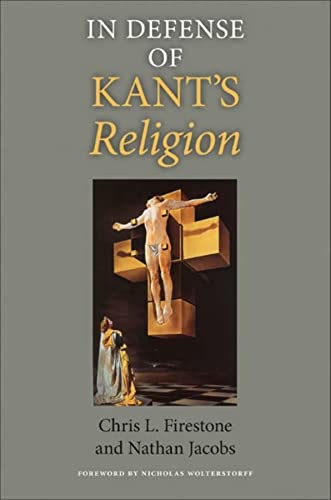
Transcript
you know, there's only so much time in life. Who feet do you want to sit at and learn from and begin to see the rest of the intellectual landscape? And Kant was a, you know, a viable candidate from from the get-go for me. All right, everybody. Well, welcome back to the Files. Kind of an unusual one here today as I am going to be sharing with you another podcast interview of me. So, that's uh that's interesting in itself.
You guys have probably remember me talking about the Nathan Jacobs podcast and interview that I did with him and how he's taken off in that world where another former student I guess I'd never had uh this guy in the classroom but he was a student at the school I was at um his name is Parker Sedakase and Parker started his own podcast a couple of several years ago now uh called Parker's Pon and that word pon should be uh of interest to us because that's in French means thoughts. It's a title of a famous book by Bla1 Pascal called Pon. And uh we're going to be talking about Bla1 Pascal somewhere down the road on the Firestone Files.
He was another one of these formative thinkers for me. Uh but Parker chose that kind of wisely because that's a not only a great book a great philosophical book but it's really about thoughts about having conversations and um Parker's Pon was one conversation um I think this was episode 16 and I don't know how many he's got now in the hundreds um at this point but it had a pretty good viewing uh and pretty good following and so I wanted to present it to you Now, because it's on Khan's religion, it's a little bit premature.
As you know, I'm promising and will deliver on sharing a deep dive into Khan's philosophy later on this year. Probably going to do that um kind of like I did uh Decart December. Probably somewhere, you know, later in the year, we'll we'll talk about do we'll do a deep dive on the philosophy of K. This is a bit of a teaser to that, but it is a really good teaser in this sense. Parker asked some great, I guess, kind of layman type questions. He's a he's a gifted philosopher himself, but you know, not everybody does a deep dive into K. So, he's asking me a lot of those really good questions that help bring understanding to Kant's philosophy.
So, that's what I have for you here. Parker Sedaki's asking me about Kant's view of philosophy, morality, religion and um really really u I thought an excellent interview. So, think of this as a teaser. Again, another opportunity for you to see why I think Khan's philosophy is so unique uh s so um heruristic helping us understand our world and our place in it. And you'll probably notice some hints of the uh four superpowers that I sometimes have been talking about here in the files and all of that stemming from this uh approach to the philosophy of Emanuel Kant. So without further ado, let's go ahead and get to that interview on Parker's Pona, understanding K's religion. That's coming at you now.
Well, welcome back to another episode of Parker's Pencies. This is a podcast where we explore thoughts in philosophy, theology, nature, and life. I love thinking about cool stuff, so come think with me. On today's episode, we have with us Dr. Chris Firestone. Dr. Dr. Firestone is a professor and the chair of the philosophy department at Trinity International University. He did his PhD work in Kant studies at the University of Edinburgh, particularly focusing on Kant's religious views. He's largely responsible for what some have called a new wave in Kantian studies, which will be the subject of our conversation today. I'm stoked to have him on the podcast.
Dr. Firestone, thanks for being here. It's great to be here. Thanks for inviting me, Parker. Yeah. So, just jumping in on Kant. Um, what why is Kant significant? Why why should our listeners care about Kant? You know, there's a lot of ways into uh philosophy. You know, anybody who's taken a philosophy class knows you can go into philosophy from the Greeks, from the Germans, from the Brits, from the Chinese, from all from any number of places. Kant is like a uh one philosopher calls him like a mountain.
you know, you can get once you get on top of Khan, you see around the the the uh intellectual landscape, it really is a pretty high mountain. He's a w, you know, he's oftentimes called the watershed of the enlightenment. In other words, he understands empiricism, rationalism. He understands realism and idealism. And he's a massive sort of uh watershed moment in the history of ideas. Um and if you understand kind, everything else looks so much clearer from that vantage point. Of course, he's a turning point to contemporary modern and post-modern philosophy as well. And so from that mountaintop, you can see an awful lot of stuff.
That's what intrigued me to get into Kant in the first place was, you know, there's only so much time in life. Who feet do you want to sit at and learn from and begin to see the rest of the intellectual landscape? And Kant was a, you know, a viable candidate from from the get-go for me. Wow. Yeah, that's great. That's great. I I found that it seems almost as if that the analytic and continental divide in philosophy today, it seems like it can be traced back to Kant. Is that a fair assessment, you think, or you know what, you know, Kant's one of those handful of philosophers who you can almost trace anything back to.
Uh but yes, I I do believe depending on how you interpret Kant, you land in an analytic or continental stream. You know, if you focus in on his revolutionary capernac insight, for example, and zero in on the language involved uh in in in in explaining nature and so forth, you tend to uh land in an analytic stream. If you look at the more transcendental side of Kant and the various perspectives that unfold in Kant's philosophy, you tend to land more in the uh in the continental stream. So you can look at those German idealists right after Khan you know ficta shelling and Hegel for example and you'll see they focus on the second third critiques in his uh in his in his religious writings you know and and and look at the first critique that has a problem to be overcome.
Yeah. Where the analytics say no there's something fundamental in the early K. we may not necessarily like how he handles it at the end of the day, but uh the analytic crowd is tends to be more traceable, if you will, to the first critique. Wow. Yeah, that's a great insight. And then we'll get into some specifics of of your project in a second, but it seems like you want to say we need to read the whole corpus of Kant uh to understand his his more mature thought, to understand his trajectory.
Yes. Yeah. There's uh you know as soon as you get into the world of Kant you you quickly realize that there's kind of two types of Kantians and one of them is Kant was a genius in his 50s when he wrote the first critique and he sort of degrades as he goes and then the other side says no he's maturing like fine wine in his later writings you know I tend to gravitate more in that direction I I think he gets he he he his philosophy unfolds he's got a plan in mind and not always clearly in until he starts putting pen to paper. But it it it unfolds and it really makes some insightful uh you know points in philosophy and really points the way for philosophy in the 19th 20th centuries.
Yeah. So uh be before we jump in and get all into the weeds which I'm looking forward to. Do you have a favorite translation series for for Kant's works or are they all pretty much uh comparable? That's a good question. It's a complex question. Uh you know there's these blue books you'll find in most libraries. uh the Cambridge editions of translations of K. What's really neat about them is everybody's using them. Yeah. And they got all the pageionation numbers in the original German and the translations are really quite good overall. Okay. But they're not uniformly good, right? There's some that are a little better than others.
And when you really get into the weeds um of a translation, let's say of his famous book uh which hopefully we get a chance to talk a little bit about religion within the limits of reason alone, you realize that some translations are in fact interpretations. And uh you know I noticed that early on when I started reading Kant and realized, hold on a second, this translation couldn't possibly be right if I'm understanding Kant right. And then I go to a different translation, I look at the German and I go, yikes. that isn't a good translation.
So, u but by and large the Cambridge edition I think is is is is reliable, handy and uh usually quite good. Okay. So, um another kind of uh definitional point um so Kant's whole capernac revolution which I I found out he uh attributed to himself. He he said that this I was like wow that's that's pretty powerful claim there Kant but it it it may have he may have been able to back it up. Can you explain can you explain uh rationalism and empiricism uh and analytic synthetic kind of divide to kind of situate the listeners into con capertican revolution. Yeah. Well I can give it a give it a shot.
Um it's a big hopefully yeah your your listeners have at least some background in these terms. Um, and I'll assume a little bit of that. Yep. You know, ever from from Bacon and Decart right on through to say, you know, Christian Wolf and and and David Hume, you have two streams of epistemology at work. Uh, one of them is, you know, the empiricism where all knowledge begins with the senses and even things like mathematics uh, and logic are eventually traceable to the senses. M and then you have the rationalists who say no those types of truths have a character that's rooted within reason.
Uh you know logic is you really don't even have a perception unless you have some kind of organization you might say. And that's where logic and uh you know mathematics come in. And so they're not in all in all practical uh for all practical purposes they're not that far apart from each other. You know David Hume still has relations of ideas and logic at work. He just thinks that at the end of the day they're really traceable to sense perceptions and how the mind deals with them.
Whereas the rationalist says no there's two things at work here as we know Deart was very clear on this there's mental and there's uh extended mental or physical substances uh as well and so that kind of separates these two streams. Now when Decart and and Bacon and those folks turned away from metaphysics as first philosophy to epistemology as first philosophy, they were trying to get rid of the the arguments and the disagreements, right? But they ended up with these two streams, you might say. And they worked their way through uh Europe and through Britain, you know, as kind of two streams of philosophy. And Kant, of course, comes along and he's just not satisfied.
She's got to figure out what's going wrong here. Why is it that we still have two two different parties at work here? Um and and Kant zeroed in on problems that were still emerging in both of these two systems. So you you you the two things he points out at the beginning of the first critique are substance and causation.
Um David Hume will awakened him from his slumbers. You may have, you know, that's pretty common jargon in the field because he pointed out that causation, strictly speaking, is never experienced. Well, how is it as an empiricist that you have causation if it's not traceable to the senses? Yeah. Um, it's a habit of the mind, David Hume called it, right? And so, that's one problem Kant's kind of scratching his head over. He's like, David Hume just awakened me to the fact that piricism can't be right. Yeah. um or at least it doesn't have a sufficient enough reason to think that it grounds scientific inquiry and so forth.
And then uh the substance side I think comes to him more from the rationalist side where you've got you know primary and secondary qualities adhering to a thing they call substance. But no one can describe substance without talking about the qualities that are adhering to it. So what then is substance? That's some kind of other assumption that seems to be in play.
So right at the beginning he realizes there's two kind of philosophical streams neither one of which has completely resolved the issues that it was you know that they were hoping to and so Kant comes along and says hold on a second perhaps like capernicus maybe we thought the earth was in the center of the you know solar system and maybe if we just thought about the fact that maybe the mind is in motion and not just at the center kind of in ner stuck there but is actually contributing something to our knowledge and what if causation and substance are two of the things that the mind is contributing.
Yeah, that would actually answer what they are. They're necessary conditions of the mind, active conditions of the mind that make experience possible in the first place. They are those things that are required to have any experience at all. And they're not all the mysterious assumptions. They're actually rooted in the very nature of reason itself. And so that's and of course he's borrowing there. If I can go back, you know, we were talking off camera about Plato and Aristotle. This is he's borrowing these categories from Aristotle, right? I mean, uh, causation and substance are not unknown to them. Plato and Aristotle in particular thought that they were inherent in things even though we couldn't see them as such.
conscious puts them in the mind as it were makes them active properties of the mind that make experience possible. Yeah, that's so great. And and for for the listeners who are like, well, you know, causation and substance, what's the deal? This is we we need these things every day for life because we have I'm sitting on a chair. Uh I'm sitting at a desk. I'm using a computer.
These are all like substances. These are all things. They have substance uh depending on how you interpret that. And there's causation going on because we're in time and space. and I'm, you know, am I causing my words to come to you? Am I the cause of lifting this book? You know, so these are things that we immediately deal with. So even though it may sound kind of uh kind of up there, this is the the the everyday life. This is what's going on and we're all doing it. And so we need to be able to make sense of it. And so absolutely Kant puts that in our in our mental framework, right?
So the the causation is is part of how we view the world. Is that does that Yeah. Well, it's it's um it's part of the superstructure of reason that makes the appearance of the world a thing. You see, without it K, I think basically holds that experience would be we be bombarded by all these sense, data and qualities, right? And be like an abstract painting coming in the mind. But the mind has 12 categories, two of which we've already mentioned. Um, which take that sense data and organizes it into a discernable experience.
Yeah. And so you want to know why you can't see causation? You know, it's like two cars hitting each other on the street. You see car A and car B and you say A cause B to get knocked off the road. Well, you didn't see cause. You saw two events in simultaneous relationship. Where then is cause? causes that piece that organizes the experience into a discernable form that the mind contributes to it. Yeah. Um and so it's kind of a radical suggestion, right, that this stuff isn't inherent in the world as such. Well, well, hold it. It may be inherent in the world as such.
We just can't know that it is, but we know the mind is utilizing it to make the world orderly and discernable to us as an appearance that we call nature.
Yeah. I at first I thought this was crazy because I I was learning about Kant from a lot of Christians and a lot of Christians kind of jump to this is a this makes uh this is subjectivism just raw just pure subjectivism you can never know the ding- on Zik you can never know the thing in itself out there you're stuck with the phenomenal realm and there's there's this numal realm that you can't know but I after learning a little bit more after thinking through after uh reading some Jordan Peterson and looking at like artificial intelligence and this is this is kind of True. You know, we look out in the world, we don't see infrared light.
We we don't see uh magnetic fields that ducks see when they migrate. We see the world, and I would say as a Christian, the way God wants us to see it. And I think I see it the same way you do because we're both made in his image and and we have this this structure of reason that he's given us. But I think K was totally right. And I think a a a maybe not totally, but he was right because a Christian can agree with that because we don't see angels, for instance.
We don't see the heavenly realm. We don't see I don't see your spirit. I can see your physical face, but I don't see the the phys the spiritual because it's not part of the mental framework that he's given me the the the human reason. Is that is that fair to say? You think? Yeah. You know, the way the way that's a great point. The way I would put it is the contributions of subjectivity are bittersweet. And this is what I mean. They're they're bitter because they cut us off from the ability to see God directly. I think that kind of, you know, jives with what scriptur is teaching us as well.
By the way, if you see God directly, you die. You know, it's basically what we find in the Old Testament. It can't see our souls uh directly. We have to like listen to people. We have to self-introspect and and these sorts of things. Um it can't see freedom directly. you know these kinds of things sort of cuts us off from the ability to fully grasp or take in some things we take to be fundamental about the world. Yeah. That's the bitter side. The sweet side of it is we can experience the world at all.
You know if we had unlimited abilities we'd be God. Yeah. Or we would not be able to experience something. We have to have it we have to have a kind of finitude. We have to have the kind of situatedness that allows us to see it from a perspective. This is the point. If you were omnierspective or could see it like God, where you'd be God, but you're not. So, the bittersweet reality is we're cut off from certain direct experiences um through the senses. But we are able to experience a wonderful world that God's created. And so this is the kind of lesson you might get from the first critique that basically says, well, there's good news and there bad news.
You know, the good news is you can experience the world and do an awful lot of fun stuff. The bad news is um you'll never see God in a sense face to face and live, you know, because that is not something that your senses are capable of handling um and and and putting into a form. Um, how do you put the infinite eternal omnipresent into a form that you can experience? Um, that that's going to be a challenge. Yeah, that's great. This just another peripheral uh point here.
I I work with wrestlers so uh disciplehip mentor relationships and they ask me all sorts of crazy stuff because we we all listen to Joe Rogan and they talk about psychedelics and I think they're I don't know a ton about psychedelics. I don't have any personal experience with them, but it seems like, and I should probably study this before I talk about it, but I'm going to anyways, that psychedelics might be breaking down that that those categories in your mind. And so, you're mixing and matching. If there is some a lot of people think there's a spiritual component, I don't recommend you go and do this and practice your faith.
But if there is a spiritual component, it would seem like perhaps that is doing exactly what you said. we we don't want is you're letting in all this unmit mitigated data into your realm in into your experience and so you're seeing all sorts of crazy stuff because you've broken down the natural god-given barriers for experience that Kant talks about in in the 12 categories and other things like that but absolutely I mean really it's all about taking chaos and making order out of it and that's really a fundamental thing that makes us human is bringing order to the chaos and one of the first things we do is is is order our experiences. It's not just raw sense datam coming from all directions.
Right. Right. Uh anybody who's tried to multitask knows the difficulties of of trying to have too many inputs at one time in your life. To the extent that you can manage those and bring order to them, you bring understanding. Yeah. And that's kind of what the mind is doing already naturally for us. It's taking this mass amount of data from reality as such, whatever that is. Yeah. And constructing it in an orderly experience that we can now manage and and and and really live fruitful, you know, flourishing lives within. Yeah. I I love that. It's it's encouraging to think about because when you think about the world as as just uh unmediated, it's kind of terrifying to think all this stuff coming at you.
But I can look over and I can see books because I have this concept that's been developed. whether that was original to to my framework or whether that was developed through a causal process of my parents teaching me what books are. I can look and see a book and I don't have to see orange first and then letters and colors and I see the book and it's it I can go on with my day and I can talk, you know, I don't have to reinterpret everything as it comes.
Absolutely. I mean this is one of the points I think is made very early on in the western tradition in Plato is that education itself is about bringing order to the chaos right you don't have to reinvent the wheel yes you can read books you can educate yourself and that's liberating in itself you want step one in liberation it's not chaos it's bringing order to the chaos through education and that's a freedom um and so you know I'm I'm all for contemporary movements to increase educ educational opportunities for all for everybody. Yeah. Um because there really is liberation there. It's when you when you turn your back on it, you your world gets smaller, right?
And it gets really smaller and then suddenly everything looks like chaos to you. Yeah. Uh when you're when you're uneducated. Yeah. And so um you know, you know, so that I think that carried Kant carries that right on through. He you know, he's the first uh real established philosopher in the academy by the way. Yeah. Kant were uh were people of affairs, but Kant believes in the university. You know, he he's in it. Uh he he was trying his whole life to get the university post so he could finally have the freedom in a contemporary civil society to state the claims that he does.
Yeah. And so uh so that whole trajectory of education fits the same motif that the mind is attempting to bring order to the chaos and it does so in a rather magical, you know, and and um enchanted sort of way, doesn't it? I mean, my goodness. Yeah, definitely. So, so I think we did a little bit of spade work here showing that Kant is not not just the unmititigated boogeyman that that everyone makes him out to be. Not not that we should just totally uh take them wholeheartedly, but I wanted to to jump off from that point into Kant's religion and and some of your own work here.
Uh I have you have uh at least this one you got defense of Kant's religion and that's one you co-edited with Nathan Jacobs. Yeah, co-written. That's a that's co-written. Sorry. Yeah. Yeah.
that that was a book we worked on for at least seven years um to try to write the ship if you will in the field of Khan studies because there was a real sense in my early study of Kant that the field was not really doing Kant justice and so went to work on that invited a former student of mine actually who's now become a PhD in his own right um to to work on this project with me and uh we were able to I think really put put a flag in the field of Khan studies and and help help the academy see continent in an entire new light.
So you're you're speaking about Nathan Jacobs. He was a he was a former student of yours. Yeah, he was a former believe it or not undergraduate student of mine. Wow. And then then went on for master's degree and then when he's pursuing his PhD, we were we we you know we had all this life experience together. uh we started working on some of these problems together and um he was he was very helpful to me in my intellectual growth. I mean it just goes to show you the power of the young mind. Um I would not be where I am today without uh this young student uh pressing me, asking questions, uh offering me some directions forward that I didn't see for myself.
Uh was just a great relationship. And one day I'd love to write a book on mentor protege relations uh with with stories like that one because it really is a a powerful story. Yeah. That's awesome. So um some of you might know that name Nathan Jacobs. He he works with the Bible answer man. Is that right? That's right. Hank Hanigraphth. Yeah. Yeah. And so so he's been kind of uh in in popular light lately. He's got some some He's That guy is crazy. He does a lot of stuff moving.
He's active, isn't he? Um he's uh Yeah. Well, he he was the kind of theological side to my philosophical side because one of the things I noticed in Kant was that Kant was really a gifted theologian as well. And I didn't know enough theology at the time when I first started digging into Kant. And so I said, "Hey, Nathan, come over here for a second. Read this." I remember we're sitting in McDonald's together and I said, "Read this page here, this this very large paragraph in religion."
and uh Nathan did and he goes and he and he just unpacks the theology and I go whoa he goes yeah he goes that's orthodox Christologology right there that start so he he started getting interested in reading come with me yeah so so I have a couple others um you wrote a chapter in transcending boundaries in philosophy and theology and that's kind of where I first got introduced to your work I saw Kevin Vanhuser's name on the book so I bought it and then uh uh who who was a professor of yours as well right that's Right.
When when I uh when I went on into the PhD program, I uh went to the University of Edinburgh where he was a professor there at the time and uh I knew he had read his K because I took a K class with him years earlier when he was at uh when he was at Trinity and uh and so I sought him out and he took on this project with me uh which in the British system you kind of have to have a supervisor for your for your advanced studies and he was uh gracious enough to take me on as a student and so I studied with him a number of years while he was in Edinburgh before he came back to Trinity and he invited me years later to write that essay that you're talking about.
Yeah, that's so fantastic. Talk about the mentor mentee relationship. He's uh he's helping me with my master's thesis. And so now we have a couple generations here of of of students of his. It's amazing, isn't it? I love it. He's a great guy. And then um another another way I was introduced to your work was through the uh Philosophia Christi volume at two 2007 uh number one. and they did a whole symposium on your your view on Kant's religion. Yeah, I think I think uh that entire what we're calling the new wave of Kh studies that Nathan and I were uh among the four or five people that were really on the front edge of that.
Uh the people at Phil Christie got wind of this and they said, "Okay, we've been doing philosophy and the analytic tradition primarily, but here comes these Christian philosophers dealing with a new reading of Kant that we have to take rather seriously because it's getting a lot of noise out there." And so they invited us to do a symposium of essays uh for that volume that was a really a fruitful exercise. Um so yeah I mean that was a that was an interesting coming together of two worlds because you know there was a division of those worlds in the past. Yeah, the continental Christian philosophy divide. I think it was uh Planning and Mel Westfall for example years in the 80s who kind of went their separate ways on that.
And what this book was promising and I think it's still promising is that that that relationship is probably much closer than we realize. Um, and so that this new wave of Kant studies uh was was starting to show that maybe these two worlds of of of theologically affirmative philosophy could come together again. Yeah. And I I think that is um made evident by the fact that Nicholas uh Waltersf wrote the forward for this book and it's that's amazing. You know, he's an analytic guy and he's praising your work. Yeah. Um he's another one of these mentors who uh we knew early on that he that he was familiar with Kant.
In fact, he wrote a book with the exact opposite title. You know, something like Reason Within the Bounds of Mere Religion, something like that. Y exact opposite of Kant's title. So, we knew he knew his Kant. He wrote a a well-known essay called uh something like the conundrums in Kant or something in another volume that was influential back in the day. And so Nathan and I re immediately realized that if we can't convince a lucid and astute mind like Nicholas Walterf that we're on to something then we don't really want to write this book.
Yeah. You know, we said, "Look, we need to set the bar high, and if we can't convince this kind of intellectual who really who has every reason to hope that we're right, but is probably a skeptic and probably against us in some fundamental ways." We identified him very early on as somebody we wanted a bar we wanted to be able to cross. Yeah. And so we started sending him some our chapters and meeting him at conferences and saying, "Uh, Nick, uh, please read this, would you? Because we want to know if we're on to something." We think we are. Yeah. But we need to know if we're just in a bubble here or if there's really merit to these things.
And fast forward that over a number of years trying to send him stuff, seeing him at conferences, took him out to dinner twice. uh he he did finally read the whole manuscript from beginning to end and I remember it, you know, when we went over to Grand Rapids, we drove there specifically to talk to him with scholars of that stature. It's kind of stuff you need to do for those young people out there who are listening. Kind of like what you're doing, Parker, looking up Firestone and figuring out how do I get them on my show? Well, it's the exact sort of thing you need to do with some of these, you know, even senior scholars like myself need to look to more senior scholars for their mentorship.
And uh we were able to convince him that we were on to something. And uh I remember when we took him out to dinner and he said, "So what do you want me to do again?" I said, "We would like you to write the preface for this book." He said, "Done." Wow. Look for that. It was wasn't a couple weeks later that it showed up in our inbox. Wow. That's got to feel great. Yeah. Well, so we've we've talked a lot about it and I know this is like years and years and years of your work, your life's work.
Um, so it's going to be probably hard to do this, but can you give us a sketch of of what you're thinking with with K uh religion? I know it's it's hard. You know what? I love the question. It's immensely hard. And it's immensely hard not because the concepts are too hard. I think we can get there. Yeah. But it's hard because it all wants to spill out of me at once. I know it. Yeah. Y um let's let's just quickly talk about the problems and the solutions that Kant offered in the first critique and then see if we can get to the profoundity, the religion stuff. As we've already talked about, he resolves a number of problems, causation and substance being two of the chief ones by making them aspects of the mind that make experience possible. Right?
They're they're a priori because they come before experience. That's right. But but they're synthetic because they're not true by definition. They're synthetic because yes, they're not true by definition, but they add something to the concept of a thing. So the fact that Parker causes this um podcast to be possible, that causation is something that is added to the concept of Parker. It's not in your definition, right? Um it's it's actually added to the concept of a thing. Yeah. And so that's got to be accounted for in some way. And Khan says you account for it by synthetic operator truths in the human mind. These are not inert ones like logic.
A logic is just stagnant. It sort of sits there and just demarcates truth from falsity you might say. Sure. Sure. Synthetic a priori is stuff that's embedded in the mind that actively adds something to the concept of a thing. Yeah. And that's what causation and substance do. Now, here's the the the bittersweet thing that all the German idealists after Kant realized. He had solved a myriad of problems from the enlightenment. Causation and substance being two of the lead ones.
But he caused one massive problem. Yeah. And that is he cut us off from ultimate reality. Yeah. There's this boundary line motif. What's who's God? What is freedom? What is immortality? those things we don't have direct access to. There's a boundary line and that boundary line is basically the synthetic op priori. It helps us to see the world of nature but not supernature or the supernatural. Um, and what do we do as theologians, as religious people who have this sense that there's more to this world than meets the eye and yet Kant's cut us off from it. And so that's the problem that sort of lays there at the end of the first critique.
But Kant has a plan for its resolution. And this is the part that some people get upset with Kant because they like the atheism, agnosticism, disism that Kant establishes. Yeah. in the first critique, but they don't like that second half of the first critique where it lays out a plan for the solution of these things because Kant is aware that a life worth living is a life that flourishes, that's theistic, that's free, and that has a soul. He understands that these are sort of basic to human flourishing. If without them, you don't have hope. There's no reason to continue on in life. You kind of self-destruct and reason goes retrograde. He understands the atheistic and agnostic projects are bankrupt at the end of the day that they end up shooting yourself. You know, they just don't sort of work. But because of the boundary line motif, he's got to come up with a way of handling them perspectally, you might say.
Uh-huh. And the next two critiques, the second critique and the third critique, handle freedom and handle immortality, respectively. That is in the second critique, you know, freedom, true freedom, whenever you're obedient to the moral law. Yeah. This is Khan's basic claim in the second critique. And this is the critique of practical reason, right? That's right. critique of practical reason or his other book called Crown Work of the Metaphysics of Morals was called the popular version of the second critique. Is that called prologamina to any future metaph? That's actually the popular version of the first critique. Okay. Okay. So he's trying to when he writes the prolamina that one is written for teachers in order to disseminate his first critique to their students.
Okay. So it's a simplified version of the first critique. So if you're if you're teaching Kant out there and you don't want them to read this 7 or 800page book, get them the prologamina because it's a shortened version of the first critique. Okay? And it's supposed to be written in an easier style. Although some people wonder whether or not he achieved his goal. Yeah.
But when we trans make a transition to the second critique, Kant is looking at what are the opri synthetic op prior conditions that make an experience of goodness possible. H first of all, you've got to be free, says K. If you're not free, you're not acting good. You're kind of just acting like a robot, right? Yep. But freedom by itself is not a it's a necessary condition, but not a sufficient condition for acting morally. Yeah. If you're going to act morally, you're going to have to act freely on the basis of universal moral law. This is why guys like Robbie Zacharias and CS Lewis love Kant's second critique.
Yeah. Because Kant discovers something that's vital to the to a meaningful universe and that is the moral law. Yeah. The moral law within. And then he later talks about the starry sky above. Right. That's really the first and second critiques, right? The starry heavens above are our experiences, nature. The moral law within is the inner world, the disposition, the cartisian side of Kant, you might say, that says there's more of the world than just the starry heavens above. There's the moral law within. That's your character, dude. Get that right.
You know, and so the second critique is kind of a liberating thing for the theologically and religiously minded because we now have something in the numinal realm, something that's beyond the boundary of the first critique that we can know. And how do we know it? It's not through the senses. We know it every time we act according to moral law.
That's freedom indeed. So this is going to separate him from guys like Nietze who follow him. Nze says freedom alone's sufficient for freedom. Be free and be human and act the way you want. But Kant says that's kind of what lions, tigers, and bears do. Yeah. They act freely on their own inclinations. Um you want to be free like a human being, you don't go the way of Nietze. You go the way of the moral law. That's reason. That separates us. And that resonates all the way back with Plato and Aristotle. What singles out the human being from all other species is we're rational agents.
Yeah. And Kant capitalizes on that and says the moral law is supremely rational. So So for for the listeners uh just to to summarize, freedom is is necessary for for goodness because uh if you're if you're not free, you can't be good. But it's not sufficient uh because there's free people who are bad people, right? So just being free doesn't mean anything, right? And other and other animals are free in that sense. Yeah. But other animals don't have this this rational law within. And some of us might be hearing rational law, practical reason, and thinking, well, that in morality is something different. But the people before the modern times, they called it practical reason. It was reasoning about morality. And that's something I learned from CS Lewis where he's he's saying like this is a part of reasoning. It's it's the moral part of reasoning. It's practical because we're dealing with everyday life kind of stuff.
Yeah. And and another way to you know another analogy you might use is um like a ruler or a tape measure without the standard of the moral law you yes you can act kind of morally and act in a as a moral or immoral agent and so forth but you have nothing by which to adjudicate or judge it. Right. Buried within reason is the standard of our moral activity. Now nobody K is not naive enough to think anybody actually does that. Yeah. Right. But he thinks to have moral progress, to have, you know, to to to to think of a world that has good and evil, you'd better have a standard somewhere.
And you know, I think he, this is why CS Lewis and Robbie Zacharias, and I think Bill Craig and others have recognized this is the this is kind of at his best because he realizes these things which we know to be true like there's a difference between good and evil that we teach our kids to get morally better. Yeah. presupposes the existence of a moral law. And where would that be? Well, it's not a tape measure laying around on the ground. It's rooted in reason. Yeah. Um and so it it sounds dry to people like, oh, our moral activity is has to be rational activity. That ain't cool, you know.
Yeah. But really, no, it's not all that. And we know it's not all that. And nobody obeys strictly speaking according to the moral law. If you did, you'd be Jesus maybe. Y you know but that there is a moral law Kant is absolutely confident of and without it you can't be free. Yeah. Um freedom has to be tethered to the moral law to be free indeed. Otherwise you're acting according to some other inclination and that makes you like every other beast of the field. Yeah that's great. Reason kind of turns in on itself. It's like a ingrown hair. Um I yeah the the So you mentioned a couple apologies.
I I follow Cornelius Vanill and the presuppositional apologetics and they actually jump on this as well.
uh when you when you when someone says well I don't believe Christianity because it's immoral and you go well immoral according to what standard right and that's kind of become like a trope that that people say but when we talk about moral progress of societies right this society is more moral than that one well according to according to what you know our society's getting better where it's getting more moral moral according to what like you got to have some kind of standard and you are presupposing a standard in even making that claim and so this is something that that we have to do that we presuppose in all of our our moral reasonings.
Absolutely. You know, any anytime you you hear a thoughtful non-Christian, uh which happens occasionally to be honest, um I'll hear I'll hear thoughtful ones say things like, um, you know, I'm I'm a scientific naturalist in terms of my scientific inclinations, but I'm a Christian in terms of my morals. Mhm. It's usually not a point of dispute that Christianity has buried within it a profound moral theory that resonates with our deepest inclinations. Now, you may not believe Jesus is who he said he was. Yeah. But even the thoughtful Christian real thoughtful non-Christian realizes that he's minimally a profound moral teacher. In fact, I want to adopt his ethics.
just want to adopt the other stuff. You know, I've heard that from a number of uh friends and and others in the academy and there's usually a tipping of the cap say, "Dog gone it, yeah, he's probably the best moral thinker we've ever seen as a human being on this planet. I'll adopt his ethical system. I just won't adopt the rest of it." And of course, as you know, CS Lewis won't doesn't think this is a move you can make, right?
You can't he's got to be a liar or he's got to be a lunatic, but he can't be just a great moral teacher. Um, so anyway, that's where that conversation stands. Yeah. Okay. So, uh, is there any more kind of spade work we need to do in the in the, uh, first critique to or the second critique to No, no, no. Now, this is where we get kind of the interesting turn to religion because by the time we get to the third critique, Kant is saying basically the following. Uh, I know what the facts are. I I can do science because of the synthetic op priori elements of reason that make nature a stable and orderly enterprise.
And so I can do science and I know freedom in the moral law as my guiding features for how to progress both as an individual and as a society. Okay. Um and by the way that becomes very influential in the founding documents of the United Nations and various other places. the contian sort of deontological ethics is sort of dominant in those documents. Anyway, that's a side note. Yeah. But here's the problem he notices in the third critique and this of course is going to lead right into the religion question.
When you do science kind of like just by observation and you do morality in its pure form, all's good. The problem is when you try to do them together. Yeah. It's one system. And so, let me give you give you an an example of this. You know, um I'm a dad, you know, I I occasionally like to take my kids to the beach. I'm trying to be a good dad. I'm trying to be a moral dad. But here comes a scantily clad woman by um suddenly nature is waring against my moral enterprise. Yeah. You know, the moral law which was in the forefront of my mind is now being challenged by other inclinations, right?
Yeah. And it's threatening to throw me retrograde. Okay. And so nature and freedom don't always coincide with each other. They don't work together real well. Yeah. Nature sometimes kills innocent people, morally good people, and it sometimes makes morally corrupt people thrive. You know, David talks about this in the Psalms all the time. Where do my enemies thrive and I'm here basically can't survive even was trying to kill me and you know Lord I'm the good one in this in this account. David recognizes just like Kant recognizes that freedom and nature don't always coincide with each other. But we know something deep in our soul tells us they should coincide with each other.
Yeah. That that evil should be punished and that goodness should be rewarded proportionately. Mhm. That's what the the ancients called the sun bonum or justice. Justice should have nature and freedom working together. Yeah. But they don't work together. So in the third critique he raises the question, if I pursue the moral law despite whatever nature presents me with, what can I hope? Will justice ever find me? Yeah. Um, I'm pursuing the moral law, but my enemies who are not pursuing the moral law seem to be thriving. Lord, what hope do I have here? Kant says, and Kant uh uh turns to the uh turns to the experience of beauty to solve this problem.
And this is the the critique of judgment, right? That's the right the third critique, the critique of judgment. How do I go about uh making judgments as it were? Yeah. Khan says anytime you experience something beautiful, you experience a sense of harmony between nature and freedom. That for a moment when you hear that beautiful song or see that beautiful portrait or see a sunset, your soul believes that nature and freedom are in harmony with each other.
Wow. I like that. This is a rather spectacular insight, I think, into the nature of aesthetics. Yeah. When you put that earbud on, you're listening to your favorite music. It's actually doing something to your soul. It's knitting together the injustices of this world. Wow. Uh thinks Kant, you experience a sense of harmony. Now, here's here's the rub, though. And this is again, we'd have to have a probably more time than you're willing to take here today. Part of here's the rub. We feel a sense of harmony. Mhm. But when we try to understand it like Socrates did in book one of the republic where he marched around trying to ask everybody what is justice, I can't fully understand it.
I can't put words to it. I feel a sense of harmony when I when I listen to music or listen or or see a beautiful sunset. But when I try to unpack what real justice or the sun bonum or the highest good actually is, I can't. It's always imperfect. It's always got a human component to it. It always has a kind of negative subjectivity to it. Yeah. Um that's exactly why he gives the definition of the poet or the artist as being one who is a master of air.
That is their ability to manipulate air to help us feel a sense of justice. Yeah. What the is what the great musician is in fact doing. So this brings us to the question of religion because in the middle of this problematic of trying to figure out who am I and what is my place in the world and what is really justice, Kant turns to religion because he thinks that the only way that you're ever going to know who you are and what real justice is is if God tells you. That's the only way. You know this resonates with Socrates. Remember Socrates? He says, "The oracle said that I'm the wisest one in Athens."
How could that be? I don't know anything. He says, "God alone is wise." This is exactly God's point. We need God to answer the question, if you will, or to give us the resources for answering the question of what justice actually is. And every human being knows this, right? You know, when you're on your deathbed, who are you making amends with? Yeah. Not not your brother, your sister, your mother, your father. It's with God. It's with God because you're going to meet your maker. Yeah. Uh and Kant, I think anticipates this.
He's already talked about freedom and immortality to ascent. Now, in the religion text, he says, "Who am I? What is my place in the world? And how can I be well pleasing to God at the end of the day?" That's the question he's raising when he goes to his fourth book here, religion within the limits of reason alone. What does Reason say about God and my relationship to God? Yeah, that's the sort of groundwork question that we find in the religion text. What I found before doing my own reading of the religion text was that everybody in the academy was telling me that what Kant's doing there is just putting religious clothing on his ethical enterprise.
You know, that's really all religion is is putting clothing on the ethical side of the human being. And at the end of the day, you can get rid of the clothing that that that the clothing was just to bolster uh people and to add an element of authority to it because these were religious folks and they needed it at the time. Yeah. And essentially religion and there there is a tinge of this in Kant in all in all in all fairness. This this is Kant Kant is looking at the religions of his time in Prussia, right?
And he's basically saying um these guys are dogmatic. They think they have all the answers. They think they know what true religion is, but hey, what we know is they all disagree with each other, first of all, so they can't all be right. And secondly, um, they haven't really taken stock of reason's contribution to this discussion. Um, yes, they have revelation, but the revelation is being variously interpreted, and it's hard to determine which of the interpretations is right. Yeah. And so, how can reason help us to navigate the turbulent waters of the religious realm? because we his his instinct tells us we we all become religious eventually.
Um you know if it's not today it's tomorrow. Um but which of these voices is trustworthy and how do we make religious decisions and so forth? And this is a question that really interests Kant in his in his later years. Well, and and he's writing what is enlightenment. And he's he's he's kind of critiquing people who hold to uh creeds and confessions um not by not because of reason but by religious affiliation and saying this is what I believe because this is what other people say and and I'm committed to this even if reason tells me not to be.
Yeah. Well, for Kant, the educated person is the one who looks at the creeds and confessions. Now, it's not just Christian, it could be any religion, right? who doesn't take these things for granted. Yeah. This is what he's talking about in the enlightenment is is we haven't we haven't arrived at an enlightened age, but this is an age of enlightenment. He tells us where we begin to become adults and say, "Let me think this through for myself." Now, this this is scary to a lot of people because, you know, as a parent having your kid go off to school or whatever, you might be concerned that they become free thinkers.
They're going to lead the creeds and confessions of the faith. And there is some risk involved. Yeah. Uh no doubt about that. But at the same time, if you just spoon feed and get spoonfed everything you've ever learned and don't kind of look it up for yourself, you know, and kind of research it for yourself and own it for yourself, then how can we expect the Muslim or how can we expect the Buddhist or how can we expect the atheist to do any different? Right. Right. Um, and so Kant is is is is living in a in a predominantly Christian culture. He thinks there's all sorts of truths there, but he's finding it hard, as it were, to ascend to to them without doing the hard work of understanding reason's contribution to this whole discussion.
Yeah. And I I really like that. And I I like um this might be like a evangelicalizing of Kant, but it it seems like I think that he's saying in his first critique, at least to go back to that when he's he's he's critiquing various arguments for the existence of God. And I think he's saying don't put don't put your weight all your weight in these arguments because then if someone disproves them, then what your idea of God goes away too because you've built up on this on this uh just rationalization. And so he's saying yes, we need to use reason to think for ourselves in in what is enlightenment.
But then he puts these limits on reason so that we can't just think any old thing. We can't just make up God through pure reason alone and make him look like us. No, no, that's an excellent point and I the speed at which we've been moving in our discussion Parker made me miss one that many of your listeners have heard, I'm almost sure. And that is I had to deny knowledge to make room for faith. Right? And so this has been a kind of holy grail in in Khan studies. We know he denies knowledge. Where does he make room for faith? You know, this is this is kind I call it the holy grail in K studies.
And that answering that question became a quest for me. Yeah. Where is this room for faith? And I tell you, I found it. I think uh in some of our in some of the work in the religion text, Kant is basically saying that the room for faith is not what we'd call strong feedism, a blind leap of faith into the unknown. That's not the kind of faith he's making room for. Um nor is he, you know, saying to just have any kind of dogmatic assumption about the truth. Obviously, that what is enlightenment?
the essay that you talked about is saying no don't just be a dogmatist for dogmatism's sake then you can't adjudicate religious truths of various religions for example rather the uh room for faith is found in the synthetic op priori what are the necessary conditions for the possibility of becoming well pleasing to god this is the question he raises in the religion text what are the necessary conditions for the possibility becoming well pleasing to God's a question we don't usually ask it in such a philosophically astute way, but we almost always ask it, right? Especially if you have those moments before you die, we what are the necessary conditions for me to be well pleasing God? It usually has to do with repentance, you know.
Um, so um, so this is a question he raises and he in the religion text, if I'm reading it correctly, he identifies three necessary conditions for the possibility of becoming well pleasing to God. And these are really simple and they kind of resonate with what we Christians seem to think to be the case. Now we wouldn't put them in Kant's words per se, but we recognize them when we see them. So the first one is that human beings are uh evil by nature. Mhm. If you don't recognize your own inability to be obedient to the moral law or to you're you're you're prone to occasionally deviate from the moral law as your highest incentive, then you're probably not in the human species.
Thanks, Khan. You know, uh nature is waring against your freedom. And truth be told, human beings tend to usurp the authority of the moral law. Yeah. And so, de facto after book one in the religion text, Khan says, "You're not well pleasing to God. Let's be honest. Mhm. If the only way you could be well pleasing to God is if the moral law was your highest incentive and you didn't have any sins, any debts to pay. Yeah.
But everybody's got debts to pay. In fact, the entire species has a debt to pay. It has inscraably chosen a principle that wars against the moral laws, its highest incentive. So that's step number one. If you're going to be well pleasing to God, you have to recognize that you're not well pleasing to God. Okay. Step number two is in book two of the religion text, and that is if you're going to have hope, you need to have a new disposition. The old one ain't going to be well pleasing to God, and there's no way to prop it up and make it well pleasing to God.
God has to provide you with a disposition, killing off the old one and taking on this new one. Yeah. This is what Kant calls the prototype of perfect humanity. God must have a divine human disposition that we can latch hold of in faith. Without such a thing, we can't account for our finite and infinite debts that we have to pay for. Y because we're evil by nature. So in book two of religion, Khan says, first of all, you we've noticed that you have to know that you're evil by nature. Not by necessity, but evil by nature. And secondly, if you're going to have moral hope, God has to provide you with a disposition that uh is not just a human disposition because it doesn't have a surplus of righteousness to cover your past sins.
Yeah. It has to be a divine human disposition. He tells us in book two and he calls that the good principle. He calls it the archetype of perfect humanity. Sometimes called the prototype of perfect humanity. If you're going to have moral hope to be well pleasing to God, God has to give you a disposition that's human so you can latch hold of it and that's divine so it can cover for your finite and infinite sins. Which is so amazing because that is in the theological terms the the hypoatic union of Christ that the two natures. Yeah. Kant Kant believes now he's not talking about Jesus here and he's I think he's pretty clear about that.
Yeah. He's just doing a rational analysis. What does a reasonable person has to think about and believe in if they're going to have hope to be found well pleasing to God? Yeah. And they have to think a that they're evil by nature and b that God would give them a disposition they can latch hold of to he calls this conversion. Conversion to the good principle he calls it. Um it looks very familiar to Christians. And um and but Kant is reasoning not from Christianity. He's reasoning from Plato and Aristotle.
You see, Plato has this notion of an original human, right? That we're the original form of humanness that gives rise to all these copies and stuff. This is what God's talking about. You got to believe that God has a perfect human divine disposition that you can latch hold of in faith unless you don't have moral hope. Yeah. So, that's stage two. And then stage three is you have to band together with other converts to the good principle in order to create a context in your communities so you can strive to get better in goodness. You have to as he says form a church.
Um you have to get together with other people who have been converted to the good principle and create communities what he calls an ethical commonwealth or ethical communities. Without such ethical communities, you're always threatened to go back to your old disposition because you run into humans all the time who are not converted to the good principle. Yeah. And you're going to go retrograde. You're going to go back to your old self in that kind of context. You need to create communities where people of like mind and like heart get together on a regular basis and form communities are that are ethical.
M and that's what he calls you know ethical commonwealth ethical communities and he says the most visible example of that that we see in the world is the church the church is where you find such ethical communities go there says Kant because you're going to find people of like mind and like heart who can help you to grow and to become progressively more well pleasing to God. Um, and so those are the three things that every religious person has to have at the core of their very belief system unless they don't have true religion.
Um, they've got some lesser rational form of religion. And so that remarkably parallels of course uh the Christian story. Yeah. And when you get to book four, rather remarkably, Kant says, "Let's take these three criteria that we developed and let's look at one example of an empirical religion. Um, and um from from that empirical religion example, sorry, no problem. Maybe that's K calling." Uh, from that, so which religion does he choose? He could have chose Islam. He could have chose Buddhism. He could have chose any number of things. He chose Christianity. He says, "Let's test Christianity to see whether or not it matches up to these three things."
And um the test in book four shows that the teacher of the gospel, he calls, he never uses the word Jesus because he doesn't think it's in the philosophers's uh purview to actually um uh uh uh uh make those kind of empirical claims. Okay? He says in the teacher of the gospel we see the coming of true religion and that it contains three components. The recognition that human beings are evil by nature but not by necessity. That they have to latch hold of of a disposition that is divine and human so that they can have moral hope and they have to band together in the form of a church. And that we see instantiated by the teacher of the gospel. And this is what Kant does in the fourth book.
Wow. that yeah as an evangelical you know it's it's like wow that that's that sounds right that sounds amazing and I've never heard that before your reading your work I haven't heard that because you know uh Kant's always the archeneemy of Christianity and the yeah like non non-Christian philosophers uh and and just non-Christians in general want to grab that and they they pick and choose different parts of Kant and you know we have uh his his categorical imperative so we don't need uh any teachings from Jesus because we just use that.
So immediately a lot of people will be asking um well one is this over evangelicalizing Kant um two uh was Kant himself then a Christian and then maybe three uh what place does Kant have for revelation? No, these are these are re now you're getting, you know, we moved out of Kant 101, 2011, and 301. We're now in Kant 401. Um because this is where it gets um you know, you can do a whole PhD in these areas, right? Um let me let me just say that um oh boy, where do we where do we begin here? Yeah, I don't want to ask you to do a whole PhD on each one of those.
Yeah. No, no. Uh you rais a number of good points. Give give me one again that I can go with. Uh well so uh was Kant himself a a Christian? Yeah that's a great question. It's a great starting point. Kant saw himself as a philosopher. And by philosopher he defines philosophy in his final publication called conflict of the faculties a state of mind or a disposition of soul whatever you want to call it where reason and freedom are the perspective by which you analyze the world.
And so when he gets to uh his vocation as a philosopher, he is going to use reason and freedom to understand the nature of of of the human being and of the world and so forth and of God for that matter. And so he is unable unwilling to state what his position is because to do so would be to take away your right to see what reason offers. Yeah. He leads you to the church door, but he won't take you inside. That's a choice you have to make. Um, and so Kra, there's two ways to look. There's a famous story about Kant. He used to go in processionals so forth, you know, for uh graduation or commencement events and he'd go to the church door, but he never go inside.
And go, it must not be a Christian. Well, what we can say, that's the negative way of putting it. The positive way of putting is that he's a philosopher and philosophers don't make those empirical judgments public. He has private thing and he says this in his letters to to his friends. I will never have the courage to say publicly what I truly truly believe. He took seriously his role as a pure philosopher. Yeah. Not a Christian philosopher, not any other kind of philosopher, but a philosopher who's going to follow the breadcrumbs of reason as far as they'll take him. And they take him awfully close as you just heard from me.
Yeah. Yeah. To to uh Christianity in its central or defining features. And he even identifies New Testament Christianity as the place where um true religion finds humanity for the first time. This is not disputable evidence. This is something everybody sort of agrees on. Okay. The problem in Khan studies and this, you know, this is again another area that we could go into. Yeah. There's two ways of reading the religion text broadly speaking.
One way is Kant has an established ethical theory and he takes tropes and thoughts from Christianity and tax them onto his ethical theory and that's why we have prototype church all this stuff going on the religion essentially he comes to the realization that it doesn't work and he reverts back to his ethical theory and so all religion really is ethics at its core Yeah, that's what I was taught in Kant early on. And I'm reading the religion text and I go, "Yeah, I can see how you could make that claim."
You know, he's he's basically taking Lampa's god, his manservant or the church, his mother's pyotistic upbringing, and he's translating Christianity into ethical terms. That's the what I would call the sort of traditional standard way of reading Kant. The revolution in Khan's studies took place when we came to the realization that maybe that's not what Khan's doing here. Maybe what he's actually doing is what he says he's doing. How's that for a novel idea? Um what he says he's doing is he's being awakened and hastened to rational insights into the nature of reason. That's what he says he's doing.
that religion when he when he hears theologians, he's being awakened and hastened to the realization that there must be more to rational faith than I thought there was. Yeah. And then when you read the religion text in this light, human depravity, the prototype, the ethical commonwealth, these things are natural outflowings of reasons self-standing, not things from Christianity that are being imported into it, but percolating out of the very nature of reason itself. That's a radically different thing, by the way. And by the way, it's a lot more religiously friendly.
Yeah. It's it's not ethics versus religion. Yeah. It's actually religion percolating out of reason. And that uh makes a very big difference in how we understand what concept up to. And I one more point, Bar, because you can tell I'm passionate about this topic. I I haven't had a chance to teach a a course on K in a while. Yeah. Uh but I'd love to do so. um what the the the big payday in all this or how do I how do I know that I'm right? How do I know that the translation reading that all religion really isn't ethics? How do I know that I'm on to something and that other reading isn't on to something?
And it's very simple actually. In the religion text, Nicholas Walters, the fellow we talked about earlier, notices a whole mess of conundrums, like intellectual conflicts within the religion text. Gordon Michaelelsson wrote a whole book called Fallen Freedom in which he identifies at least seven different conundrums in the text. So two things to do with a conundrum if you're a philosopher. One is to say the guy was illogical and probably off his game. That's the standard reading of Kant. The other way to deal with a conundrum is to solve it.
That is to figure out why it's not a conundrum. Yeah. Our book in defense of Kant's religion solves the conundrums that is the reading that we offer that's basically a a a Plato and Aristotilian mix an emergence of religion from the recesses of reason rather than a translation of Christianity into rational language solves a myriad of conundrums in the text and makes the text coherent and a classic in the uh canon of philos philosophical literature. Yeah. The standard reading of the religion text casts it to the flames because it's incoherent. It contradicts itself. Which reading do you think is more charitable and more understanding of Kant?
Yeah. We are arguing that in defense of Kant's religion is by far more charitable, more enlightening, and more theologically friendly than its counterparts. And it isn't even close at the end of the day. I mean, it's this isn't rocket science. When you see the two alternatives, one's a failed experiment by Kant. The other is a very insightful understanding of what human beings must believe to have hope of being found well pleasing to God. Yeah. Which one do you think is right? Uh well, you know, you can read the book for yourself and make up your own mind.
Yeah. Well, so what's interesting about this is in case someone uh a Christian listening is upset by this and thinks, well, it can't just be relegated to to reason. This this would fit well with Calvin's census divinitus. just including more in the census than just knowledge of God, but it's also knowledge of salvation and it would be knowledge of the church that that's implanted in reason and and intuitively maybe apprehended and then that's why Christianity is so appealing or yeah it can be found by an anal analysis of your your reason as Kant is doing in the book. Well, this is the beautiful thing about the Christian gospel, right?
And I think this is the beautiful thing about what Kant's up to, if I'm right about Kant, and that is Jesus comes on the scene. He has this amazing message that can change lives. And it is either such a foreign thing that you're either a humanist or you're a Christian, you know, and and to make that leap, there's an infinite gap there, you know, you either got to be one or the other. But if Kant's right, what is actually happening in in in saying the sharing the gospel in a changed life is that you're your reason is being awakened to further truths that it that it was struggling to utter itself, but it couldn't put into words.
Jesus had to actually come into flesh to put it into words. You know, the word became flesh. Yes. And it quickened within our very essence as rational beings a kind of uh anthropology within reason that's this strikes us as right. Yeah, we are fallen. We do need redemption. We do need a new a replacement of our old self with a new one. Get rid of the old man. Make the new man. And then we need we do need to band together with other people lest we won't be able to keep our house in order. Yeah. Yeah. And we won't be able to change the world.
Yeah. You know, and that's a big deal. That's a very big deal. And so, if we're right, this view of K is very optimistic indeed. Now, admittedly, it doesn't get us to Orthodox Christianity. That will always be a choice, kind of a Kirkagardian choice you and I will have to make for ourselves. Yeah. He'll lead us with reason to the church door. You got to decide if you're going inside. Yeah. Uh, you know, then that's kind of the way I see what Con's up to here. Yeah. Well, you've you've given us so much your time. I wonder could we can we talk one more thing before?
Yeah. No, you know what? I love this kind of stuff. So, uh you know, I have my coffee right here. So, what we got? What what do you got there, Parker? Yeah, I got some coffee. So, um so my my question then is well, you've told me this before and I really appreciate this. And you say, "Look, if I'm wrong about Kant, you know, then we let go of Kant." Or if you know, it's it's always Christ over Kant, of course, for any listeners hearing that. But so this is this brings me back to to the necessity of revelation. And it seemed like we were we in our conversation of justice.
It really made sense that that there would be this place for the transcendent coming down for God coming down. What by what standard? Right? We were talking about that. Well, God has to give us a standard because we are depraved. Not necessarily, but we happen to be in in this in this uh human uh context. We are depraved. So we need a transcendent form coming down giving us goodness. So what role does revelation play for Kant? Is he an enemy of revelation or what what do we think? Because you know we're evangelicals. We love revelation. So yeah where does what place does Kant have for it? Well, Kant, you know, like all of us, had had to eventually die.
Um, and so he couldn't really flesh out, you know, uh, where this is all going and where how he saw the broader picture of the empirical realities, if you will, of God breaking into our world through revelation, either through his son or through his inspired words or anything like that. So, he he doesn't actually do the work of theology for us.
Yeah. But he does set the agenda for us you know um in his final publication conflict of the faculty he sets up the university with the queen of the sciences theology being present at the apex of the university he thinks this is right and appropriate I believe and he calls philosophy the what he calls the lower faculty the one that chasens these other faculties of medicine law and theology uh and the significance of that is important right he never comes to the how do how do I put this he never rise takes philosophy and makes it rise to the level of being empirically true. He's just doing an analysis of reason. All right? He's trying to say what's reason's contribution to this ongoing experience that human beings have. And he gives us a whole myriad of answers to these questions. But then he he sort of leaves it at that point and says, "Let the let the doctors, lawyers, and uh and and theologians work it out from here."
um you know as to what this all means. Um so that's that's you know that's one point I'd say. Uh the the other point is it's very clear that philosophy can't do this job alone. It needs revelation in order to awaken and hasten within reason anything that it that it needs to flourish. Um, and so his view of theology is if the theologian were to stop doing theology, I'd have to start doing theology, says Khan, because reason is restless. It needs to understand more. And his work in the religion text only gives us a core of religious convictions or the basis for how you determine true religion from false religion.
Um, but it doesn't necessarily stop there. And so in some of my more recent work, you may have noticed in some other things, I argue that Kant's philosophy requires not just a soul, but it requires a body. And the reason is is that I mean the basic logic is this. The Kant expects that in the life to come the soul will continue to grow, continue to grow in in in in goodness, to be more holy as it were. But that whole notion of growing without a body seems you don't have a playing field as it were. You don't have how do you grow when you have no challenges? You have no um you have no body that the soul isn't is associated with.
Yeah. So, I think, you know, my my gut tells me that he's going to need a physical and not just a a spiritual resurrection if uh he's going to get all the elements of the sun bonum that he actually needs. Yeah. Um so, I've written on this in the past that I think you can extend Khan quite fruitfully in theology by saying, "No, it's not just a spiritual resurrection or a dispositional one we're talking about. he needs us to be embodied as well. So, there's one piece to that puzzle. I think the Trinity is another potential place where Khan has something to say. Um because the Trinity of course is all about community.
It's about loving relationships, you know, uh between the Father, Son, and Holy Spirit. That seems like a pretty good uh standard if you will for understanding what the ethical commonwealth might look like about the loving relationships among social agents. Um so again there's lots of additional pieces once you understand how philosophical theology can be done Allah K's methodology you can see progressively more interesting ways of importing revelation and Christian thought into what Kant's up to. And that's kind of what I've been uh doing more recently in some of my work is trying to show where this trajectory is taking us theologically. Um, and so, you know, that's those are at least a few of the the pieces to that puzzle.
That's really helpful. That's that's great. Um, well, so we we've we've covered a ton. We went from K 101 to all the way up to to 104. And I'd love to have you back on again to talk uh some some more of your your more recent work. Uh, talk Jordan Peterson stuff. I know you've you've listened to quite a bit of his stuff and read his stuff. So for the for the listeners um this may have been shocking to you to hear Kant from from this perspective but I bet you haven't read uh more than the critique of pure reason if you've read that. So do the hard work and and read it and if you come to different conclusions that's great.
Um but read this book Kant's uh in defense of Kant's religion by Dr. Firestone and Nathan Jacobs. Grab that. um that's where uh his perspective can be more flesh or is fleshed out more fruitfully uh or more fully I should say and then um go grab the symposium from uh philosophy of Christie you can just go to uh eps. com I think evangelical philosophical society and you can see other evangelicals critiquing the position and them going back and forth to to help you get a better take on that. Um Dr. Firestone thanks for so much for coming on man this has been fantastic. Hey Parker, thank you so much for having me. You scratched an itch I've had in the academy here for a while to get back into KD a little bit. So, thank you so much for the great questions.
Yeah. Well, so uh we could talk about this more and Lord willing someday we will. But that's going to have to do it. Thanks for stopping by to spend some time with me here on the Firestone Files. I hope today's reflections offered you some new insights and perspective on life. If you enjoyed the episode or found it valuable, I'd appreciate it if you'd take a moment to like, subscribe, and share it with someone you care about. I'd also love to hear your thoughts. What resonated with you? What challenged you? Or what would you like to hear more about in future episodes? Drop a comment below or send in your suggestions to the email in the description. Your input helps shape where we go next. This has been Dr. Chris Firestone. Until next time, keep asking the big questions and remember the kingdom journey is always best with your friends. Further up and further in. Bye for now.
Auto-generated from YouTube captions and lightly formatted; it may contain errors.
Related episodes
More from Immanuel Kant, then the nearest by date.
 Immanuel Kant39:55
 Immanuel Kant46:24
 Meet the Firestones48:56