
The Life of the Mind
Summary
Using a queen-sacrifice chess game and a nearly missed Amtrak train as case studies, Dr. Firestone contrasts autopilot living with intentional, conscious thought and introduces analytic versus synthetic (contextual) logic as tools for turning routine moments into meaningful ones.
Show notes
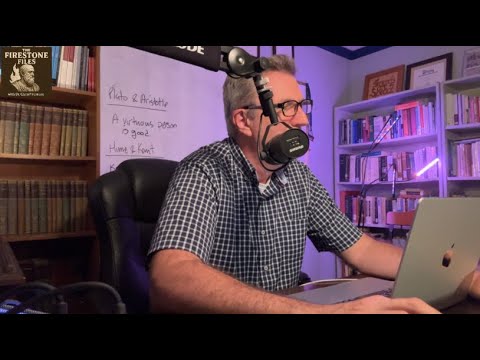
In episode three, Dr. Firestone discusses the life of the mind and the power of conscious, intentional thought to provide hidden insights and reveal new ways forward.
Transcript
So today on the Firestone Files, we'll discuss the philosophy behind thinking. I'll share a few personal stories to illustrate its power and draw practical lessons for living a more meaningful life. Welcome back everyone to the Firestone Files. I'm Dr. Chris Firestone. Today we're going to be talking about thinking. Have you ever driven a long distance and not remembered how you got there? I mean, I drive from Chicago down to Arkansas about at least once a year, sometimes multiple times, and there are long stretches of time if I don't have music on or if I'm just kind of vegetating while I'm driving where I can't remember how I got 100 miles down the road.
Have you ever been so absorbed in a mundane task like cleaning out your garage or maybe doing a jigsaw puzzle and the hours just slipped away? Many of us experience moments where time passes without conscious thought or conscious awareness like you're going through life on autopilot. Today we explore the question, how can thinking enhance your life? and not just thinking but sort of a conscious aware sort of thinking. This intentional thinking can transform routine moments or even special moments into meaningful experiences.
So today on the Firestone Files, we'll discuss the philosophy behind thinking. I'll share a few personal stories to illustrate its power and draw practical lessons for living a more meaningful life. As a philosopher, contemplation, contemplation over the meaning of life, a meaning of our individual experiences is pretty common place. We observe the world. We reflect on sensations. We observe our reactions to things and how to react better. But when we think about a philosopher, oftent times we think of hairsplitting, analyzing everything so deeply, it can seem impractical. So we don't really develop the skill, if you will, of careful critical thinking on a regular basis.
Oh, we do so when we have difficult times or when situation calls for it. I know if you're investing money, for example, you'll carefully consider the various options and you know, never perfectly, but with some fear and trepidation, maybe you'll make an investment and then watch it go up and down and realize you didn't know as much as you thought you knew and and then you go back at it again and get a little better at it next time and so forth.
So we do I'm not saying people don't use critical thinking but we don't go about life generally speaking I would suggest exercising that kind of conscious aware thinking that I'm going to be advocating for here today in philosophy there are kind of two realms in which thinking is primary. There's the theoretical realm contemplating experiences and their meaning. You observe the world. You reflect on sensations. You describe what you see.
And then of course you decide on a course of action relative to what you see. Practice. That's the bifurcation I want to make here. Theory and practice. One is descriptive. One is experiencing the real world as it really is. And then there's practice. And I would argue that that's basically trying to act well or virtuously based upon your reflections. In philosophy in the modern period um they kind of separated those two things theory and practice. One is just primarily descriptive of nature and of my place in the world and so forth and the other is prescriptive about what we should do about it. What is the ought that encount that we encounter when we act in life.
Both require thought, but theory, I would suggest, often involves contemplation for its own sake, which can in turn inspire meaningful action. Typically, most of our thought goes into the practical and less so in the theoretical. But I guess I'm going to make the case for being more consciously aware of your environment, your surroundings in your place in the world on a regular basis and then making practical decisions based upon um that knowledge, that experience, that sort of conscious aware interaction with your surroundings.
uh a former colleague of mine, Dr. Cliff Williams, who's now retired. He was at Trinity with me for many years. And now then he went over to Wheaten College. Um and uh and now I think he's still teaching occasionally, but more or less retired. He wrote a book called The Life of the Mind. And uh really kind of a fun book. It's one thing about Cliff's books. Um, they're all sort of existentially interesting. And by that I mean he is acutely aware. He is a he's like the quintessential sort of thoughtful person. He sees things just mundane things and he thinks about them. Why are they this way and not some other way?
And he advocates the intrinsic value of thinking for thinking's sake in this book called the life of the mind. um that kind of mental engagement. I remember part of the uh one of the interesting stories in that book as I recall. It's been a year since I've read it, but I remember him sitting on his porch while he was writing the book and observing squirrels and why the squirrels came down the trees when they did, how they uh interacted with one another, how they planted or they they not planted but buried nuts and so forth in season and uh the various ways they behaved. and he and he and he tried to reason why they do what they do.
And it was really kind of a fascinating uh little mini study of squirrels and how to think through what it is you were observing. So that's just one of the things that uh Cliff Williams talks about in that book. But he makes the case as I recall for the intrinsic value of doing it for its own sake. There's a kind of inherent value. I would also argue that there is a really tangible value that I'm going to try to get at with a few stories here um today. So what's the takeaway here? Thinking deeply even about small things enriches our understanding and connects us with the world. Now let me give you a couple of couple of stories from my own life. I recognized this very early on. The power of thinking.
Uh, one of the things I did after my early athletic interests was move in high school in my sophomore year from athletics to the chess team. And there a lot of reasons for that in my own life. But, uh, I will say that for about two years of my high school life, chess dominated my thinking. Some of you who are watching this may have an area of life. Maybe it's chess. Maybe it's Dungeons and Dragons. Maybe it's board games or maybe it's um something else. You know, maybe it's video games. Maybe it's a world in the video game world that you are caught up into and that you can't wait to get back to and you you develop a certain kind of expertise.
Well, that was me in chess and my junior year. we ended up winning the state championship and then my senior year we went on to uh went on to be I think it was fifth in the nation and so I really had two years where chess in enriched but also engulfed my entire life. Uh between my junior and senior year, I rose rapidly within the chess world. And one of the neat things about rising rapidly in the chess world is your rating typically lags behind your actual ability. I just picked up the game, but I was learning so quickly. My actual skill level always seemed to be about 200 or 300 points higher than my current rating. And so that summer I made a lot of money in tournaments just going through class tournaments winning winning until I got uh up into the expert master rankings and then that's when uh that's when things got extraordinarily difficult by the time I was a senior in high school.
But uh one of the tournaments where the life of the mind really came to the four for me was um at the Palmer House. It was a class tournament. I think it was either class B or class C in that summer. And uh I uh I was 4-0. I was playing an opponent who was 4-0 in the class tournament. And uh whoever wins gets to take home the check for first place and pretty big tournament, lots of players in it. And so it was a prestigious kind of thing. And here I was probably a little bit better than my rating was, but even in even so, I was playing a player who was exceedingly good.
Um, I remember the game well because some of my uh friends would come by and watch the game and then, you know, disappear and come back and watch the game cuz they they have long time controls in these big tournaments. It was something like an hour and a half for each player. So, the game would go at least three hours long. Um and uh in this particular game uh I I was not doing well. I had encountered a player who knew an opening and knew a variation and knew uh and probably frankly was a little bit more advanced in chess than I was at that time.
And he had me so bound up, you know, it was just hard to describe because you can feel first place ebbing away. And uh I uh I I I remember the board was kind of locked up, but it was locked up where he had peace play and and and maneuverability and advantage. And I was just kind of waiting for my demise, I think. And that's when I started really thinking. I said, "Look, there was one thing about this young brass uh um chess player, you brash chess player who who uh didn't think he could be beaten. I said, "I've got to find a way to get back in this game. I just don't know what to do." And my my uh friends were looking at the board and they were going, "Woo, this is not looking good for old Firestone."
Anyway, uh as I was thinking, time was going and going and going, and I was getting way down on time. So, not only was I losing positionally on the board, um, but I was, um, I was losing on time as well. And, uh, that that, you know, that was, I think, weighing on my psychology as much as anything else because as your time gets less and less, you know, back in those days, we didn't really have that many digital clocks. In fact, I'm not sure we had any back in the early 80s when I was in high school.
Uh, but they had these flags on top of the analog clock and when that clock would go, that flag would rise up and if it fell, the game was over. And if you hadn't met time control, you hadn't had enough moves made by that time that flag fell, then you lose. So, my clock was going and going and going, and I realized, man, I am losing every which way in this game. But then it dawned on me as I thought it through. He looked like he was getting visibly psychologically more excited the further my clock went down. In other words, he wasn't as confident over the board as uh as he was with the clock after a certain point.
And I was like, "Wow." I mean, he's got me destroyed on the board. If he just plays the game, I'll lose on time. if he if he just plays the game, I'll lose over the board. There's no way for me to win. Well, I looked at the board and I examined it and I realized something about the nature of the way the pieces were set up. If I were to sacrifice my queen, I would certainly lose if he gave it any thought at all.
But when I sacrifice my queen, I could follow it up with a knight check. And with that knight check, his king, who was somewhat exposed, would have three possible squares to go to. Two of them win the game easily. One of them was a blunder because I would slide my rook down, check, and then made him on the next move. So I thought to myself, hold on a second. You're on the verge of losing. You got nothing to lose at this point. You have one pathway to victory and that's a blunder on his part. How are you going to handle this Firestone? Well, I thought about it and I thought, you know what?
I think I'm just going to let my clock run almost completely out and then I'll make my moves. And so my flag went and it went right to the edge of the clock and I had not yet even made my queen sacrifice. I mean, it was barely holding on. And that's when I reached for my queen, sacrificed it in a piece in front of his king and then smacked the clock and the flag stayed up. Um, he was getting visibly excited because I kept seeing him kind of look over at the clock. He's like, "Game is almost over. I'm almost the champion."
He saw my queen sacrifice and he s thought to himself, the guy is just tossing the game. He's desperate. So he takes my queen, smacks the clock really hard. Flag stays up. I throw my knight check in. Hit the uh hit the clock. Flag still doesn't doesn't fall. He is virtually giddy on the verge of winning a large paycheck. He takes his king and he moves his king and he smacks the clock really hard, wanting the flag to fall. I do a quick rook check. He smacks it again. And this time the flag falls.
Game over. Well, in chess, at least in tournament chess in the 80s, I've noticed that online this rule is no longer in effect, but in tournament chess in the 80s, you cannot lose on time if you have checkmate on the move. It's a rule that I wish chess. com would instantiate in all of its games. In other words, I have played many games on chess. com in the last, you know, year or two because I've kind of gotten back into chess recently where I had checkmate on the move and I lost on time. In the old days, that was impossible. The person who had outplayed the other person who if they had a checkmate on the move, the clock was irrelevant.
Um, now you might argue, well, how would the game be over? It would never be over. Well, maybe they should give an extra 5 seconds for the person to move, provided they move and move into checkmate. Anyway, that's a side note. What was really interesting about the game is I said, "No, you didn't win." And he goes, "Why?" Because I have checkmate, which I made the move on the next move. He his his demeanor fell to the floor because he realized that his jaw is like, "What?" He had failed to play the game and rather he played the clock and he fell into the only checkmate that I could possibly have mustered given the nature of the game the way it was.
My friends came back and they asked me, "So Firestone, how'd you do?" And they were kind of, you know, I wouldn't say giggling, but they were like, you know, "Yeah, well, we kind of know how he was doing in that game." I said, "Yeah, I won." They were just utterly shocked. What did I learn? What was the lesson there? Thinking creatively, strategically, carefully, critically leads to realworld success. If that person was a computer, they wouldn't have fallen for the psychological nature of what I was trying to do with the clock there. But they were a human being. I was reading their emotional state. the way they were looking at the clock.
They weren't realizing that they had me pretty much under control over the board, their attention was deflected. And I capitalized, but I only capitalized it because I was aware. I was thinking if you do that kind of thinking in life, you can often times get over hurdles that you didn't think or you weren't even really capable of getting over any other way.
I learned that lesson back in high school. When I went to college, I had a sports experience that I think is akin to that experience. I was playing inter mural flag football with my uh dorm team at the University of Illinois. We threw together a team and we had a lot of fun playing inter mural football. Um but we were struggling. There were a lot of teams, a lot of good teams and guys who' played together and stuff. And I'm not sure we even had a victory that season. I don't think we had had a victory. But in the particular game that I want to tell you a little bit about, we were down by less than less than a touchdown.
And they play those games based on number at least they did the number of plays. So there was like say 20 plays in the in the in each half or something like that. There's an official who was keeping count. We were down to our last play. We had about 50 yards to go. Last play of the game and we were down by less than a touchdown. And uh I decided to adopt a similar lesson to what I learned over the chess board. I said, "Look guys, let me quarterback this thing." They were, I wouldn't say, defeated, but they were downtrodden because they realized, man, we are in super trouble here. Firestone wants to try let him quarterback. So I said, "Look, you guys run down as fast as you can to the end zone. Just run full speed. These guys are running, rushing in. They're grabbing our flag.
They're sacking us. Um, what I'm going to do is I'm going to drop back and I'm going to maneuver a little bit and I'll buy as much possible time as I can and I'm going to let it rip and throw it as far as I can. So, that's what I did. I dropped back. Their rushers came in, made their way around our our um our blockers. We had a couple of guys running full speed down the field. And I did not have a conscious awareness and this this is of of exactly where they were on the field.
I was acutely aware of the fact that the only way we could win is if the ball traveled 50 yards and I did so before they pulled my flag. And so I dropped back. They were right upon me. I waited as long as I possibly could. He was just about to grab my flag. And I tell you, I whipped the tightest spiral that I could that I've that I've uh ever thrown. It feels like I mean, that's probably hyperbolic, but it was a beauty. It just it just went out. It was a tight spiral. They had three guys on the goal line um defending the play and a buddy of mine named Tony Jones running full speed.
The ball is dropping to be intercepted by one of those players right in the middle of the field 50 yards down right at the goal line and Tony Jones running full speed runs right in front of him grabs the ball and runs into the end zone to win the game. Well, we went absolutely bonkers after that. Um it was uh one of our finest moments uh as a we did inter mural basketball and other things but this one to win a inter mural football game against a pretty good team um you know and get our first victory that way.
Oh man, you can't beat that. Strategic thinking from chess translated to success in a completely different context. In other words, a conscious, careful awareness of the only possible way forward gave us a chance at victory and it fell into our laps. A few years later, I um uh had a chance to use similar thinking when I was with my kids uh as a parent. Now, here we're talking about much uh further on down the road. Um, I uh I had uh I was taking my two of my youngest, Andrew and Becca, on the Amtrak train down to Arkansas. It's an overnight trip.
We got all of our bags put together and we jumped on the Metro train up in uh up in Deerfield and we were making our way down. We were actually an hour and a half going to land an hour and a half early uh for our trip. I wanted to make sure we weren't rushed. We had plenty of time and um we were going to be in great shape. It was going to be uh I think about a a 1:30 p. m. um train ride overnight arriving in Melvin, Arkansas at around 3:30 or 4:00 a. m. And kids love these kinds of adventures with their dad. But uh something happened on the way down with the Metra. The uh the train started sputtering and it died. Oh, about I would say um 2 or 3 miles um south of Deerfield.
There were other people on that train who were also going to Amtrak and there were a variety of other people just going to downtown Chicago uh for the weekend. But uh we sat there, we must have sat there for an hour or you know 30 minutes, an hour. I mean it was uh quite the experience. We weren't at a train station so we were kind of locked into the train. And it began to dawn on me that my hour and a half might not have been sufficient that maybe I should have uh given us even more time. But man, who could have who could have realized that?
So anyway, um the train finally got started again and it made its way I think it was into the Glen View train station and I had a decision to make. Should I get the kids and myself out of the train and jump in an Uber to get to the train station downtown? Or should I just risk it for the biscuit and stay on the train? Well, the train seemed to be running just fine. The our new time was going to be about, I don't know, 30 or 40 minutes early.
Um, you know, we got an announcement over the speaker that uh train was back up and running and that we would uh going to be late, but uh hopefully we're going to be doing just fine. So, I made the executive decision and remember these kids now, they're like, let's say 10 and 8 years old or something like that. I don't remember the exact ages. Uh we had our backpacks, full backpacks, and we had, you know, our pillows and other stuff that we're going to use on the train.
They said, "Okay, Dad. We'll we'll we'll we'll hang we'll hang in there." I when I was in that train station, I went on the Uber app and I noticed that um we would we could get off the train and we could be there on time um without a problem, 30 minutes early. But the train was going to be like 40 minutes early. And so I said, "Let's stick to the train. We're still okay. And we still have the backup plan of Uber if the train has problems further on down the track." Well, you know what's going to happen now? The train in fact did have problems further on down the track.
Uh I don't think it was another mile or two down. It died again. This time it died right in an intersection with cars and the doors were closed and we weren't in a train station. It was like in the middle of a street. I'm like, "Holy smokes." Um, they said another train was going to come along and push us along uh to the next train, but we there would be some delay and we might have to switch trains. And there was just all sorts of stuff going on. And I'm like, "Okay, hold it. What do I do now?" Now, I checked my GPS uh in my Uber app, and my Uber app was saying, "If you jump in an Uber right now, you'll be like 10 minutes early."
And I'm like, "Oh my goodness, we may not have the backup plan available to us. We might be stuck with the train." Well, there was another family who was uh going for a train ride uh to uh across the country. Apparently, they were going all the way to California and had a lot of money invested in their trip and they're stuck on the train with us. We're all looking at each other when one of the business guys, you know, who's going downtown to Chicago for work apparently. He goes to the door and he gets his fingers in there and he pries the door open and he says, "Yep, I think it's time to get out of here."
And he looks at me and I remember it like it was yesterday. He says, "Um, this is it. This is your last chance." I let go of this door and you're done. And I look at my kids and I look at my phone and it tells me that now my uh Uber ride will be only like 3 minutes early. I said, "Kids, it's time to leave." So, we got he he held that door open for us. I jumped out with my backpack and got the kids held the held the door for us and we all uh got out of there.
I hit the Uber button and uh to pick up a a ride and uh lo and behold, there was backed up cars in all directions um because this train was blocking the entire street. But we were on the right side of the train. I mean, I guess it would be the left side of the train, but the correct side of the train for my Uber ride to pick us up out of that mob of cars to turn around where there's no traffic and to take us. So, we ran, I think, about a block with all of our bags and these two little kids running and there's our Uber.
We got in and it looked at it and it had us arriving one minute early. I said, "Sir, our train is leaving and it says you're arriving at this time and we and it when those doors shut on that Amtrak, we'll be heading back home. Can you get us there as quickly as you can?" He said, "Jump in."
Well, um, we jumped in. That guy was amazing. I mean, I don't know if he broke the law. Probably did. He was cutting in and out of traffic somewhat. He made it to the Amtrak station downtown Chicago and I think we had maybe 1 2 3 minutes before the train was set to depart. And I put on that same mentality, that same mentality I learned in the chess world and in the flag football world that if you have a chance for victory and there's only one pathway, then go down that pathway until you find some roadblock. Maybe the catch isn't made or maybe the chess player makes the right move and you lose anyway, but what do you have to lose other than barrel forward?
Well, I said, "Kids, get your backpacks on. Follow me." So, we went into that Amtrak station and they were two little kids and they were basically right behind me, either holding on to my shirt, just right behind me, and we just kept moving. We got to the uh Amtrak station which is a couple 100 yard 200 yards down from where you're dropped off. Nobody was in there waiting. Everybody was on the train. They were already loading up another train. So the ticket takers were busy and I said, "Look, we have one chance to get on our train and that's just to walk right past everybody and walk directly to our train and get on it.
We can sort out the details later." So, we made our way around a rope through this a secondary waiting area into the train area and we're making our move toward the train. And uh that's when my heart nearly dropped because a ticket uh taker, a conductor, somebody like that, grabbed my shoulder and he said, "Sir, what do you think you're doing?" And I said, I turned my head and I looked at him. The kids were looking at me. I said, this is uh maybe lesson number two. I said, "Sir, that train is my train and we're late and it's going to leave in 1 minute.
Can you help me?" He looked at us and he says, "I'm going to get you on that train. Don't do that again." He marched us over to the train, shoved us through the door, basically got our backpacks on. We got into the train and just as my uh uh just as all of us got on we just bar I mean barely got on the train the door shut and the train started moving. It's like dang that was pretty special. My kids couldn't believe it. We had an absolutely wonderful trip after that.
stories to tell galore about how this train, this Metro train, nearly cost us our Amtrak train, but how, you know, critical thinking, decisive action, plowing forward, knowing the only possible way for victory and uh getting it done and then at just the right moment asking a a a good conductor, you know, to help us out. Uh he could probably see it in my eyes. I didn't, as a dad with two young kids, I did not want to go back home, fight with Amtrak to get a second ticket or three extra tickets for the next day. We were uh I wouldn't say desperate to get on that train, but man, it would be nice to get on that train. I think that guy saw all of that in our faces and uh and uh he was willing to help us out with that.
So um all of this to say being conscious, being logical, being critical within the moment, not allowing to not being passive in your thinking, but being proactive in your thinking can have tangible benefits in the real world. You keep walking forward until you're told to stop. And then when you're told to stop, you ask good people to recognize the situation with you and come on board with you. and good things begin to happen. Okay. Well, let me bring this full circle around to uh philosophy again because I think philosophy is at work here in some very interesting ways. Um there's really broadly speaking two types of thinking or logical thinking.
There's the analytic kind of thinking. That's basically the kind of thinking that breaks things down into their component parts. It's based upon the law of non-contradiction. This is something that uh Aristotle talked a lot about. A thing cannot be and not be at the same time. Clear analytical reasoning. You can't win and lose simultaneously. In all three of those cases, I was either going to win or I was going to lose. I was either going to hold up the trophy or I was going to go home with my tail between my legs. Critical thinking understands that and moves forward on the basis of the fact that our intention is to win. Our intention is to get from point A to point B.
I uh when I first went to Trinity to teach philosophy, Cliff Williams was tired of teaching logic. So he demanded in his own sort of very nice cliff way that I teach logic. I taught logic for about 20 years or so. Maybe maybe I taught it for all 25 years. Um but one thing was interesting about the class logic. I'd never felt as though it was my strongest class. I love the history of ideas more than I like just the uh sort of technical disciplines. But my students almost universally would report to me that logic was their favorite class and it's their favorite class I think because it put into visual technical language what they were struggling to utter.
They understood the importance of logic inherently. But it wasn't until we studied um you know uh categorical logic of Aristotle, truth functional logic, other forms of informal logic, some symbolic logic and so forth that they found what was intuitive to them put into a visual format. And so you know logic was a very interesting class to teach uh for that reason. students seem to love, especially the better students. There's kind one thing I learned in logic, at least at Trinity, was that there's kind of three sorts of people with regards to logic. There's the sort of lucid logicians who could potentially even teach the course because it comes so naturally for them. um they are excited about logic because it puts into visual concrete almost mathematical form what is already intuitive to them.
There's also the kind of what I would call learned logicians. These folks are knowledgeable. They're teachable. Um but logic requires some work on their part and some uh h repetition and so forth to get it. So the class has these ones who are stellar, who are off the charts, good in logic. Then there's this middle group that I call the learned. They can learn it and they can do well in the course, but it comes at some effort. It doesn't necessarily come naturally. And then there's the lost. I call the lucid, the learned, and the lost. Uh the lost are the ones who are confused by this sort of thinking.
They're like, "What? Hold on a second. How does that work? Why does that work? Why does it always work that way? Can't I just sometimes use a logical fallacy and, you know, and still get from point A to point B? And why is it this way and not some other way? Uh, etc. Those people are always the ones who I'm having to tutor. I'm having to show the light bulb flickers on and off. And, uh, sometimes they get it, sometimes they don't. I call them the A, B, and C students right there in a logic class.
A, B, and C students. Sometimes those B's can climb to A's and sometimes the A's don't show up and don't do their work and they fall to B's and C's. You know how this works if you're a teacher, but in logic you can kind of quickly see these three sorts of people. Um anyway, so that's analytic logic. That's the kind of logic you would get in the North American Anglo-American context. It's kind of the sort of bread and butter of philosophy. There's another sort of logic. Let me call that synthetic logic.
Um that is a little bit of a higher order thinking and that is you take basic logic you're familiar with basic logic but it involves combining ideas creatively to solve complex problems with higher order thinking. This is where you get into strategies like chess or football strategies. Um these are these meta strategies. There's some people who can technically find their way forward. There's other people who do it in a more creative way. You know, my son is a special forces operator and uh I think you an analogy might be your common foot soldier who goes into battle is on the front lines, has to take the hill and uh goes forward and gets the job done.
critical in any kind of military operation to have analytically sophisticated troops who know how to get from point A to point B. Special forces operators, however, say, "Hold we have to take that hill. Well, there's at least five different ways we could take that hill. What if we took the bridge down the river there? Um what if we uh snuck across underneath? What if we did X, Y, and Z and then took it that way?" That requires a higher order thinking. That requires complex problem solving and uh synthetic reasoning. That is taking two opposites and colliding them together to get some kind of higher order synthesis.
I would suggest to you that both are fundamental to logic. I'm going to talk more about these later on in the course at some point because I think they're so fundamental, the analytic and synthetic reasoning. Um, and I just mentioned them here because I think they're in play with um with this whole question of the importance of being aware, consciously aware of your thinking. Typically, we are analytically describing and analyzing our situation. But if you are consciously aware of excellent and creative ways of getting the job done, you are living at a different level. And this is what I mean by embracing the life of the mind. Trying to utilize every conscious waking moment to think analytically well and synthetically in a higher order.
Thinking isn't in this sense just for philosophers. It's a universal tool to enhance human life. Um, philosophy, if it's done well, teaches us to think and reflect deeply, as seen in Cliff Williams more mundane examples, you know, describing squirrel life isn't exactly going to change the world, but it does show you the intrinsic value of thinking and regular thinking being important part in the toolbox of any kind of 21st century person. Logic provides the clarity and creativity needed to tackle life's biggest problems. So I would encourage my audience here to embrace the life of the mind. Try to minimize those zombie moments. I honestly think that the critical person can embrace the thoughtless zombie moment on those 12-hour car rides.
If I can vegetate for an hour to get from point A to point B and do so safely and let you know my mind and my my my sort of motor skills, you know, go on autopilot, that can be a good thing, right? It's hard to make some of them long drives. Uh I would recommend a podcast. I wouldn't recommend staying alert, but sometimes I could see there being some value, but not if it becomes a way of life where you're a zombie in every and all situations. Challenge yourself to observe, to analyze, and to act thoughtfully in daily life. And when those big moments come up, you'll be ready to seize the day with some good critical creative reasoning.
It won't always work. Sometimes you'll try it and you'll find that you're sty. But you'll be shocked at how often this kind of approach to life really works. So the life of the mind just isn't about solving problems or winning games. It's about living with purpose. It's about living with curiosity and creativity. But it's also about becoming excellent and becoming thoughtful in taking yourself and everyone around you to the next level of living well. All right. Well, that's all I have for you uh this time. Uh thanks so much for listening and thank you for um you know um being a part of the Firestone Files.
Write to me if you can uh like it. uh share it with a friend and uh until next time. Take care. Bye for now. Thanks for stopping by to spend some time with me here on the Firestone Files. I hope today's reflections offered you some new insights and perspective on life. If you enjoyed the episode or found it valuable, I'd appreciate it if you'd take a moment to like, subscribe, and share it with someone you care about. I'd also love to hear your thoughts. What resonated with you? What challenged you? Or what would you like to hear more about in future episodes? Drop a comment below or send in your suggestions to the email in the description. Your input helps shape where we go next. This has been Dr. Chris Firestone. Until next time, keep asking the big questions. And remember, the kingdom journey is always best with your friends. Further up and further in. Bye for now.
Turn it around.
Auto-generated from YouTube captions and lightly formatted; it may contain errors.
Related episodes
More from Mind, Heart, and Body, then the nearest by date.
 Mind, Heart, and Body41:20
 Mind, Heart, and Body47:00
 Mind, Heart, and Body51:47